
Table of Contents >> Show >> Hide
- Why You’ll Love This Greek Chicken Skillet
- Ingredients for Greek Chicken Skillet
- How to Make Greek Chicken Skillet
- Greek Chicken Skillet Recipe Card
- Tips for the Best Greek Chicken Skillet
- Serving Ideas
- Easy Variations
- Storage and Meal Prep
- Common Mistakes to Avoid
- Nutrition Perspective
- Personal Cooking Experience: What Makes This Greek Chicken Skillet So Reliable
- Conclusion
If weeknight dinner had a passport, this Greek Chicken Skillet Recipe would be the kind of meal that lands in your kitchen wearing sunglasses, smelling like lemon and oregano, and politely asking where you keep the feta. It is bright, savory, juicy, colorful, andbest of allmade in one pan. That means fewer dishes, which is basically the culinary version of finding money in your jeans pocket.
This recipe brings together tender chicken, olive oil, garlic, lemon juice, oregano, cherry tomatoes, Kalamata olives, red onion, spinach, and creamy crumbled feta. The result is a Mediterranean-inspired chicken dinner that tastes fresh and satisfying without requiring a culinary degree, a pile of specialty tools, or a mysterious spice jar you bought once and never opened again.
A great Greek chicken skillet should hit a few important notes: juicy protein, tangy brightness, salty depth, fresh herbs, and enough sauce to drag a piece of warm pita through without shame. This version is designed for real home cookspeople who want dinner to taste like a restaurant meal but also need it to happen before everyone starts snacking directly from the pantry.
Why You’ll Love This Greek Chicken Skillet
This dish works because it follows a simple Mediterranean formula: good olive oil, lean chicken, fresh vegetables, herbs, lemon, and a bold salty finish from olives and feta. The flavors are layered but not complicated. Garlic gives the base warmth, oregano adds that classic Greek aroma, lemon wakes everything up, tomatoes soften into a light pan sauce, and feta melts slightly into creamy little pockets of happiness.
It is also practical. You can make it with boneless chicken breasts or thighs, depending on what you prefer. Chicken thighs are a little more forgiving and stay juicy, while chicken breasts cook quickly and keep the dish lean. Either way, the key is not overcooking the chicken. Use a meat thermometer and cook poultry to an internal temperature of 165°F for safe, juicy results.
Ingredients for Greek Chicken Skillet
Main Ingredients
- 1 1/2 pounds boneless, skinless chicken thighs or breasts, cut into large pieces or left as cutlets
- 3 tablespoons extra-virgin olive oil, divided
- 3 tablespoons fresh lemon juice
- 1 teaspoon lemon zest
- 4 garlic cloves, minced
- 2 teaspoons dried oregano
- 1 teaspoon paprika
- 1/2 teaspoon dried dill, optional but excellent
- 1/2 teaspoon kosher salt, plus more to taste
- 1/4 teaspoon black pepper
- 1 small red onion, thinly sliced
- 1 pint cherry or grape tomatoes, halved
- 1/2 cup Kalamata olives, pitted and halved
- 2 cups baby spinach
- 1/2 cup crumbled feta cheese
- 2 tablespoons chopped fresh parsley
- Optional garnish: cucumber, fresh dill, extra lemon wedges, or tzatziki
Ingredient Notes
Chicken thighs vs. chicken breasts: Thighs are rich, juicy, and less likely to dry out. Breasts are lighter and cook fast, but they need attention. If using large chicken breasts, slice them horizontally into thinner cutlets so they cook evenly.
Kalamata olives: These bring that unmistakable briny Greek flavor. If you are not an olive person, use marinated artichokes or roasted red peppers. No judgment. Well, maybe a tiny bit from the olives.
Feta cheese: Use block feta and crumble it yourself if possible. It tends to be creamier and more flavorful than pre-crumbled feta. But if pre-crumbled is what you have, dinner will still be delicious.
How to Make Greek Chicken Skillet
Step 1: Marinate the Chicken
In a medium bowl, combine 2 tablespoons olive oil, lemon juice, lemon zest, minced garlic, oregano, paprika, dill, salt, and pepper. Add the chicken and toss until well coated. Let it marinate for at least 15 minutes. If you have more time, 30 minutes to 2 hours gives the chicken even better flavor.
Do not marinate the chicken all day in lemon juice. Citrus is powerful, and after too long it can make the texture a little strange. Think tender and flavorful, not chicken ceviche.
Step 2: Sear the Chicken
Heat 1 tablespoon olive oil in a large skillet over medium-high heat. Add the chicken in a single layer and sear for 4 to 5 minutes per side, depending on thickness. The goal is golden color on the outside and juicy meat inside. If the skillet feels crowded, cook the chicken in batches. Crowding the pan makes the chicken steam instead of sear, and steamed chicken rarely inspires applause.
Transfer the browned chicken to a plate. It does not need to be fully cooked yet because it will finish simmering with the vegetables and sauce.
Step 3: Build the Tomato-Olive Sauce
In the same skillet, add the sliced red onion. Cook for 2 to 3 minutes, stirring occasionally, until it begins to soften. Add the cherry tomatoes and Kalamata olives. Stir well, scraping up the browned bits from the bottom of the pan. Those browned bits are flavor confetti.
Cook for 4 to 5 minutes, until the tomatoes begin to burst and release their juices. If the pan looks dry, add 2 to 3 tablespoons of chicken broth, water, or even a splash of white wine if you cook with it. The sauce should be light, glossy, and fragrant.
Step 4: Simmer Until Juicy and Done
Return the chicken to the skillet, nestling it into the tomato and olive mixture. Reduce the heat to medium-low, cover, and cook for 5 to 8 minutes, or until the chicken reaches 165°F in the thickest part.
Add the baby spinach during the last 1 to 2 minutes of cooking. It will wilt quickly into the sauce, adding color, freshness, and a little “look at me eating greens” confidence.
Step 5: Finish with Feta and Herbs
Turn off the heat and sprinkle the skillet with crumbled feta and fresh parsley. Add an extra squeeze of lemon over the top. Let the skillet rest for 3 to 5 minutes before serving so the juices settle and the feta softens slightly.
Serve warm with pita bread, rice, orzo, couscous, roasted potatoes, or a crisp cucumber salad. The pan sauce is bright and savory, so choose a side that can soak it up. Leaving sauce behind should be illegal, or at least strongly frowned upon.
Greek Chicken Skillet Recipe Card
Prep Time
15 minutes
Cook Time
25 minutes
Total Time
40 minutes
Servings
4 servings
Ingredients
- 1 1/2 pounds boneless, skinless chicken thighs or breasts
- 3 tablespoons extra-virgin olive oil, divided
- 3 tablespoons fresh lemon juice
- 1 teaspoon lemon zest
- 4 garlic cloves, minced
- 2 teaspoons dried oregano
- 1 teaspoon paprika
- 1/2 teaspoon dried dill, optional
- 1/2 teaspoon kosher salt
- 1/4 teaspoon black pepper
- 1 small red onion, thinly sliced
- 1 pint cherry tomatoes, halved
- 1/2 cup Kalamata olives, pitted and halved
- 2 cups baby spinach
- 1/2 cup crumbled feta cheese
- 2 tablespoons chopped fresh parsley
- Lemon wedges, for serving
Instructions
- In a bowl, whisk together 2 tablespoons olive oil, lemon juice, lemon zest, garlic, oregano, paprika, dill, salt, and pepper.
- Add the chicken and toss to coat. Marinate for 15 minutes or up to 2 hours in the refrigerator.
- Heat the remaining 1 tablespoon olive oil in a large skillet over medium-high heat.
- Sear the chicken for 4 to 5 minutes per side, then transfer it to a plate.
- Add red onion to the skillet and cook for 2 to 3 minutes.
- Add tomatoes and olives. Cook until the tomatoes begin to soften and release juices.
- Return chicken to the skillet. Cover and simmer for 5 to 8 minutes, until the chicken reaches 165°F.
- Stir in spinach and cook until wilted.
- Top with feta, parsley, and lemon juice. Rest for 3 to 5 minutes before serving.
Tips for the Best Greek Chicken Skillet
Use a Heavy Skillet
A cast-iron skillet or stainless-steel pan gives the chicken a better sear than a thin nonstick pan. Browning equals flavor, and flavor is the reason we are all here. If using cast iron, make sure it is well seasoned, especially because this recipe includes acidic lemon and tomatoes.
Do Not Skip the Lemon Zest
Lemon juice gives acidity, but lemon zest gives fragrance. It makes the dish taste brighter without making it sour. A little zest can make your kitchen smell like you suddenly became someone who owns linen napkins.
Salt Carefully
Feta and Kalamata olives are naturally salty, so season the chicken modestly at first. Taste the sauce before adding extra salt at the end. You can always add more, but you cannot politely remove salt once it has moved in and signed a lease.
Let the Chicken Rest
Resting chicken for a few minutes helps the juices redistribute. Cut into it too soon and those juices run onto the cutting board instead of staying where they belong. Patience is hard, but dry chicken is harder.
Serving Ideas
This Greek chicken skillet recipe is flexible enough for both casual dinners and meal prep. For a classic plate, serve it with warm pita, tzatziki, and a Greek salad. For something hearty, spoon it over lemon rice, orzo, couscous, quinoa, or roasted potatoes. If you want a lighter meal, serve it over chopped romaine, cucumbers, and tomatoes with a drizzle of olive oil and lemon.
You can also turn leftovers into wraps. Slice the chicken, tuck it into pita with lettuce, cucumber, feta, and a spoonful of the tomato-olive mixture. Suddenly yesterday’s dinner becomes today’s lunch, and nobody has to know how little effort was involved.
Easy Variations
Greek Chicken and Orzo Skillet
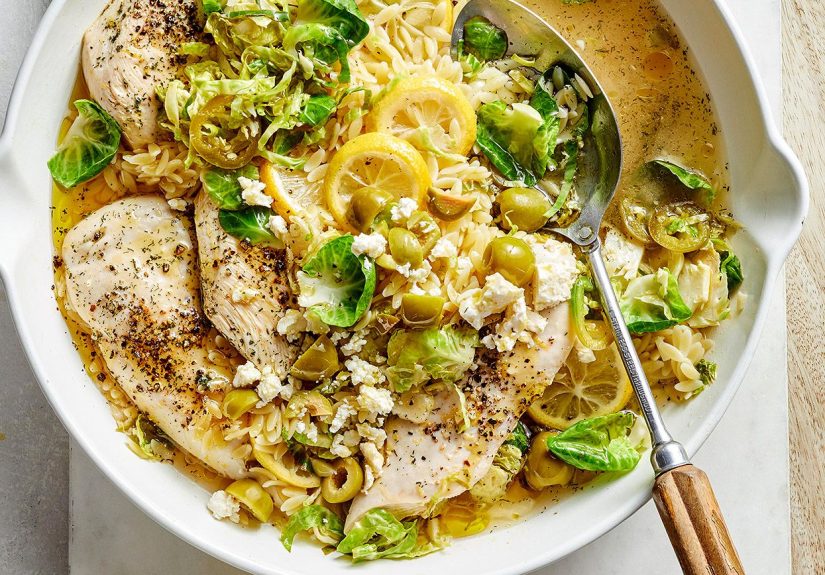
Add 3/4 cup orzo and 1 3/4 cups chicken broth after cooking the tomatoes and olives. Return the chicken to the pan, cover, and simmer until the orzo is tender and the chicken is cooked through. Stir often so the orzo does not stick.
Low-Carb Greek Chicken Skillet
Skip grains and serve the chicken with cauliflower rice, roasted zucchini, or a big cucumber salad. The sauce has enough flavor to carry the meal without needing pasta or rice.
Greek Chicken Skillet with Artichokes
Add 1 cup marinated artichoke hearts with the tomatoes and olives. They bring a tangy, tender bite that works beautifully with feta and lemon.
Creamy Greek Chicken Skillet
Stir in 2 tablespoons Greek yogurt at the very end, off the heat. This makes the sauce creamy while keeping the flavor fresh. Do not boil the yogurt, or it may separate.
Storage and Meal Prep
Store leftovers in an airtight container in the refrigerator for up to 3 to 4 days. Reheat gently in a skillet over medium-low heat or in the microwave at reduced power. Add a splash of broth or water if the sauce thickens too much.
This recipe is excellent for meal prep because the flavors continue to develop after a day in the fridge. Pack it with rice, quinoa, roasted vegetables, or salad greens. Keep extra feta and fresh herbs separate until serving for the best texture.
Freezing is possible, but the texture of tomatoes and feta may change slightly. If you plan to freeze it, consider freezing the chicken and sauce without the feta, then adding fresh feta after reheating.
Common Mistakes to Avoid
Overcooking the Chicken
Chicken can go from juicy to chewy faster than a group chat changes topics. Use a thermometer and stop cooking when the thickest part reaches 165°F. This is the best way to protect both flavor and food safety.
Using Too Much Marinade in the Pan
A little marinade helps flavor the sauce, but too much liquid can prevent browning. Let excess marinade drip off before searing the chicken.
Adding Feta Too Early
Feta is best added near the end. If it cooks too long, it can lose its crumbly-creamy texture. Sprinkle it over the finished skillet and let the residual heat soften it.
Nutrition Perspective
This Greek chicken skillet is naturally high in protein and full of colorful vegetables. Olive oil provides rich flavor, while tomatoes, spinach, onion, herbs, and lemon add freshness. Feta and olives bring salt and tang, so a little goes a long way. For a balanced Mediterranean-inspired meal, pair the skillet with whole grains, beans, salad, or roasted vegetables.
Like many Greek-inspired chicken recipes, this dish is less about heavy sauces and more about clean, bold flavor. It proves that healthy-ish food does not need to taste like punishment. Nobody should have to chew sadly through dinner while thinking about pizza.
Personal Cooking Experience: What Makes This Greek Chicken Skillet So Reliable
The best thing about making a Greek chicken skillet at home is how forgiving it feels once you understand the rhythm of the dish. The first time you cook it, you might measure every teaspoon carefully. By the third time, you are probably zesting lemon directly over the pan like a confident Mediterranean auntie who does not believe in measuring spoons. That is the beauty of this recipe: it has structure, but it also leaves room for personality.
One experience that stands out is how much difference a short marinade makes. Even 15 minutes with lemon, olive oil, garlic, and oregano changes the chicken. It does not just sit on the surface; it gives the meat a brighter aroma and helps create that “I planned this” flavor, even when dinner was absolutely not planned. For busy nights, I like mixing the marinade before chopping the vegetables. By the time the tomatoes are halved, the onion is sliced, and the skillet is hot, the chicken has already picked up enough flavor to taste intentional.
Another lesson: tomatoes are doing more work than they get credit for. At first, they look like a colorful add-in. Then heat hits them, they soften, and suddenly the pan has a light sauce. Their juices mix with garlic, olive oil, chicken drippings, lemon, and olive brine. That little skillet sauce is the part people go back for with bread. It is also the reason this dish tastes complete without needing cream, butter, or a complicated reduction that makes you feel like you accidentally enrolled in culinary school.
The olives are equally important, but they need balance. Kalamata olives are bold, salty, and a little fruity. Too many can take over the dish, while just enough gives every bite a pop of briny flavor. If you are cooking for people who are suspicious of olives, chop them smaller. This spreads the flavor through the sauce without creating big “surprise, I am an olive” moments.
Feta is the final personality boost. Add it after the heat is turned off, and it softens into the warm tomatoes without completely disappearing. The best bites are the ones where feta, tomato, chicken, and lemony pan juices all meet on the fork. It is a tiny dinner miracle, and thankfully it does not require much cleanup.
This recipe also teaches the value of resting the chicken. It is tempting to serve immediately because the skillet looks beautiful and smells even better. But a short rest helps the chicken stay juicy. During that time, you can warm pita, toss a quick salad, or dramatically announce that dinner is ready even though everyone is already standing in the kitchen asking what smells so good.
For meal prep, this skillet is a quiet champion. On day one, serve it with rice or potatoes. On day two, slice the chicken into a pita wrap. On day three, chop the leftovers and pile them over greens with cucumber and a spoonful of Greek yogurt. It does not feel like eating the same meal repeatedly; it feels like the recipe packed different outfits.
The most useful tip from experience is to keep the heat under control. Medium-high is great for searing, but once the tomatoes and chicken return to the pan, lower the heat. A gentle simmer keeps the chicken tender and gives the sauce time to come together. Too much heat can toughen the chicken and make the tomatoes collapse too aggressively. You want cozy bubbling, not a tomato sauna.
In the end, a Greek chicken skillet is the kind of recipe that earns a regular spot in the dinner rotation because it checks all the boxes. It is fast enough for a weeknight, pretty enough for guests, healthy enough to feel good about, and flavorful enough that nobody asks where the takeout menus are. It is simple, sunny, and deeply satisfyingthe dinner equivalent of opening a window and letting in fresh air.
Conclusion
This Greek Chicken Skillet Recipe is everything a weeknight dinner should be: quick, colorful, flavorful, and easy to clean up. With juicy chicken, lemon, garlic, oregano, tomatoes, olives, spinach, and feta, it brings Mediterranean-inspired comfort to the table without making your evening complicated. Whether you serve it with pita, rice, or a crisp salad, this one-pan Greek chicken dinner is bright, satisfying, and reliable enough to become a household favorite.





 Close
Close