
Table of Contents >> Show >> Hide
“Best” in WWE is trickybecause WWE isn’t just wrestling. It’s athletic performance + character acting + live crowd psychology + marketing + the ability to
make a moment feel like the most important thing on Earth… even if it involves a ladder, a pyrotechnic budget, and someone dramatically pointing at a sign.
So instead of pretending there’s one universal, legally binding GOAT, this guide pulls from what the most credible wrestling coverage and WWE’s own history
consistently reward: drawing power, longevity, match quality, mic work, cultural impact, reinvention, and the ability to deliver “I remember exactly where I was”
moments. In other words: the Superstars who didn’t just win matchesthey moved eras.
How We’re Defining “Best”
Here’s the filter that keeps this list from turning into “my childhood favorites and also that one guy with cool pyro.” A true all-time great usually checks
multiple boxes below:
- Era-defining influence: They shaped what WWE looked and sounded like for years.
- Big-match credibility: When the stakes rose, they didn’t shrink.
- Character clarity: You could describe them in one sentenceand you’d still be right.
- In-ring storytelling: Not just movesmeaning.
- Longevity & reinvention: Greatness that survived booking swings, trend changes, and time itself.
- Cultural footprint: They escaped the wrestling bubble and left fingerprints on pop culture.
Also: WWE history spans multiple “feels” (territory-era grit, cartoonish spectacle, Attitude Era chaos, modern athleticism). Greatness looks different in each.
That’s why this list balances icons, technicians, and true entertainersbecause WWE always has.
The Mount Rushmore Tier
These are the names that show up no matter which decade you grew up in, which brand you watched, or how loudly you swear you “only liked wrestling before it
was cool.” (Buddy, it was always cool. It had a funeral home wizard.)
Hulk Hogan
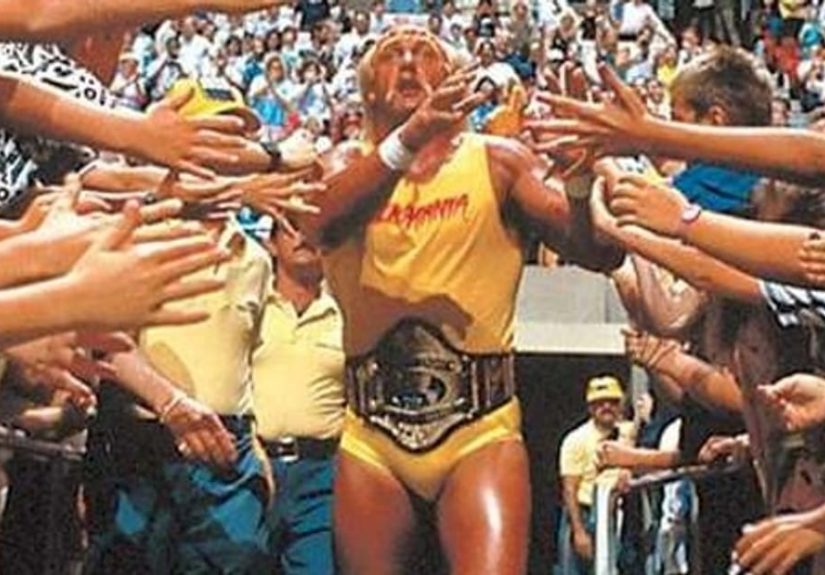
If WWE has a “before” and “after” in mainstream popularity, Hogan is a giant neon sign sitting right on that dividing line. The 1980s boom, the cartoon-bright
heroism, the simple (and extremely chantable) idea that the good guy can power up and winHogan made that formula global. He wasn’t just a champion; he was
a touring attraction whose presence could turn a match into an event. Love him or side-eye the theatrics, his peak is one of the clearest examples of a single
Superstar driving an entire era’s identity.
“Stone Cold” Steve Austin
Austin didn’t merely get overhe changed the crowd’s relationship with authority. His anti-hero persona turned the audience into co-conspirators, and his feuds
(especially against WWE management on-screen) helped define the Attitude Era’s rebellious tone. The beauty of Austin is that his character was instantly legible:
tough, blunt, allergic to nonsense. Whether he was cutting a promo or throwing a punch, it felt real enough to make you forget you were watching a scripted show.
That “realness” is rare, and it’s why his impact still echoes in how modern babyfaces are built.
The Rock
The Rock is what happens when you mix movie-star charisma with wrestling timing and then give it a microphone. His ability to turn a catchphrase into a crowd
phenomenonand a crowd reaction into a feedback loopmade him a pop-culture bridge. In-ring, he delivered blockbuster pacing: big expressions, big moments,
perfectly timed comedy, and a knack for making rivalries feel personal. Even people who “don’t watch wrestling” often know The Rock, which is basically the
ultimate sports-entertainment flex.
John Cena
Cena’s case is simple: longevity at the top, massive mainstream visibility, and a career that carried WWE through multiple transitions. He became the face of the
company for a generationpolarizing at times, but undeniably central. His matches often leaned into a “big-fight” structure (comebacks, near-falls, emotional
pacing), and his ability to generate reactionscheers, boos, debates, essays, dissertationskept the product hot. Add in his championship résumé and his place
in major WrestleMania moments, and he’s locked into any honest “best ever” conversation.
Ring Generals & Storytellers
This tier is for the Superstars who could turn a match into a story you felt in your ribs. They made the craft look effortlesswhich is wrestling’s sneakiest magic trick.
The Undertaker
The Undertaker is the rare act that stayed iconic across decades without losing mystique. He combined size, movement, and character discipline in a way that
made the “Deadman” feel real inside WWE’s universe. His WrestleMania streak turned into a yearly tradition, and at its height it wasn’t just a statit was a
suspense engine for the entire show. Beyond the streak, his gift was atmosphere: entrances that changed the room, pacing that built dread, and big matches that
felt like myth.
Shawn Michaels
“Mr. WrestleMania” isn’t just a nicknameit’s a thesis statement. Michaels could have a classic with almost anyone because he understood rhythm: when to speed up,
when to sell, when to tease the crowd, when to hit the accelerator like the building owed him money. He also mastered emotional stakes. Win or lose, his best matches
made you care about why the result mattered. In a company built on moments, Michaels made moments feel earned.
Bret “Hitman” Hart
Bret Hart’s greatness lives in precision. He made offense look crisp, selling look believable, and storytelling feel logicallike you could diagram the match and
it would still be exciting. Hart didn’t need fireworks to be compelling; his intensity did the work. He also helped define an era where WWE leaned harder into
athletic credibility, proving that “the best there is” could be a brand that actually matched the performance.
Ric Flair
Flair’s legend is built on a template he made famous: the champion as a dramatic, charismatic survivor who can talk you into the arena and then make you believe
he’s fighting for his life once the bell rings. WWE has long billed him as a 16-time world champion, but the deeper point is that his styleflashy villainy,
high-drama selling, endless confidencebecame a blueprint for countless heels. He didn’t just win titles; he made the title chase feel like the point of the show.
Bruno Sammartino
Long before “sports entertainment” became a slogan, Bruno was the face of a company that needed a hero fans could trust for years at a time. His legendary run
as WWE Champion (including a famously long reign) stands as a reminder that being “the guy” isn’t about a viral momentit’s about being the anchor when the
entire business depends on you. Bruno represents a kind of greatness modern fans don’t always see: consistent, steady, era-sustaining dominance.
Game Changers & Crowd Catalysts
These are the Superstars who shifted the vibesometimes by being unbelievable athletes, sometimes by being unbelievable human beings (in the best possible wrestling way).
“Macho Man” Randy Savage
Savage wrestled like every move had emotional punctuation. His intensity, facial expressions, and “everything matters” energy turned matches into mini-movies.
He could be heroic, unhinged, tragic, hilariousoften in the same segment. Savage also helped define what a top-tier performer looks like when commitment is
non-negotiable. If you ever watched a modern Superstar “go all-in,” you’re seeing echoes of Macho Man.
Triple H
Triple H is a case study in reinvention and influence. As a top heel, he was a consistent final boss figurecalculating, cruel, and extremely good at making his
opponent feel like the heroic center of the story. In-ring, his best work thrived on big-match pacing and psychology. Beyond that, his presence across multiple
eras (and his role in shaping modern WWE’s look and talent pipeline) makes his all-time impact hard to ignore.
Kurt Angle
Angle is one of WWE’s greatest “how is this even fair?” talents: world-class athletic credentials translated into pro wrestling excellence, plus comedic timing
sharp enough to turn absurdity into gold. He could have a technical masterpiece, a chaotic brawl, or a funny segment that still advanced the storysometimes all
in the same month. Angle’s greatness is range: serious credibility with entertainment instincts.
Eddie Guerrero
Eddie made wrestling feel personal. His charisma wasn’t just charmit was connection. He could play lovable trickster, desperate underdog, or ruthless competitor,
and it always felt emotionally honest. In-ring, he was smooth, inventive, and intensely human in his selling. Eddie’s legacy is also about inspiration: he proved
that being smaller than the giants didn’t mean being smaller than the moment.
Rey Mysterio
Rey redefined what a WWE Superstar could look like physicallywithout sacrificing believability. His speed, aerial style, and underdog storytelling opened doors
for generations of high-flyers, but his true gift was heart: the crowd wanted him to win because he made the fight feel uphill. Rey also mastered the art of
being iconic at a glance. The mask isn’t just gearit’s a symbol.
Women Who Redefined the Word “Superstar”
WWE’s women’s division has evolved dramatically across eras, and a few names stand out as true turning pointsperformers who expanded expectations for what women’s
wrestling could be on the biggest stages.
Trish Stratus
Trish became one of the most recognizable women in WWE history by pairing star presence with relentless improvement. She wasn’t just “featured”she was a pillar
of her division, blending athleticism, charisma, and big-match confidence. Her era didn’t always provide the time or depth modern performers get, which makes her
ability to create memorable rivalries and standout moments even more significant. She’s a foundational figure in the bridge from the past to today’s main-event standard.
Becky Lynch
Becky Lynch’s rise is one of WWE’s clearest examples of audience momentum reshaping the top of the card. “The Man” persona hit at exactly the right time, and her
work helped push women’s wrestling from “special attraction” to “main event capable.” The WrestleMania main-event breakthrough wasn’t just a milestoneit was a
statement that the division could carry the biggest show of the year. Becky’s greatness is part performance, part connection, and part timing that she turned into history.
Charlotte Flair
Charlotte brought a consistent big-match aura that made women’s title feuds feel major. Her style is built for spotlight wrestling: athletic, aggressive, and
comfortable with high-stakes pacing. Whether fans love her dominance or prefer an underdog story against her, that reaction is the pointshe reliably creates a
“this matters” atmosphere. In the modern era, that’s a hallmark of top-tier greatness.
Honorable Mentions
A true “best of all time” list could easily be 50 names long (and then wrestling fans would still argue in the comments like it’s their second job). Here are a few
Superstars who often belong in the conversation depending on what you value most:
- Randy Orton: longevity, smoothness, and a modern “classic” WWE style.
- Mick Foley: unmatched emotional resonance and willingness to sacrifice for the story.
- Chris Jericho: reinvention king with elite mic work and huge match history.
- CM Punk: voice-of-the-fans energy and a cultural moment that changed WWE’s tone.
- AJ Styles: elite in-ring excellence and late-career WWE success that felt undeniable.
- Brock Lesnar: a special-attraction aura so strong it changes match stakes instantly.
- Chyna: a barrier-breaker whose presence expanded what roles felt possible.
Conclusion
The best WWE Superstars of all time share one trait: they made the audience feel something powerfulexcitement, awe, anger, joy, suspense, sometimes all at once.
Hogan gave WWE a mainstream megaphone. Austin made rebellion a business model. The Rock turned promos into pop culture. Cena carried an era with endurance and
spotlight pressure. Undertaker made mythology. Michaels and Hart made craft feel like art. Eddie and Rey made heart and style unstoppable. And Trish, Becky, and
Charlotte helped redefine what “main event” can look like.
Your personal GOAT might differand that’s part of the fun. Wrestling isn’t a spreadsheet; it’s an emotional experience that lives in memories, moments, and the
sound a crowd makes when a theme song hits at exactly the right time.
Bonus: of Fan Experiences Related to “The Best WWE Superstars of All Time”
Ask ten WWE fans about the best Superstars of all time and you’ll get eleven answersbecause one person will change their mind halfway through explaining why.
That’s the first shared experience of wrestling fandom: the debate is part of the entertainment. You don’t just watch WWE; you argue WWE. Friendly arguments,
passionate arguments, “I can’t believe you just said that out loud” argumentsusually followed by someone pulling up a clip like it’s evidence in a courtroom drama.
Another universal experience is the “theme-song time machine.” For many fans, hearing glass shatter instantly brings back the feeling of late-90s chaos. A gong can
turn a living room into a cathedral. A familiar chant can make you remember the exact couch you sat on, the snack you ate, and the moment your friend yelled,
“NO WAY!” loud enough to scare the dog. The greatest Superstars don’t just have entrance music; they have an on-switch for nostalgia.
If you’ve ever watched wrestling with other people, you’ve probably seen the “conversion moment,” too. It’s when a non-fan walks in, rolls their eyes, and then
accidentally stays because the storytelling hooks them. Maybe it’s a heroic comeback. Maybe it’s a villain getting exactly what they deserve. Maybe it’s the sheer
absurdity of it allbecause WWE is the only place where someone can be a dramatic anti-hero one week and then ride a tank (metaphorically or literally) into the
arena the next. The best Superstars are often the ones who turn skeptics into “okay wait… what happens next?”
Then there’s the experience of living through eras. Fans talk about “the Hogan era” or “the Attitude Era” the way people talk about favorite seasons of a TV show,
except the cast occasionally suplexes each other through tables. You remember who your household cheered for, who your friend group booed, and which rivalries became
weekly rituals. The GOAT-level Superstars become landmarks: you measure your fandom by who you watched live, who you discovered later, and which moments still hit
even when you already know the finish.
Finally, there’s the emotional experience that surprises people most: wrestling comfort. During stressful weeks, many fans put on classic matches the way others
rewatch sitcoms. There’s something grounding about a story with clear stakes, a crowd that reacts like a choir, and a finish thatmost of the timetells you what
you’re supposed to feel. The greatest WWE Superstars of all time earn their status because they didn’t just entertain once; they became part of fans’ routines,
memories, friendships, and identities. That’s a kind of greatness you can’t fake, and you definitely can’t book into existence.







 Close
Close