
Table of Contents >> Show >> Hide
- Why the “Chief Automation Officer” Idea Is Suddenly Everywhere
- What OpenAI Got Right
- What OpenAI Got Wrong
- What Rippling Got Right
- What Rippling Got Wrong
- What Gorgias Got Right
- What Gorgias Got Wrong
- What All Three Companies Got Right About AI
- What They All Still Get Wrong
- The Real Lesson: The CFO Is Not Dead. The Job Just Got Stranger.
- Observed Enterprise Experiences: What Actually Happens After the AI Demo
- SEO Metadata
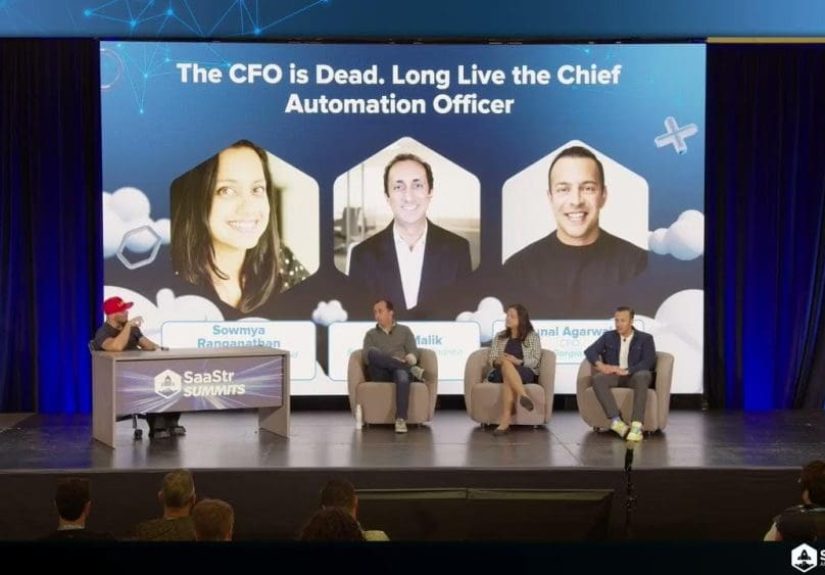
Every era of business gets its dramatic headline. Ours apparently is this: the CFO is dead, spreadsheets are shaking, and somewhere in the distance an AI agent is whispering, “I have automated the quarterly close.” It is a fun headline. It is also, in the strict technical sense, wildly overcaffeinated.
The CFO is not dead. Finance is not disappearing. Customer service is not becoming a robot petting zoo. HR is not being replaced by a chatbot in loafers. But the old model of leadership, where executives buy software to “assist” workers while keeping the real work stubbornly manual, is definitely under pressure. That is where the idea of a Chief Automation Officer starts to make sense: not necessarily as a literal title, but as a new operating mindset.
The companies getting the most attention in this shift are not just selling AI as a writing tool. They are selling AI as a system that can see context, make decisions inside guardrails, and take action. OpenAI is building the infrastructure for agents. Rippling is embedding AI into the messy guts of HR, IT, and finance. Gorgias is turning customer support into a revenue engine instead of a cost center.
That is the good news. The bad news is that the AI industry still loves the demo more than the org chart, the landing page more than the process map, and the word “autonomous” more than the phrase “show me the audit trail.” So yes, OpenAI, Rippling, and Gorgias have gotten important things right. They have also gotten a few things gloriously, predictably wrong.
Why the “Chief Automation Officer” Idea Is Suddenly Everywhere
The phrase sounds like executive cosplay, but it captures something real. For years, most software promised productivity. AI promises leverage. That is a different pitch. Productivity software helps people do tasks faster. Agentic AI aims to do chunks of work itself, hand off exceptions, and keep moving while humans are busy being human.
This is why the conversation has shifted so quickly from chatbots to AI agents, workflow automation, digital labor, and human-agent teams. Boards are not asking whether employees can draft better emails anymore. They are asking whether payroll approvals, customer resolutions, policy lookups, refunds, reconciliations, and reporting workflows can be automated without causing a legal incident or a public relations bonfire.
That is also why the CFO sits at the center of this story. AI is no longer only a technology purchase. It is an operating model decision. It changes labor allocation, software spend, risk exposure, control environments, and unit economics. In other words, the finance leader is not being deleted. The finance leader is being drafted into the automation war room.
The companies winning this moment understand one simple truth: nobody actually wants “AI.” They want less manual work, fewer handoffs, cleaner decisions, better margins, and customers who do not leave angry comments at 2:13 a.m.
What OpenAI Got Right
1. It stopped pretending chat alone was the destination
OpenAI’s smartest move has been shifting the market narrative from “look what the model can say” to “look what the system can do.” That sounds obvious now, but for a long time the AI conversation was basically a talent show for text generation. The real enterprise opportunity was always elsewhere: tools, memory, retrieval, workflows, computer use, tracing, and evaluation.
That matters because enterprises do not buy poetry generators at scale. They buy systems that can search, retrieve, click, summarize, compare, and execute actions within rules. OpenAI recognized that an enterprise-grade AI product is not a brilliant standalone model. It is a model with plumbing, permissions, and an increasingly serious attitude about orchestration.
2. It understands that action beats intelligence theater
OpenAI’s agent direction matters because it connects reasoning to action. Once a system can search the web, inspect files, use tools, and interact with software environments, it becomes much more than a polished autocomplete machine. That is the difference between an AI that helps write an SOP and an AI that actually follows the SOP.
For finance and operations leaders, this is the tipping point. Intelligence becomes useful only when it can cross the bridge into execution. The companies that win will be the ones that turn AI into a system of action, not a system of impressive paragraphs.
3. It made “AI agent” feel like infrastructure, not sci-fi
Another thing OpenAI got right is positioning agents as a developer and platform problem, not just a consumer magic trick. That is a mature move. Enterprises need APIs, repeatability, logs, testing, and the ability to plug AI into existing systems. They need to know what happened, why it happened, and who approved it. The future of AI in business is not an inspirational keynote. It is boring architecture, and boring architecture is where real money gets made.
What OpenAI Got Wrong
1. It still makes autonomy look smoother than reality
Even when OpenAI is careful, the market hears what it wants to hear. “Agent” quickly becomes “employee replacement” in the imagination of every overexcited executive who has never documented a workflow in their life. The problem is that enterprise reality is messy. Interfaces break. Permissions are inconsistent. Policies conflict. Data is incomplete. One sensitive click can create a compliance headache large enough to earn its own budget code.
The industry’s biggest mistake is not technical. It is theatrical. Vendors show the clean path through a task, while businesses live in the edge cases. That gap matters. It is the difference between a successful pilot and six months of meetings about why the AI refunded the wrong customer.
2. It risks encouraging “tool-first” thinking
OpenAI’s toolkit is powerful, but tool access alone is not transformation. Plenty of companies will wire together agents, retrieval, dashboards, and browser automation, then wonder why nothing meaningful improved. The answer is painful but simple: they automated fragments without redesigning the workflow.
In most organizations, the problem is not that people lack software. The problem is that processes are ugly. AI attached to a bad process is still a bad process, only now it moves faster and has a better marketing deck.
What Rippling Got Right
1. It focused on high-stakes back-office work
Rippling’s big insight is that AI becomes far more valuable when it is grounded in structured company data and connected to real operational systems. HR, IT, and finance are full of repetitive, rules-heavy work: onboarding, access changes, payroll adjustments, approvals, policy checks, device provisioning, reporting, and compliance workflows. These are not glamorous jobs, but they are exactly where automation earns trust.
That is why Rippling’s approach is compelling. It is not selling AI as a general-purpose brain in the sky. It is selling AI as a way to act on live company data across tightly linked domains. That is how you make AI useful to operations leaders who care less about chatbot charm and more about whether the numbers reconcile.
2. It understands that trust requires auditability
Rippling’s positioning around exact answers, code-based logic, and auditable outputs is one of the strongest signals in this whole market. Back-office AI does not need to be cute. It needs to be traceable. When an employee asks why a change was made to payroll, permissions, or expenses, “the AI thought it seemed right” is not a satisfying answer. It is the beginning of a lawsuit-shaped conversation.
Rippling gets this. It knows enterprise buyers want determinism where possible, approvals where needed, and records everywhere. That is not a small detail. It is the difference between AI as productivity frosting and AI as operational infrastructure.
3. It framed automation as cross-functional, not siloed
Most companies are still organized by function, but work rarely is. An employee onboarding flow touches HR, IT, payroll, security, and often finance. Rippling’s strength is that it sees those workflows as one chain, not five disconnected ticket queues. This cross-functional view is where the “Chief Automation Officer” mindset becomes real. The opportunity is not to optimize a department. It is to redesign how work moves across departments.
What Rippling Got Wrong
1. It may underestimate how ugly company data really is
Every enterprise platform sounds brilliant when the data is clean, the permissions are logical, and the exceptions are rare. That environment also happens to be home to unicorns and reasonably priced airport sandwiches. In real companies, data is duplicated, naming conventions are chaotic, and half the “source of truth” systems disagree with each other before lunch.
This is where Rippling’s promise can meet friction. AI acting on live company data is powerful, but if the underlying data model is inconsistent, the AI becomes a very fast amplifier of confusion. Automation maturity is downstream from data maturity, whether vendors like saying that out loud or not.
2. It risks sounding more autonomous than some leaders are ready for
Executives say they want automation. What they often mean is “automation I can blame if it works and personally override if it doesn’t.” The trust gap is real, especially in payroll, access control, reimbursements, and compliance. Rippling is directionally right to push action-taking AI, but market readiness still depends on change management, human review thresholds, and clear ownership. Even excellent systems fail when teams do not know when to trust them and when to stop them.
What Gorgias Got Right
1. It picked a narrow, painful, measurable use case
Gorgias deserves credit for not trying to be “AI for everything.” It focused on ecommerce support, where the pain is obvious and the metrics are brutally clear: resolution rate, time to first response, conversion rate, ticket deflection, refunds, upsells, and customer satisfaction. This is smart strategy. AI succeeds fastest when the workflow is repetitive, the context is accessible, and the business value is easy to measure.
Customer support is also one of the few areas where automation can affect both cost and revenue. If an AI agent can answer order questions, process routine requests, recommend products, and preserve brand tone, it does not just save labor. It can also help convert shoppers who were one unanswered message away from leaving the site forever.
2. It understands that context is commercial
Gorgias’s emphasis on brand voice, policies, live inventory, shopper context, and integrations is exactly right. Support AI should not sound like it graduated from the School of Generic Professionalism. It should reflect the brand, know the rules, and understand what is actually happening in the store. In ecommerce, context is not a nice-to-have. Context is the difference between helpful and hazardous.
3. It treats feedback loops as part of the product
One of the biggest truths in AI is that version one is never the real product. The real product is the improvement loop. Gorgias’s focus on analytics, quality checks, and guidance updates is strategically sound because support AI only becomes valuable when it learns from misses. Teams do not need a flawless agent on day one. They need an agent that becomes less embarrassing over time.
What Gorgias Got Wrong
1. Consumer-facing AI still has a much lower margin for error
This is the part vendors prefer to whisper. Internal AI can fail quietly. Consumer-facing AI fails in public. If a back-office agent formats a report badly, people grumble and fix it. If a customer-facing agent gives the wrong refund policy, mishandles a shipping promise, or sounds weirdly cheerful while a package is missing, the brand pays for it immediately.
Gorgias is right that ecommerce is a strong AI use case. It is wrong, or at least optimistic, if it implies that more automation is automatically better. The hard part in customer support is not only solving the ticket. It is knowing when not to automate, when to escalate, and when a human should step in before the customer goes from mildly annoyed to screenshotting the conversation for social media.
2. “More conversations” is not always “better customer experience”
There is a subtle trap in AI support economics. Brands can become obsessed with containment rates, deflection rates, and labor savings while forgetting that customers are not KPIs with shipping addresses. A support interaction that is fast but unhelpful is still a bad interaction. A recommendation engine that upsells aggressively in a service moment can also feel tone-deaf. If Gorgias users chase automation vanity metrics, they can accidentally optimize for operational efficiency while degrading trust.
What All Three Companies Got Right About AI
Despite their differences, OpenAI, Rippling, and Gorgias share three important ideas that the broader market is finally learning.
First, AI needs tools and context. A model without access to relevant information and actions is just an eloquent bystander.
Second, narrow workflows beat grand theory. The fastest enterprise wins come from specific use cases with clear data, permissions, and metrics.
Third, AI value comes from redesigning work. The point is not to sprinkle AI across every function like expensive confetti. The point is to rethink how work is routed, reviewed, approved, escalated, and measured.
What They All Still Get Wrong
The shared blind spot is hype compression. Everyone in this market wants to compress the timeline between “interesting technology” and “fully transformed enterprise.” Real companies do not move that way. They move through pilots, controls, legal reviews, adoption resistance, messy data cleanup, and endless debates about ownership.
AI is not replacing the executive team. It is forcing the executive team to work differently. The companies that win will not be the ones with the boldest slogans. They will be the ones that combine automation with governance, experimentation with discipline, and ambition with adult supervision.
The Real Lesson: The CFO Is Not Dead. The Job Just Got Stranger.
The provocative headline hides the actual story. Finance leaders are not being replaced by a Chief Automation Officer. They are slowly being asked to become one. The same is true for operations chiefs, service leaders, HR executives, and founders. In an AI-first company, leadership is less about managing departments and more about managing systems of human and machine work.
That means new questions rise to the top. Which workflows deserve automation first? What level of human validation is required? Which metrics matter beyond speed? How do we audit decisions, monitor risk, and maintain trust? Where does AI create margin, and where does it create chaos wearing a productivity costume?
OpenAI got the infrastructure story mostly right. Rippling got the operational grounding right. Gorgias got the vertical focus right. But all three also remind us that AI is easiest to sell at the moment before it collides with reality. Reality, unfortunately for marketers everywhere, is undefeated.
The future belongs neither to the loudest AI evangelists nor to the executives pretending this is all a fad. It belongs to the organizations that can combine automation, accountability, and common sense. That may not fit neatly on a conference slide, but it is a much better strategy than declaring the CFO dead and handing the budget to a chatbot with swagger.
Observed Enterprise Experiences: What Actually Happens After the AI Demo
Once companies move past the glossy demo phase, the lived experience of AI deployment gets much more interesting. The first experience is usually excitement. Teams see an agent answer questions, route tickets, create reports, or summarize policies, and the reaction is immediate: “We can use this everywhere.” Then the second experience arrives, wearing steel-toe boots. That experience is called process reality.
In finance and operations, teams quickly discover that AI is rarely blocked by raw capability. It is blocked by approvals, inconsistent workflows, exception handling, and unclear ownership. The model may be good enough. The business process often is not. A team automates one approval flow and realizes five different managers have been using five different rules for the same decision. Suddenly the AI project becomes an operating model project. That is when the room gets quieter.
Support teams usually experience a different pattern. At first, AI handles the obvious stuff beautifully: order tracking, password resets, store policies, simple FAQs, basic recommendations. Everyone celebrates. Then edge cases show up. A delayed shipment overlaps with a discount request. A VIP customer wants an exception. A policy conflicts with what the website said last week. This is where great teams learn that AI does not eliminate support design. It forces them to make support design explicit.
HR and IT teams often report one surprising benefit: automation exposes invisible work. Tasks that felt like “just part of the job” suddenly become measurable once an AI or workflow engine touches them. People realize how much time was lost to access changes, employee questions, document chasing, ticket routing, and internal clarification loops. In that sense, AI acts like an x-ray machine for operational waste. It does not merely automate work. It reveals where the work was poorly designed in the first place.
Another common experience is emotional, not technical. Employees are less resistant when AI removes annoying tasks and more resistant when leadership talks like every role is a temporary inconvenience. The companies getting the best outcomes usually frame AI as a teammate, reviewer, or force multiplier before they frame it as labor reduction. That does not mean workforce impact is imaginary. It means adoption rises when people see where judgment, escalation, and expertise still matter.
And finally, successful companies learn that the best AI rollouts are almost boring. They are disciplined. They start with narrow workflows. They define human checkpoints. They track quality, speed, cost, and error rates. They improve prompts, rules, and data access every week. They do not chase total autonomy on day one. They build trust in layers. That is the real enterprise experience of AI: less science fiction, more process engineering, and a lot more value than the hype merchants make it soundprovided someone in the building is willing to own the automation logic like it is now part of the business itself.







 Close
Close