
Table of Contents >> Show >> Hide
- What Is a Mopet, Exactly?
- Why This Makes Sense in Japan (Without Turning Into a Stereotype)
- How Mopet Compares to Typical U.S. Pet-and-Bike Setups
- Safety First: How to Make Pet Micromobility Actually Safe
- Battery and Charging: The Unsexy Part That Matters a Lot
- Legal Reality Check: E-Bike vs. Moped Depends on Where You Live
- Why Mopet Matters (Even If You Never Buy One)
- Conclusion
- of Real-World “Mopet-Style” Experiences (What Riding With a Pet Is Actually Like)
If you’ve ever tried to run errands with a small dog, you’ve probably learned an important truth:
your pet has opinions. They don’t want to walk that far. They don’t want to be carried like a furry suitcase.
And they definitely don’t want to be left behind when you go to the park, the café, or the dog run.
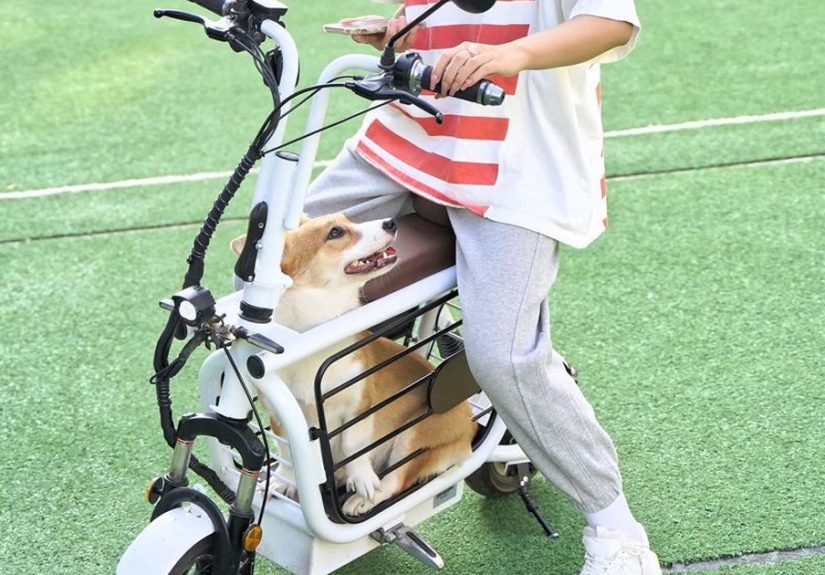
Enter the Mopeta compact, scooter-like pet-friendly e-bike that was introduced in Japan as a way to help people travel with their dogs
without needing a car. Think of it as an urban mobility mashup: part e-bike, part e-moped, and part “yes, my dog rides in the middle like royalty.”
The name is basically a wink: moped + pet = Mopet. Subtle? Not even a little. Effective? Surprisingly, yes.
What Is a Mopet, Exactly?
The Mopet was reported as a Japan-developed concept shared by a Hokkaido-based team (often described as Rest Logic) and promoted through crowdfunding,
earning attention for one very specific feature: a built-in pet compartment positioned low and centered in the frame.
That placement matters because it keeps the load stableyour dog isn’t perched high on handlebars like a wobbly hood ornament.
Specs vary slightly across different reports and versions, but the core idea stays consistent: it’s foldable, designed for short-to-medium commutes,
and built around a secure “ride-along” space for small pets. On the Mopet product listing, the storage/pet space is described at roughly
50 cm long × 20 cm wide × 37 cm high (about 19.7 × 7.9 × 14.6 inches), which is roomy for many small dogs and some compact medium breeds
(but not your neighbor’s Labrador who thinks he’s a lapdog).
Key Features That Make It Pet-Friendly
- Centered pet compartment: A low, middle “cabin” that’s easier to balance than a front basket.
- Secure latch/closure: Designed to function like a carrier so pets can ride safely without jumping out mid-squirrel-sighting.
- Foldable frame: Built to shrink for storage or trunk transportuseful in cities where “parking” is often a creative writing exercise.
- Road-ready hardware: Reports describe features like lights, signals, horn, mirror, and plate mounting to meet local rules in Japan.
How Fast Is It? (And Why That Matters)
Depending on the version, reported top speed is around 34–37 km/h (roughly 21–23 mph). That’s brisk for neighborhood travelespecially with
a passenger whose seatbelt is basically “trust me, I’m chill.” It’s also a key reason Mopet often gets described as a hybrid between an e-bike and a moped:
it lives in that micromobility gray zone where local rules determine whether it’s treated like a bicycle or like a small motor vehicle.
Why This Makes Sense in Japan (Without Turning Into a Stereotype)
Japan’s cities are dense, parking is limited, and many people rely on compact transportationbikes, trains, walking, and small vehicles designed for tight spaces.
At the same time, pet ownership is huge, and “getting the dog somewhere fun” can become a whole logistical mission if you don’t have a car.
The Mopet’s pitch is refreshingly practical: if your dog can’t comfortably walk long distances (because they’re older, recovering, small, or it’s scorching out),
you can ride together to a greener area and then let the dog walk where it’s comfortable. That’s not just cuteit’s a mobility solution that recognizes real-life limits:
human time, dog stamina, weather, and urban geography.
How Mopet Compares to Typical U.S. Pet-and-Bike Setups
In the U.S., riding with pets usually looks like one of these options:
- Handlebar or rear baskets: Good for very small dogs, but stability depends on basket design and proper restraints.
- Bike trailers: Great for larger dogs or older dogs, but longer overall length can be awkward in tight city navigation.
- Cargo bikes: Extremely capable, but often expensive and bulky for apartment storage.
- DIY solutions: Sometimes creative, sometimes terrifying. (If your “pet carrier” involves bungee cords and optimism, please reconsider.)
Mopet’s approach is basically: “What if the pet space was built-in from day one?” That integration is the whole point. You’re not adding an accessory;
you’re choosing a vehicle designed around the passengeryour dog.
Where Mopet Shines
- Stability: A centered compartment is easier to manage than a high basket.
- Convenience: One compact device instead of bike + trailer + storage headache.
- Short errands: Grocery runs, park trips, quick meetupsespecially when driving feels like overkill.
Where You’ll Want to Be Realistic
- Dog size limits: This is not a “bring your Great Dane” situation.
- Road comfort: Smaller wheels and compact frames can feel bumpier on rough pavement.
- Rules vary: If it’s treated as a moped where you live, you may need registration, helmet compliance, or roadway restrictions.
Safety First: How to Make Pet Micromobility Actually Safe
Cute is optional. Safe is not. If you’re inspired by the Mopet concept (or you’re looking at any pet-carrying e-bike setup), focus on four safety basics:
fit, restraint, ventilation, and riding style.
1) Fit: The “Can My Dog Turn Around?” Test
A safe carrier should be large enough for your pet to sit, lie down, and turn aroundwithout being squeezed into a furry game of Tetris.
If your dog can’t settle comfortably, the ride becomes stressful fast. Stress leads to wiggling, and wiggling on a moving bike is… physics with consequences.
2) Restraint: Harnesses Beat “Good Boy Promises”
Even calm dogs can panic at sudden noise, a fast-approaching skateboard, or a surprise squirrel cameo.
Use a setup that keeps your dog from jumping out or shifting dangerously. The best designs include attachment points for a harness,
plus a secure closure that prevents accidental escapes.
3) Ventilation and Temperature: Heat Is the Sneaky Villain
The pet compartment should have good airflow. Also, remember that pavement and city heat can build up quickly.
If it’s hot enough that you want to complain, your dog probably wants to file a formal protest.
Choose cooler times of day, keep trips short, and watch for signs of discomfort.
4) Riding Style: Smooth Is the New Fast
When you ride with a pet, your goal is not “fast commute energy.” It’s “gentle roller-coaster designed by a person who likes you.”
Brake early, accelerate gradually, take wide turns, and avoid rough routes. Your dog can’t brace the way a human passenger can,
so your smoothness is their seatbelt.
Battery and Charging: The Unsexy Part That Matters a Lot
E-bikes and e-scooters are amazing until someone uses a questionable charger, stores a battery poorly, or modifies components in ways the manufacturer never intended.
For any micromobility deviceespecially one you plan to use oftenbattery safety is part of the purchase decision, not an afterthought.
Smart Charging Habits
- Use the manufacturer-approved charger and avoid off-brand replacements unless they’re explicitly compatible.
- Don’t charge near flammable clutter (yes, that includes laundry piles and the “box of mysteries” in your hallway).
- Inspect batteries and cords for damage, swelling, or unusual heat.
- Prefer certified systems when possibleindependent testing standards exist specifically to reduce fire and shock risks.
If you’re shopping for an e-bike or e-scooter in the U.S., look for strong safety signals:
reputable brands, clear documentation, and recognized certification for electrical systems and batteries when available.
Legal Reality Check: E-Bike vs. Moped Depends on Where You Live
In the U.S., many jurisdictions use a three-class e-bike framework (Class 1, 2, and 3), generally tied to whether the bike has operable pedals,
how the motor engages, and the maximum assisted speed. The key detail: many “e-bike” definitions assume fully operable pedals and speed limits.
Because the Mopet concept is often described as an electric moped-style ride with speeds around the low-20s mph,
it may fall outside typical “low-speed e-bike” categories in some placesespecially if it’s throttle-driven or lacks traditional bicycle pedals.
Translation: before you try to import the idea into your life, check your local rules.
Why Mopet Matters (Even If You Never Buy One)
The Mopet is interesting not just because it’s adorable, but because it signals a shift in how micromobility is being designed.
For years, e-bikes have focused on commuters, fitness riders, and cargo-haulers. Mopet says: “Cool. What about people who commute with a dog?”
That’s bigger than a niche. It’s design empathy. And it points toward a future where personal transportation isn’t just about moving a person from A to B,
but moving a lifeerrands, routines, pets, and all.
Conclusion
The Mopet is a clever, pet-centered take on micromobility: a foldable, compact ride that builds the pet carrier into the vehicle itself.
Whether it ultimately becomes mainstream or remains a delightful oddity, it highlights a real needsafe, practical transportation for pet owners who don’t want (or can’t afford)
to rely on cars for every small trip.
If you’re inspired by the Mopet idea, take the lesson with you: prioritize stability, secure restraint, airflow, smooth riding, and battery safety.
Pet-friendly transportation can be easierbut it should never be reckless. The goal is a happier commute, not a dramatic story titled “We Learned This the Hard Way.”
of Real-World “Mopet-Style” Experiences (What Riding With a Pet Is Actually Like)
The best way to understand the Mopet concept is to imagine the small moments it’s built forthe everyday trips that feel too short to justify a car,
but too annoying to do on foot when your dog hits “I’m done” after two blocks. In a typical Mopet-style scenario, the ride starts with a routine:
harness on, quick gear check, and a “wait” command while you open the compartment. Most dogs don’t fall in love with a carrier instantly,
so owners often ease into it the same way you’d introduce a crateshort sessions, treats, calm praise, and a few “practice sits” before the first real trip.
Once your dog accepts the space as a safe spot, the experience becomes surprisingly smooth. Instead of juggling a leash, a tote bag, and your sanity,
you roll out at a steady pace. People who commute with pets often describe the biggest difference as mental: you’re not rushing,
because you’re hyper-aware of braking, bumps, and turns. You find yourself choosing routes with gentler pavement and fewer surprise potholes.
The ride becomes more like a quiet neighborhood cruise than a “beat the traffic” sprint.
Errands change, too. A quick coffee run becomes a two-for-one adventure: you get your latte, your dog gets attention from strangers who suddenly remember how to smile.
Park trips feel easier because you can go farther without exhausting a small dogespecially in summer when hot sidewalks can be uncomfortable.
For older dogs, the best part is that you can deliver them to the fun part of the outing (grass, shade, sniffing) without asking them to “power through” the boring part
(long, repetitive sidewalks with a thousand intersections).
Of course, it’s not all cinematic. Dogs shift their weight. They reposition. They sometimes do that dramatic “I’m not moving” flop when you’re trying to get them situated.
Riders learn quickly that a secure harness attachment is non-negotiable, and that smooth riding isn’t just politeit’s necessary.
You also start paying attention to weather and timing in a new way. A sunny day might feel great for you, but inside a pet compartment,
you’re thinking: “Is there enough airflow? Are we stopping in shade? Do we have water?”
The biggest “win” people report is freedom. You’re not planning your day around a car. You’re not skipping the dog park because parking is a nightmare.
You’re not turning every outing into a complicated negotiation with your schedule. A Mopet-style ride makes pet-friendly transportation feel normal
like your dog is part of your day because, well… they are.





 Close
Close