
Table of Contents >> Show >> Hide
- Yuri Gagarin: The Hero the Space Race Needed
- The Flight That Didn’t Come Home
- Why It Became a “Mysterious Death” Instead of a Tragic Accident
- The Main Theories: What Could Have Happened in Those Final Minutes
- 1) The “Foreign Object” and Sudden Maneuver Theory
- 2) Wake Turbulence: The “Another Jet Was Too Close” Theory
- 3) Hypoxia and the “Open Vent / Rapid Descent” Hypothesis
- 4) Human Factors: Weather Briefings, Timing, and “Tiny Errors That Become Big”
- 5) The Conspiracy Buffet (And Why It’s Mostly Junk Food)
- What “Mysterious” Really Means in Aviation
- So… What’s the Most Likely Answer?
- Why This Story Still Matters
- Experiences: How People Connect With Gagarin’s Mystery Today
- Step into the era through museums and exhibits
- Read the competing theories like a detective, not a fan
- Watch (or listen to) the story with an engineering mindset
- Try a flight-sim “instrument weather” challenge
- Join (or create) an anniversary-style reflection
- Write the ending that history doesn’t give you (responsibly)
Yuri Gagarin didn’t just go to space firsthe went first in a way that permanently changed what “possible” meant. One orbit, one grin, one “Let’s go!” and suddenly Earth felt smaller. Then, just seven years later, he was gone. Not in a rocket explosion. Not in some cinematic Cold War showdown. In a routine training flight that ended in a crash and a question mark.
The result is one of history’s strangest footnotes: the world’s most famous pilotarguably the most famous human on Earth for a timedied in an accident so wrapped in secrecy and speculation that it still feels like a missing chapter. If you’ve ever wondered why people call it “mysterious,” it’s not because the basic facts are unknowable. It’s because the why got stuck behind locked doors, half-statements, and decades of rumor.
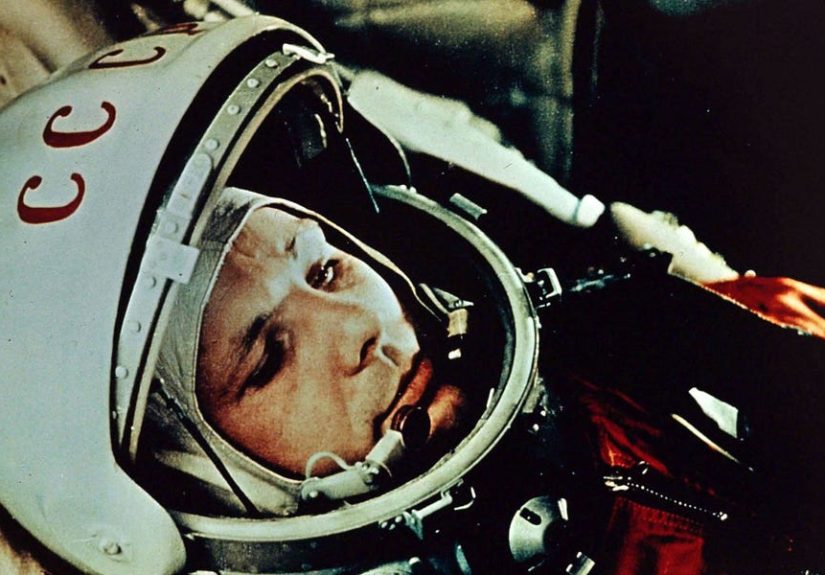
Yuri Gagarin: The Hero the Space Race Needed
By April 1961, the space race was less a race and more a global staring contest, and the Soviet Union blinked lastin a good way. Vostok 1 carried Gagarin around Earth and made him an instant symbol: of technology, bravery, and national prestige. His celebrity was so intense it became a safety issue. The Soviets wanted him alive, smiling, and available for parades, not rolling dice in risky missions.
That’s part of what makes the story emotionally complicated. Gagarin wasn’t simply a “space guy.” He was a working pilot and officer, and he wanted to keep flying. Over time, he returned to training, worked with other cosmonauts, and pushed to stay involved in the next era of Soviet spaceflight. The public saw a legend. The people around him saw a colleague who still wanted to do the job.
The Flight That Didn’t Come Home
On March 27, 1968, Gagarin and his flight instructor, Vladimir Seryogin, took off in a MiG-15UTI, a two-seat training jet. This was not meant to be dramatic. It was meant to be ordinary. The weather, however, had other planscloud layers, poor visibility, the kind of conditions that turn “routine” into “high workload” fast.
The jet crashed, killing both men. Gagarin was only 34. The Soviet Union mourned. The world mourned. But almost immediately, the story split into two parallel timelines: the public timeline, where the explanation was vague, and the private timeline, where investigations, reports, and internal debates piled up behind closed doors.
Why It Became a “Mysterious Death” Instead of a Tragic Accident
Aviation accidents are often messy, but they’re usually not mystical. You gather data, interview witnesses, analyze wreckage, and eventually land on a cause (or a short list of highly probable causes). What made Gagarin’s case different was the information climate. The Soviet system wasn’t built for public transparencyespecially not when the victim was a living symbol of national pride.
That gap between “what likely happened” and “what the public was told” became a rumor factory. In the decades that followed, theories multiplied: some technical, some political, some wildly imaginative. The more the official story sounded like a shrug, the more people treated the crash like a riddle that must have a twist ending.
And here’s the uncomfortable truth: sometimes a mystery isn’t a secret plot. Sometimes it’s what you get when high stakes, imperfect communication, and limited public evidence collide at high speed.
The Main Theories: What Could Have Happened in Those Final Minutes
No credible account suggests a single, cartoonish “gotcha.” What you see instead is a menu of plausible explanationseach shaped by weather, air traffic control, aircraft behavior, and the brutal fact that jets can run out of altitude faster than humans can run out of opinions.
1) The “Foreign Object” and Sudden Maneuver Theory
One long-standing official-style explanation is that the crew made a sharp maneuver to avoid something in the air: a bird, debris, or a weather balloon. In bad visibility, you don’t get much warning. You see something, you react, and your priority is not eleganceit’s survival.
The catch is that an avoidance maneuver can create a chain reaction: sudden attitude change, loss of stable flight, spatial disorientation in cloud, and entry into a spin. In a training jet, recovery is possibleif you have enough altitude and you know exactly what the aircraft is doing. If you’re low, in cloud, and surprised? The margin shrinks to almost nothing.
This theory has a “sounds reasonable” simplicity, which is both its strength and its weakness. It explains the crash without villains, but it can also sound like the kind of explanation you give when you can’t (or won’t) provide details.
2) Wake Turbulence: The “Another Jet Was Too Close” Theory
Former cosmonaut Alexei Leonovwho was involved in investigating and spent years trying to clarify the eventhas argued that another aircraft, specifically a faster jet, may have passed dangerously close and disturbed the MiG-15UTI’s airflow. The idea is not science fiction. Wake turbulence is real, and it can be violent. A larger or faster aircraft can leave invisible spirals of air that flip or destabilize a smaller aircraft, especially at close range.
In this version, the tragedy isn’t that Gagarin made a mistake. It’s that someone else’s flight path, altitude, or procedure created a problem that appeared instantly and gave the crew almost no time to respond. Imagine driving in thick fog and suddenly hitting black ice you didn’t create. You can do everything “right” and still lose control.
The reason this theory has staying power is that it also fits the era’s secrecy. If another aircraft was somewhere it shouldn’t have been, or operating in a way that violated procedure, that’s exactly the kind of detail a system might prefer to keep quietespecially when the victim is the planet’s most famous cosmonaut.
3) Hypoxia and the “Open Vent / Rapid Descent” Hypothesis
Another explanation focuses on physiology: oxygen deprivation (hypoxia) after a cockpit issue, followed by a rapid descent. Some reporting has suggested that a vent might have been left open or malfunctioned, leading the crew to descend quicklypossibly too quickly.
Hypoxia is especially nasty because it doesn’t always feel like an emergency at first. It can blur judgment and reaction time, which is the last thing you want while flying in cloud where you’re relying heavily on instruments. If the crew was compromised and then entered an unusual attitude, their ability to recover could have been severely reduced.
This theory appeals to aviation minds because it treats the crash as a cascade: small technical issue → urgent corrective action → physiological impairment → loss of control. No conspiracy neededjust bad luck in a high-performance environment.
4) Human Factors: Weather Briefings, Timing, and “Tiny Errors That Become Big”
Aviation safety often comes down to “Swiss cheese”: layers of protection with small holes, and disaster happens when the holes line up. Bad weather information, confusing cloud layers, rushed decisions, a crowded training zone, a late or incomplete briefingnone of these alone has to be fatal. But combine them, and you can end up with a scenario where the crew believes they have altitude or visibility they don’t actually have.
In other words, the “mystery” could be less about a single dramatic cause and more about a system where conditions were quietly setting a trap. That’s one reason professional investigators tend to distrust neat, one-sentence explanations. Real accidents are usually multi-factor stories.
5) The Conspiracy Buffet (And Why It’s Mostly Junk Food)
Where there’s secrecy, conspiracy theories show up like they got an invitation. People have suggested sabotage, political elimination, drunkenness, and even UFOs. Most of these ideas persist not because the evidence is strong, but because the narrative is irresistible: a hero, a cover-up, and a hidden truth.
But here’s the thing: a conspiracy is not an explanationit’s a claim that must beat the simpler alternative. And the simpler alternative is that aviation + weather + procedure + human limits can produce tragedy without anyone pulling a string in the shadows. If you want an honest conclusion, you don’t start with “Who did it?” You start with “What conditions made this crash possible?”
What “Mysterious” Really Means in Aviation
In crash investigations, “mysterious” often translates to: insufficient publicly verifiable data. That can happen when records are classified, reports aren’t released, or the information that does surface arrives decades later in partial or conflicting forms.
It also happens when an accident occurs in conditions that erase the most helpful clues: clouds, fast-moving aircraft, limited radar data, and no modern flight data recorders like we expect today. The human brain craves a clean storyline. But sometimes the cleanest storyline is simply that the sky can be unforgiving, and bureaucracies can be stubborn.
So… What’s the Most Likely Answer?
Based on the most widely reported credible explanations, the strongest “professional” picture looks like this: the crew encountered unexpected conditions (whether a foreign object, turbulent air from another aircraft, or a cockpit-related issue), made a rapid maneuver or descent in poor weather, and entered a flight regimelike a spinthat became unrecoverable due to altitude, visibility, or physiological impairment.
In other words: not one magic bullet, but a tight chain of events where each link shortened the time available to fix the next one. That’s a frustrating answer if you want a single villain. It’s also exactly how many real-world accidents work.
Why This Story Still Matters
Gagarin’s death sits at the intersection of legend and paperwork. It’s about a human being who became a symboland the cost of being a symbol in a system that preferred control over clarity. It’s also a reminder that exploration doesn’t only happen in spacecraft. It happens in training flights, test programs, maintenance hangars, and weather briefings. The boring parts are often the parts that keep people alive.
And maybe that’s the final irony: the first man in space survived the part everyone feared most, then died doing the work that most people never think about. That doesn’t make the story less meaningful. If anything, it makes it more human.
Experiences: How People Connect With Gagarin’s Mystery Today
You don’t need a time machineor a Cold War passport stampto feel the pull of this story. People “experience” the mystery of Gagarin’s death in surprisingly modern ways: through museums, anniversary events, archival reading, and even flight simulation. The trick is to treat it like a real investigation, not a spooky campfire tale.
Step into the era through museums and exhibits
Start with institutions that treat space history like history, not gossip. The Smithsonian’s National Air and Space Museum (and its online stories) gives context on why early human spaceflight mattered, how hero-making works, and how the U.S. and USSR watched each other obsessively. When you’re looking at artifactscapsules, suits, medals, photosyou realize something important: legends were built from hardware, training, and long days of routine work. That’s the same “routine” world Gagarin returned to in 1968.
Read the competing theories like a detective, not a fan
A fun exercise is to read two or three credible summaries and compare how they handle uncertainty. One account emphasizes a foreign object and a sudden maneuver; another stresses wake turbulence from another jet; another leans into cockpit/oxygen explanations. As you read, highlight what is presented as evidence versus what is presented as interpretation. If a claim is dramatic but thinly supported, label it “great story, weak spine.” That habit is basically media literacy with jet engines.
Watch (or listen to) the story with an engineering mindset
Documentaries and podcasts about the space race often focus on the glory momentslaunches, speeches, flags, parades. Seek out episodes that slow down and talk about training and aviation safety. The most interesting question isn’t “Was he murdered?” It’s “How does a highly trained crew lose control in a plane that’s supposed to be safe for training?” Once you frame it that way, you’ll start noticing how often accidents are described as cascades: a weather decision, an airspace decision, a human decision, then a point where the math of altitude runs out.
Try a flight-sim “instrument weather” challenge
If you have access to a flight simulator (even an entry-level setup), try flying a basic aircraft in cloudy conditions using instruments. You’ll learn quickly why pilots respect instrument training and why spatial disorientation is such a serious risk. You don’t need to recreate Gagarin’s flightplease don’t turn tragedy into a stunt. The point is empathy: feeling how workload rises when the horizon disappears and you must trust needles and numbers. After ten minutes of “Where am I pointing?” you’ll understand why professionals treat weather as a full participant in every flight.
Join (or create) an anniversary-style reflection
Around April 12often celebrated as “Yuri’s Night” in many placescommunities host space-themed gatherings, talks, and stargazing events. Even when the vibe is celebratory, you can add a reflective layer: discuss how exploration includes risk, how nations build heroes, and how transparency affects public trust. A classroom, club, or online community can run a mini “case file” project: build a timeline, list the top three credible theories, and write what additional evidence would be needed to reduce uncertainty. That’s a powerful way to turn a mystery into learning.
Write the ending that history doesn’t give you (responsibly)
One last experience is creative but grounded: write two short conclusions to the story. In the first, assume the foreign-object maneuver explanation is correct and describe how a chain of small factors can become fatal. In the second, assume the wake turbulence / airspace-conflict explanation is correct and describe how organizational systems can fail quietly. Keep both versions respectful and realisticno cartoon villains. You’ll discover something weirdly hopeful: even when we can’t know every detail, we can still learn how to design safer systems.
That may be the best “experience” this story offers. Not thrills. Not scandal. Just the sober, fascinating reminder that history is made by humans operating complex machines in imperfect systemssometimes brilliantly, sometimes tragicallyand that the most honest mysteries don’t ask for myths. They ask for better questions.







 Close
Close