
Table of Contents >> Show >> Hide
- Why medicine creates unusually strong friendships
- Character is not “soft”it’s clinical
- Success in medicine is bigger than grades and titles
- The friendship advantage: how good friends make better clinicians
- Communication, handoffs, and teamwork: where character becomes visible
- Mentorship: the bridge between friendship and professional growth
- Well-being isn’t optional: protecting the people who protect patients
- A story you’ve seen (even if you haven’t lived it yet)
- Practical takeaways: build friendship, build success, build character
- Experiences from the floor: of real-life moments that prove friendship matters
- Conclusion: the best doctors are built in community
Medicine has a funny way of turning strangers into teammates… and teammates into the kind of friends who can read your face from across a nurses’ station and know you’re one coffee away from becoming a cautionary tale.
It’s not just the long hours or the shared vocabulary of “STAT” and “where did my pen go?” It’s the mission. When your daily work is peopletheir fears, their families, their fragile trustyour character becomes part of your clinical toolkit.
And when you find a friend who values that mission the same way you do? That’s when medicine stops feeling like a solo marathon and starts feeling like a relay race where someone actually shows up with water.
This is the story (and practical playbook) of how friendships form in medicine, how real success is built beyond test scores, and why characterintegrity, compassion, humility, couragemay be the most “evidence-based” advantage you can bring to a career in health care.
Why medicine creates unusually strong friendships
In most careers, bonding happens over meetings that could’ve been an email. In medicine, bonding happens over moments that can’t be un-seen and can’t be un-felt:
the first time you deliver bad news; the first time you catch a mistake before it reaches a patient; the first time you realize you’re not just learning medicineyou’re being reshaped by it.
There’s a reason friendships in medical school and residency can feel “compressed,” like five years of life experience packed into five weeks. The work demands trust quickly.
You learn who will answer your question without making you feel small. Who will double-check your dosing when you’re sleep-deprived. Who will own an error instead of hiding it.
Friendship forms when two people repeatedly choose the same value: patient first, ego last.
Shared pressure reveals shared priorities
Under pressure, people don’t become someone newthey become more like themselves. In clinical training, pressure is practically a curriculum.
That’s why medicine has a unique ability to surface character fast. Your best friends in medicine are often the ones whose default settings match yours:
do the right thing, speak up early, stay kind, keep learning.
Character is not “soft”it’s clinical
Medicine loves measurable things: lab values, vitals, imaging, scores. But anyone who has practiced for a week knows the truth:
patients don’t just experience your knowledgethey experience your character.
The way you listen. The way you explain. The way you own uncertainty without surrendering confidence.
Integrity: the quiet superpower
Integrity in medicine looks unglamorous. It’s documenting accurately. It’s admitting, “I don’t know, but I’ll find out.”
It’s resisting shortcuts that save time now but cost trust later. It’s recognizing that your reputation is not built on the cases you post online,
but on the habits you practice when nobody is watching.
Humility: the skill that keeps patients safe
Humility isn’t thinking less of yourselfit’s thinking of yourself less.
In a complex system, humility is the difference between “I’m sure I’m right” and “Let’s verify.”
That second sentence prevents errors. It also makes you a better colleagueand, not coincidentally, a better friend.
Compassion: the multiplier
Compassion doesn’t mean absorbing every emotion until you burn out. It means communicating care in a way patients can feel.
In practice, it’s small and specific:
sitting down for a minute; using plain language; checking understanding; noticing the family member who hasn’t spoken all day.
It’s the difference between a patient who “complies” and a patient who partners with you.
Success in medicine is bigger than grades and titles
If you’ve ever watched an excellent physician work, you know “success” isn’t a GPA.
It’s the ability to deliver high-quality care while building trust, coordinating teams, and staying grounded when the day gets chaotic.
The top performers are rarely the loudest. They’re often the ones who are consistent, coachable, and calm.
Competence is a foundation; professionalism is the structure
Clinical competence mattersobviously. But the structure that keeps competence useful is professionalism:
reliability, ethical judgment, respect, responsiveness to feedback, and a commitment to lifelong learning.
These traits determine whether your knowledge shows up for patients when it matters most.
Team-based care is the modern reality
Health care is not a one-hero story. It’s a team sport with high stakes.
Nurses, pharmacists, therapists, case managers, techs, attendings, residentseveryone holds a piece of safety.
In this environment, success means you can collaborate, communicate clearly, and invite others to speak up.
Your character sets the tone for the room.
The friendship advantage: how good friends make better clinicians
Let’s say it plainly: friendship is not a luxury in medicine. It’s a performance and well-being strategy.
A trusted friend in training can function like an emotional airbagreducing the impact of stress so you can keep driving forward.
Friends protect your blind spots
The best medical friends do three things:
(1) they notice when you’re not okay; (2) they tell you the truth kindly; and (3) they help you correct course.
They’ll remind you to eat. They’ll challenge your thinking on a diagnosis. They’ll say,
“You’re spiralinglet’s walk through the facts.”
That’s not just friendship; that’s clinical safety.
Friends create psychological safety
The ability to ask questions earlywithout fear of humiliationis one of the strongest predictors of learning and safer performance in teams.
Good friends model that behavior. They normalize curiosity. They make it okay to say,
“I’m not sure,” which is often the first step toward getting sure.
Friends keep your values intact
Clinical culture can drift. Over time, people can become numb, cynical, or performative. The right friends act like guardrails.
When you’re tempted to cut a corner or talk about a patient like a problem instead of a person, a good friend pulls you back to who you want to be.
Not with a lecturesometimes just with a look that says, “That’s not us.”
Communication, handoffs, and teamwork: where character becomes visible
If you want to see character in action, don’t look at someone’s white coat speech. Look at a handoff.
Look at how they communicate critical information. Look at whether they close the loop, verify understanding, and invite questions.
This is where professionalism stops being a concept and becomes a measurable behavior.
Why handoffs are high-risk moments
Every transition of care is an opportunity for information to get lost. That loss can be minor (“the patient likes ice chips”)
or major (“the patient is allergic to that medication”).
Safe teams treat handoffs like clinical procedures: structured, focused, and confirmed.
Structured communication tools helpcharacter makes them work
Many patient-safety frameworks emphasize structured communication (think brief, standardized formats) and teamwork behaviors
like call-outs, check-backs, and mutual support. But here’s the catch:
tools don’t fix culture unless people have the character to use them consistently.
- Respect makes you listen fully.
- Courage makes you speak up when something feels off.
- Humility makes you accept feedback without defensiveness.
- Integrity makes you report accuratelyeven when it’s inconvenient.
Mentorship: the bridge between friendship and professional growth
In medicine, mentorship is often described as career guidance, but the best mentorship is character formation.
Mentors teach you how to think, how to lead, and how to stay human in a system that can treat humans like productivity units.
What great mentors actually do
Great mentors don’t clone you; they clarify you.
They help you identify strengths you didn’t recognize and habits you didn’t realize were holding you back.
They teach communication: how to give feedback, how to receive it, and how to deliver hard truths with dignity.
Friendship + mentorship = durable success
Some of the most powerful relationships in medicine are “hybrids”:
peers who become friends, friends who become mentors, mentors who become lifelong advocates.
The common thread is trustbuilt through repeated evidence that someone is for your growth, not your status.
Well-being isn’t optional: protecting the people who protect patients
Burnout isn’t a personal moral failure; it’s often a systems problem with personal consequences.
Long hours, moral distress, inefficient workflows, and chronic overload can grind even the most passionate clinicians down.
The risk isn’t just emotional exhaustionit’s reduced empathy, impaired learning, and compromised performance.
Friendship as a “protective factor” (without turning into therapy)
A good medical friendship doesn’t require you to process every emotion at full volume.
It’s often simplerand more sustainable:
someone who checks in, shares the load, and reminds you that you’re not alone.
That can be the difference between “I can’t do this” and “I can do this today.”
Character helps you ask for help
One of the hardest skills in medicine is admitting when you need supportclinical or personal.
Paradoxically, that admission often requires strength. The clinicians who last are not the ones who never struggle;
they’re the ones who reach out early and build routines that keep them steady.
A story you’ve seen (even if you haven’t lived it yet)
Imagine two traineeslet’s call them Maya and Jordan. They meet on day one of rotations.
They are different on paper: different backgrounds, different study styles, different vibes.
But they share the same instinct: do right by the patient, even when it’s hard.
In their first month, Maya catches a near-miss medication order because she’s learned to double-check.
Jordan doesn’t laugh it off or act annoyed. Jordan says, “Nice catch,” and helps communicate the correction clearly.
Later, Jordan makes a mistake in documentation. Maya doesn’t shame them.
Maya says, “Let’s fix it now,” and then adds, “And let’s figure out what tripped you up so it doesn’t happen again.”
Their friendship grows through small, repeatable choices:
asking questions early, giving feedback kindly, owning errors, respecting nurses, staying curious, staying decent.
Over time, success followsnot because they’re perfect, but because they’re consistent.
They become the kind of clinicians people trust under pressure.
And they become the kind of friends who make a hard career feel possible.
The punchline? Their “secret advantage” isn’t raw intelligence. It’s characterpracticed dailyand friendship that reinforces it.
Practical takeaways: build friendship, build success, build character
1) Choose values over vibes (then let vibes catch up)
Friendship in medicine isn’t just about who you likeit’s about who you trust.
Look for people who are honest, consistent, respectful, and growth-oriented.
Humor helps. Kindness lasts.
2) Make micro-commitments and keep them
The fastest way to earn trust is reliability.
Show up when you say you will. Follow through on tasks. Reply when it matters.
In clinical teams, reliability is love in action.
3) Practice “brave humility”
Ask the question. Clarify the order. Confirm the plan.
You’re not proving you’re smart; you’re proving you’re safe.
4) Give feedback like you want to receive it
Be direct, be kind, be specific. Focus on behaviors, not identity.
Good feedback is a gift that keeps patients safer and colleagues stronger.
5) Protect your humanity on purpose
Eat real food. Sleep when you can. Move your body.
Make room for relationships outside medicine.
Your character shines brighter when your nervous system isn’t running on fumes.
Experiences from the floor: of real-life moments that prove friendship matters
If you spend enough time in hospitals or clinics, you collect moments that never make it into textbookslittle scenes where friendship and character do the heavy lifting.
Like the night shift when the ED is full, the call light feels like a car alarm nobody can find, and your brain starts buffering like it’s on dial-up.
A friend doesn’t fix the chaos, but they keep you from drowning in it. They slide a snack onto your workstation without a speech.
They take the next consult so you can finish yours. They say, “I’ve got you,” and you believe them.
Or the moment you realize you missed something smalla lab trend you should have noticed, a symptom you didn’t ask about.
The wrong kind of teammate turns it into shame. The right kind of friend turns it into learning.
“Okay,” they say, “let’s review it together.” There’s no theatrics, no public embarrassmentjust a steady commitment to getting better.
That’s character in a practical form: accountability without cruelty.
You also see friendship in how people talk about patients when the door is closed.
It’s easy to let frustration become a personality. But a good friend in medicine can interrupt that drift.
Not with a grand moral monologuesometimes with one sentence: “Hey, that’s somebody’s mom.”
That line is a reset button. It pulls the room back to the reason everyone showed up in the first place.
Then there are the winsthe quiet ones. The successful handoff that prevents a complication.
The nurse who speaks up about a subtle change and the resident who responds with respect instead of ego.
The attending who models calm, thanks the team, and makes it safe to ask questions.
In those moments, you can almost watch a culture of safety forming in real time, like a muscle getting stronger.
Friendship fuels that culture because it normalizes communication: checking in, double-checking, closing loops, and admitting uncertainty.
And sometimes, friendship shows up after the hard stuff.
After a code. After a loss. After you walk out of a room and realize your hands are shaking.
The best friends don’t demand you “be tough.” They give you space to be human.
They might say nothing at alljust walk with you to the stairwell, breathe with you for a minute, and then return to work with you.
Medicine asks for strength, but friendship reminds you that strength doesn’t mean isolation.
Over a career, those moments add up. They shape how you practice, how you lead, and how you treat people when you’re tired.
That’s why friendship in medicine isn’t a side story. It’s part of the main plot.
Conclusion: the best doctors are built in community
Medicine will teach you anatomy, pharmacology, diagnostics, and treatment algorithms. But it will also teach you who you are under stress.
If you’re luckyand intentionalyou’ll find friends who make you better: sharper, kinder, braver, more grounded.
Success in medicine isn’t just achievement. It’s trust earned over time.
It’s patients feeling heard. Teams feeling respected. Colleagues feeling safe to speak up.
And at the center of it all is charactermade visible through everyday choicesand strengthened through relationships that keep you aligned with your best self.
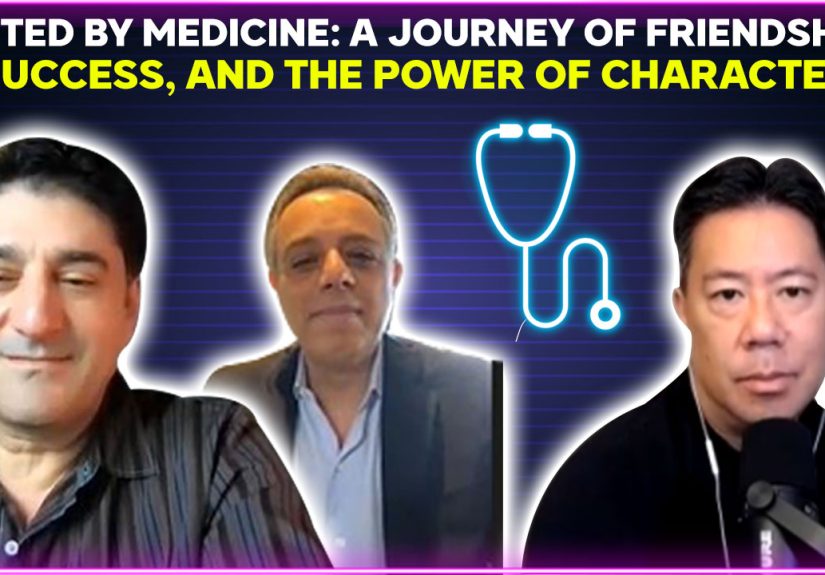
United by medicine, friendship becomes more than companionship. It becomes a professional advantage, a patient-safety asset, and a lifelong source of meaning.




 Close
Close