
Table of Contents >> Show >> Hide
- Why Make-Ahead Scrambled Eggs Usually Turn Weird
- The Best Make-Ahead Method: Sheet-Pan “Scrambled” Eggs
- Flavor Variations That Don’t Turn Sad on Day 3
- How to Store Make-Ahead Scrambled Eggs (So They Stay Good)
- How to Reheat Scrambled Eggs Without Turning Them Into Packing Peanuts
- Busy-Cook Meal Prep Ideas Using Make-Ahead Scrambled Eggs
- Troubleshooting: Common Problems and Fixes
- Food Safety Notes for Make-Ahead Eggs
- FAQ: Make-Ahead Scrambled Eggs Recipe for Busy Cooks
- Extra : The “Real Life” Side of Make-Ahead Eggs
- Conclusion
Mornings have a talent for turning into a reality show called “Where Did My Time Go?” You wake up with good intentions,
then suddenly you’re answering messages, hunting for matching socks, and negotiating with a coffee maker that’s acting like it needs
emotional support.
That’s where make-ahead scrambled eggs earn their cape. They’re fast, filling, protein-packed, and endlessly flexible:
breakfast sandwiches, burritos, rice bowls, even “I’m eating this over tortilla chips and calling it brunch.”
The trick is making eggs that still taste good after refrigeration (or freezing) and reheatingbecause nobody is meal-prepping on Sunday
just to eat rubber on Tuesday.
Why Make-Ahead Scrambled Eggs Usually Turn Weird
Eggs are basically a gentle science experiment you can eat with hot sauce. When they cook, egg proteins tighten and set.
When they overcookespecially during reheatingthose proteins squeeze out moisture. That’s why leftovers can go from fluffy to dry,
or from creamy to “squeaky.” (If your eggs squeak, they’re trying to escape.)
So the goal is simple: cook them evenly, keep moisture in, and reheat without overdoing it.
The easiest way to win that game is an oven-based method that’s made for batching.
The Best Make-Ahead Method: Sheet-Pan “Scrambled” Eggs
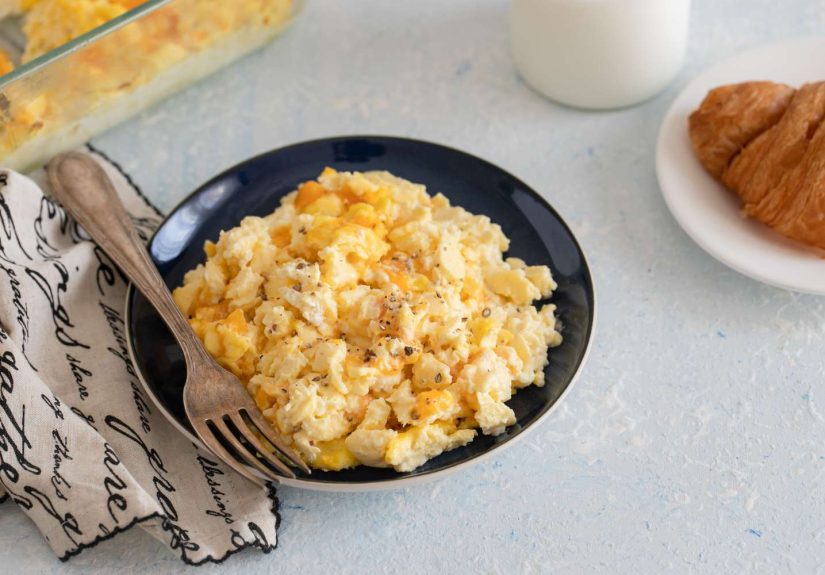
Sheet-pan eggs are the busy-cook cheat code. You whisk, you pour, the oven does the heavy lifting, and you end up with tender egg “slabs”
you can slice, stack, fold, or chop into scramble-like pieces. They reheat more evenly than stovetop curds, which makes them
ideal for meal prep.
Make-Ahead Sheet-Pan Scrambled Eggs (Fluffy, Reheats Well)
Yield: 6 servings | Prep: 10 minutes | Bake: 18–24 minutes
Ingredients
- 12 large eggs
- 1/2 cup cottage cheese (or 1/3 cup milk + 2 tbsp cream cheese)
- 2 tbsp melted butter (or olive oil)
- 3/4 tsp kosher salt
- 1/2 tsp black pepper
- Optional add-ins (choose 1–2): 1 cup shredded cheese, 1/2 cup cooked crumbled bacon/sausage, 1 cup sautéed peppers/onions, chopped chives
Equipment
- Rimmed sheet pan (about 13×18)
- Parchment paper (strongly recommended)
- Large bowl + whisk
- Spatula
Instructions
-
Heat the oven to 325°F. Line a rimmed sheet pan with parchment. Lightly grease the parchment with butter or spray.
(This is not the moment to “see if it sticks.” The pan will win.) -
Whisk smart, not aggressive. In a large bowl, whisk eggs, cottage cheese, melted butter, salt, and pepper until combined.
You want a cohesive mixture, not a foam party. -
Add mix-ins strategically. If using watery vegetables (mushrooms, spinach, tomatoes), sauté first and cool.
Raw wet veg can weep during baking and make the eggs spongy. -
Pour and bake. Pour mixture into the prepared pan. Bake 10 minutes, then gently stir and spread back out.
Bake another 8–14 minutes, until eggs are set with no visible liquid. -
Rest, then portion. Let the eggs rest 5 minutes. Slice into squares for sandwiches, or chop and fluff with a spatula for a
scrambled texture.
Flavor Variations That Don’t Turn Sad on Day 3
Meal prep eggs love bold flavors and low-moisture add-ins. Keep it simple, keep it delicious:
- Southwest: cheddar + sautéed peppers + pinch of cumin; serve with salsa.
- Spinach-Feta: sautéed spinach (squeezed dry) + feta + oregano.
- Breakfast Sandwich Classic: sharp cheddar + chives; stack on an English muffin.
- High-Protein: cottage cheese + diced turkey + a little garlic powder.
- Kid-Friendly: mild cheese + tiny diced ham; skip the pepper, add ketchup diplomacy later.
How to Store Make-Ahead Scrambled Eggs (So They Stay Good)
Cool fast (quality + safety)
Don’t put a blazing-hot slab of eggs into a sealed container and hope for the best. Let the eggs cool briefly, then portion them so they chill faster.
Faster cooling helps texture and reduces the time food spends in the “too-warm” zone.
Refrigerator
- Best containers: shallow, airtight containers (or individual meal prep boxes)
- Storage time: aim to eat within 3–4 days for best quality
- Moisture trick: add a folded paper towel in the container lid area to catch condensation (replace daily)
Freezer (yes, you can)
Eggs can be frozen, but texture is best when you freeze them as part of somethinglike a breakfast burrito or sandwich.
If freezing plain egg portions, wrap tightly to prevent freezer burn.
- How: cool completely → portion → wrap portions in parchment → seal in freezer bags
- Label: date + flavor
- Best use: within 1–2 months for best texture (they can last longer, but quality fades)
How to Reheat Scrambled Eggs Without Turning Them Into Packing Peanuts
Microwave (fastest)
- Place portion on a microwave-safe plate or in a bowl.
- Add 1 teaspoon water or milk per serving (tiny splash, big difference).
- Cover (lid ajar or damp paper towel).
- Heat in 15–20 second bursts, stirring between, until hot.
The cover creates gentle steam, which helps keep eggs tender. The short bursts prevent overcooking the edges while the center begs for help.
Stovetop (best texture)
- Add a small pat of butter to a nonstick skillet over low heat.
- Add eggs plus a splash of water or milk.
- Stir gently until just warmed through.
Think “warm and fluffy,” not “let’s see how fast I can make this sizzle.”
Oven or toaster oven (great for batches)
- Spread eggs in an oven-safe dish.
- Cover with foil.
- Warm at 300°F until hot (time depends on amount; start checking at 8–10 minutes).
Busy-Cook Meal Prep Ideas Using Make-Ahead Scrambled Eggs
Once you have the eggs, breakfast becomes a plug-and-play situation:
- Freezer breakfast burritos: eggs + cheese + beans + salsa; wrap tightly and freeze.
- Egg McHomemade: egg square + cheese + ham on an English muffin; wrap and reheat.
- Protein rice bowl: eggs + leftover rice + avocado + hot sauce (breakfast? lunch? yes).
- Breakfast tacos: eggs + pickled onions + cilantro; done in 5 minutes.
- “Kitchen sink” omelet bowl: eggs + leftover roasted veggies + a sprinkle of whatever cheese you have.
Troubleshooting: Common Problems and Fixes
“My eggs are watery.”
Usually from raw high-water veggies or too much added liquid. Pre-cook vegetables, drain well, and keep milk additions modest.
If using cottage cheese, blend it briefly for a smoother, less weepy texture.
“They’re rubbery after reheating.”
Reheated too long or too hot. Use short microwave bursts, cover for steam, and add a tiny splash of liquid.
Also, don’t bake the sheet pan to death on prep dayeggs should be set, not browned.
“They taste bland.”
Eggs need seasoning and contrast. Salt appropriately, add pepper, and finish with something bright:
salsa, hot sauce, pesto, chimichurri, everything bagel seasoning, or even a squeeze of lemon over a spinach-feta version.
“They stick to the pan.”
Use parchment and grease it. If cooking in a skillet, use enough fat and keep heat moderate.
Eggs are delicate; your pan should act like a supportive friend, not an antagonist.
Food Safety Notes for Make-Ahead Eggs
Make-ahead recipes only feel convenient if they’re also handled safely. The big principles:
cook thoroughly, cool promptly, store cold, and reheat well.
- Cook eggs until set (no visible liquid egg) and use a thermometer if you want certainty.
- Don’t leave cooked eggs out for longrefrigerate promptly after serving or prepping.
- Reheat leftovers thoroughly so they’re steaming hot throughout.
- When in doubt, toss it. Your grocery budget matters, but your stomach’s opinion matters more.
FAQ: Make-Ahead Scrambled Eggs Recipe for Busy Cooks
Can I make scrambled eggs ahead of time and keep them fluffy?
Yesespecially with the sheet-pan method. The keys are gentle cooking, not overbaking, and reheating with steam (cover + short bursts).
Adding a little dairy and fat also helps keep the texture tender.
Is the oven method better than stovetop for meal prep?
For most busy cooks, yes. Stovetop scrambled eggs can be delicious, but they’re easier to overcook in a big batch,
and they can dry out faster on reheat. Sheet-pan eggs portion cleanly and reheat more evenly.
What’s the best way to freeze make-ahead scrambled eggs?
Freeze them inside burritos or sandwiches for the best texture. If freezing plain portions, wrap tightly, remove excess air,
and reheat gently with steam.
Extra : The “Real Life” Side of Make-Ahead Eggs
Make-ahead scrambled eggs aren’t just a recipethey’re a lifestyle adjustment for people whose mornings feel like a timed obstacle course.
If you’ve ever opened the fridge, stared into it, and somehow wasted five full minutes without selecting a single edible item, you already
understand the emotional value of having breakfast ready to go.
The most common experience busy cooks share is that breakfast doesn’t fail because they hate breakfast. Breakfast fails because it competes
with everything else. It competes with school drop-off, commuting, early meetings, walking the dog, answering “quick questions” that turn into
20-minute conversations, and that classic morning surprise: the printer suddenly needs ink like it’s 2009.
That’s why the sheet-pan method feels like a small miracle. You’re not making “leftovers.” You’re making options.
Monday can be an egg-and-cheddar sandwich. Tuesday can be a burrito with salsa. Wednesday can be a rice bowl with avocado and hot sauce.
Same egg base, totally different vibelike a capsule wardrobe, but for breakfast.
There’s also something quietly calming about the routine: whisk, pour, bake, portion. It’s one of the few kitchen tasks that doesn’t require
constant attention. While the eggs bake, you can prep fruit, portion yogurt, set up coffee, or just stand there and enjoy the rare moment when
nothing is actively burning. That’s not lazinessthat’s strategy.
And then there’s the reheating learning curve, which is where most people earn their “make-ahead eggs” badge.
The first reheat is often too aggressive: full-power microwave, too long, eggs emerge dry and disappointed.
But once you discover the two trickscover for steam and heat in short burstsit clicks.
Suddenly the eggs taste like breakfast again instead of a science fair exhibit.
Finally, make-ahead scrambled eggs tend to change how people grocery shop. When breakfast is handled, you stop buying random morning snacks
out of panic. You stop “accidentally” spending money on a pastry because you were hungry enough to view it as a life coach.
You may even find yourself packing a breakfast sandwich for laterbecause future-you deserves nice things, and you’re finally the kind of person
who does favors for future-you.
Conclusion
A solid make-ahead scrambled eggs recipe is one of the simplest ways to upgrade your week: fewer chaotic mornings,
more protein on autopilot, and breakfast options that feel fresh even when they’re prepped in advance.
Use the sheet-pan method for easy batching, keep moisture on your side, and reheat gently. Busy cooks deserve a breakfast that shows up on time.




 Close
Close