
Table of Contents >> Show >> Hide
- The Viral Moment: A Hat, a Kid, and a Camera That Didn’t Blink
- “Hat Snatcher Identified”: Who It Was and How That Happened
- The Apology Tour: What Happened After the Backlash
- Why This Story Hit a Nerve Bigger Than Tennis
- Lessons From the Hat: A Quick Guide to Not Being “That Guy”
- The Ending Everyone Wanted: Brock Got His Moment Back
- Fan Experiences: of “Been There” Energy From the Stands
A tennis match ends, adrenaline is still doing jumping jacks, and a player does the wholesome post-win thing: signs a few items, hands out a souvenir, makes a kid’s whole week.
Thenlike a plot twist written by the universe’s least-fun screenwriteran adult reaches in and yoinks the prize.
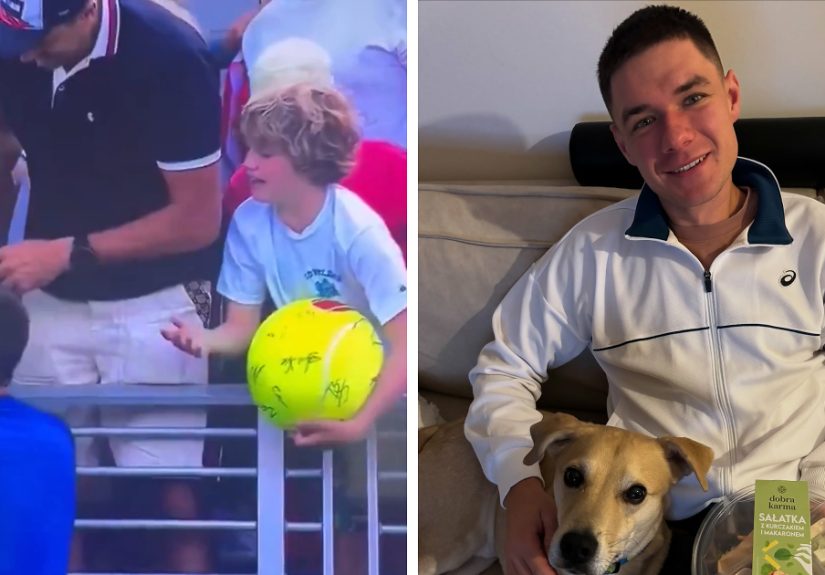
That’s the “US Open hat snatcher” moment that ricocheted across the internet: a young fan named Brock reached for Polish tennis player Kamil Majchrzak’s cap,
and a grown man grabbed it instead, tucking it away as the child protested. The clip was brief, but the reaction was not.
Within hours, the internet did what it does best: replay, zoom, caption, meme, andeventuallyidentify.
And that’s where the headline-worthy joke lands: “Where’s Coldplay when you need them?” Not because anyone wanted a concert soundtrack for theft-by-opportunity,
but because we’re living in an era where public “caught-on-camera” moments can turn ordinary misbehavior into instant global lore.
(Sometimes it’s a stadium kiss-cam. Sometimes it’s a tennis broadcast. Either way, the internet always has the receipts.)
The Viral Moment: A Hat, a Kid, and a Camera That Didn’t Blink
What happened at the US Open?
The incident occurred after Majchrzak’s second-round match at the 2025 US Open, where he defeated ninth-seeded Karen Khachanov.
As Majchrzak lingered to sign autographs, Brock asked for his hat. Majchrzak handed the cap toward the boythen an adult man
reached in, took it, and stashed it away. Majchrzak, focused on the autograph line and post-match chaos, didn’t realize the hat
hadn’t gone to the child.
Why the internet got so mad (so fast)
Sports fans will debate anythingline calls, coaching decisions, whether a hot dog is a sandwich (it is not; it’s a hot dog). But one thing
that tends to unify the crowd: don’t snatch memorabilia from a kid. The outrage wasn’t just about a cap. It was about the
social contract of live sports: you can cheer, you can boo, you can wear face paint that makes you look like a patriotic raccoonbut you don’t
steal someone else’s moment.
Add the visual clarity of the broadcast angle and the unmistakable “Wait…did that just happen?” body language from everyone nearby, and the clip
practically narrated itself. The internet didn’t need a detective novel. It had slow-motion replays.
“Hat Snatcher Identified”: Who It Was and How That Happened
The man was publicly identified as Piotr Szczerek
Reporting in multiple outlets later identified the man as Piotr Szczerek, a Polish businessman described as the CEO of a paving company called
Drogbruk. The identification spread quickly once social media users connected names, faces, and company informationproof that modern crowdsourcing can be
both astonishingly effective and, at times, terrifyingly fast.
The story didn’t stay confined to tennis corners of the internet. It jumped into mainstream coverage because it sat at the intersection of sports,
viral video culture, and a question we all keep relearning: How private is “public” anymore?
Why people keep invoking Coldplay
The “Where’s Coldplay?” line is less about the band and more about the genre of scandal: the modern “caught on the big screen” moment.
Over the past year, a separate viral kiss-cam clip at a Coldplay concert became a symbol of how quickly a public scene can become a life-altering headline.
So when the US Open hat moment exploded, the internet reached for the nearest comparison: another stadium clip that became everyone’s business overnight.
It’s not that tennis suddenly needed a soundtrack. It’s that we’ve entered an age where one camera angle can turn a stranger into a trending topic
before they’ve even made it back to their seat.
The Apology Tour: What Happened After the Backlash
Szczerek apologized and said it was a misunderstanding
After the video spread, Szczerek posted an apology on social media, saying he made a mistake and believed the hat was being handed in his direction for his sons.
He said he returned the hat and apologized to the boy and family. In other words: the official position was “bad judgment, not cartoon villainy.”
Some coverage also described an initial, harsher response circulating online before the apologyfuel that only intensified the backlash.
Regardless of the timeline, the public pressure was immediate: criticism, mockery, and the kind of internet dogpile that turns a minor moment into an international incident.
Majchrzak’s response: “Let’s find the kid and fix this.”
Majchrzak handled the situation like someone who understands what a small souvenir can mean to a young fan. Once he saw the clip, he asked social media to help locate Brock.
Within days, Majchrzak met up with him, gave him a replacement hat and signed items, and posted the reunionturning a sour moment into a redemption arc.
That mattered, because it shifted the story away from “look at this awful thing” and toward “look at how quickly people can repair damage when they actually try.”
It also reminded everyone that athletes aren’t omniscient; sometimes they don’t see the worst behavior happening two feet away because they’re juggling ten requests and a post-match rush.
Why This Story Hit a Nerve Bigger Than Tennis
It’s about fan etiquetteand who gets to feel safe having joy
Live sports are basically a traveling festival of emotion. People cry. People scream. People hug strangers. People take blurry photos of the scoreboard like it’s modern art.
Kids are often the purest version of that joy: they show up hoping for a wave, an autograph, or a souvenir that becomes a lifelong keepsake.
When an adult overrides that momentespecially on camerait doesn’t land as “oops.” It lands as “you knew exactly what you were doing,” even if you later claim confusion.
That’s why the outrage was so intense: it felt like someone punctured the innocence of the whole scene.
It’s also about the new reality: everyone is on camera, all the time
In the pre-smartphone era, a petty act like this might have been a local grumble: “Did you see that guy?” Now it’s a global spectacle with frame-by-frame analysis,
name identification, and consequences that can spill into professional life.
That doesn’t automatically make the internet “good” or “fair.” But it does mean the social cost of being publicly awful is risingand rapidly.
In this case, that cost included reputational damage and widespread condemnation, alongside the pressure that ultimately helped push the story toward restitution.
Lessons From the Hat: A Quick Guide to Not Being “That Guy”
For fans
- Don’t snatch memorabilia. If it’s not clearly for you, it’s not for you.
- Kids first. If a child is reaching for something from a player, let the moment happen.
- Ask once, then step back. Autograph lines aren’t buffet lines.
- Assume cameras are rolling. Because they are. Always.
For events and broadcasts
- Clear handoff zones help. When players want to gift items, barriers and ushers can reduce chaos.
- Rapid response matters. A simple “we’re fixing this” message can stop the narrative from becoming pure rage-bait.
- Celebrate the repair. Highlighting the reunion encourages better behavior than endless replaying of the wrongdoing.
The Ending Everyone Wanted: Brock Got His Moment Back
The satisfying part of this story isn’t that a man was identified. It’s that Brock ultimately got a replacement hat, signed items, and a personal moment with Majchrzak.
The internet can be loud and chaotic, but it can also be weirdly efficient at helping the right person get found when an athlete genuinely wants to make amends.
Majchrzak’s follow-through didn’t erase what happened, but it did transform the final memory from “I got my hat stolen on live TV”
into “a pro player made sure I left with something even better.” That’s the version of viral culture worth rooting for.
Fan Experiences: of “Been There” Energy From the Stands
What it feels like when a live sports moment goes sidewaysand how fans can keep it magical
If you’ve ever been in the stands at a big tournamenttennis, baseball, basketball, take your pickyou know the feeling: the crowd hums like an engine.
You can smell sunscreen, popcorn, and the faint panic of someone who just realized they sat in the wrong section. People clutch Sharpies like they’re
holding golden tickets. Kids bounce on their toes because maybe today is the day they get a wave, an autograph, or a tiny “hey” that becomes a core memory.
That’s why moments like the US Open hat snatch hit so hard: every fan has watched a kid lock onto a dream like it’s a magnet. The kid isn’t thinking about resale value
or collectibles. The kid is thinking: “My favorite player touched this hat. This hat is basically a superhero cape now.” Parents know it, too. You’re not just watching
sportsyou’re watching your child’s joy catch fire in real time. And when something interrupts that, the frustration is instant and visceral.
On the flip side, most fans have also experienced the best-case version. The kind where a player pauses, smiles, signs a ball, and you can see the kid’s whole face
reboot into pure happiness. Maybe you’ve watched a stranger help lift a child so they can see over the railing. Maybe a nearby adult hands over a spare marker.
Maybe security gently clears a path so a player can do quick autographs without getting mobbed. Those tiny acts create an invisible safety net around the moment.
If you’re chasing that experience (in the non-chaotic, non-hat-stealing way), the practical advice is surprisingly simple. Show up early to smaller courts where access
is easier. Bring a thick marker that actually works on fabric. Don’t shovepost-match crowds move like tidewater, and pushing just makes it worse for everyone.
Keep expectations light, especially for kids: frame it as “we might get lucky,” not “you will get this.” That way the day still feels like a win even if the autograph
doesn’t happen.
And if you’re the adult standing near a kid in a high-emotion moment? Congratulations: you’ve been cast in a tiny role called “community.” The job is easy:
don’t compete with a child for a souvenir. Don’t reach across them. Don’t treat their excitement like an obstacle. Instead, be the person who steps back
so the moment can land the way it’s supposed to. Because years later, nobody remembers the exact scorelinebut they remember who helped make the day kind.
The most useful takeaway from the “Where’s Coldplay when you need them” joke isn’t snarkit’s awareness. Cameras are everywhere. But so is decency.
If we choose the second one, the first one stops being a threat and starts being a spotlight on what sports fandom can be at its best.







 Close
Close