
Table of Contents >> Show >> Hide
- What That Rotten Egg Smell Usually Means (In Plain English)
- Should You Keep Driving?
- 7 Causes of a Rotten Egg Smell (And the Fixes)
- 1) A Failing or Clogged Catalytic Converter
- 2) The Engine Is Running Rich (Too Much Fuel, Not Enough Air)
- 3) A Bad Oxygen (O2) Sensor (Or Other Fuel-Mixture Sensors)
- 4) High-Sulfur Fuel (Or “That One Tank” Your Car Hated)
- 5) An Overcharged, Leaking, or Overheating Battery
- 6) Old or Burning Transmission Fluid (Often From a Leak)
- 7) Exhaust Fumes Entering the Cabin (Exhaust Leak, HVAC Intake Issues, or… Something Gross)
- DIY Detective Checklist (Before You Spend Money)
- How to Prevent the Rotten Egg Smell From Coming Back
- Real-World Experiences: What This Smell Actually Looks Like Day-to-Day (Extra 500+ Words)
- Experience #1: “It Only Smells When I Floor It”
- Experience #2: “It Started Right After I Got Gas”
- Experience #3: “The Smell Is Strongest Under the Hood at a Stoplight”
- Experience #4: “It Smells Inside the Cabin When the A/C Is On”
- Experience #5: “My Car Also Shifts Weird, and Then the Smell Shows Up”
- Conclusion
You’re driving along, minding your business, and thenbamyour car hits you with a smell that belongs in a science lab
(or the back of your fridge). That “rotten egg” odor is usually a sulfur smell, and while it’s occasionally something silly
(like actual forgotten groceries), it’s more often your car’s way of waving a giant red flag.
The good news: this problem is usually diagnosable. The better news: you don’t need to be a master mechanic to narrow it down.
And the best news: once you find the source, the fix is often straightforwardthough sometimes not cheap.
What That Rotten Egg Smell Usually Means (In Plain English)
Most “rotten egg” car smells come from sulfur-related gasesoften hydrogen sulfidemaking their way out of places they shouldn’t.
Gasoline contains small amounts of sulfur. Under normal conditions, your emissions system (especially the catalytic converter)
helps convert nastier byproducts into less offensive stuff. When that system is overwhelmed, failing, or something upstream is
running “wrong,” the sulfur smell can slip through and announce itself like an unwanted passenger.
Should You Keep Driving?
Sometimes you can limp home. Sometimes you shouldn’t. Use this quick safety filter:
- If the smell is strongest under the hood (especially near the battery), stop driving when safebattery off-gassing can be hazardous.
- If the check engine light is flashing, stop drivingflashing often points to a serious misfire that can damage the catalytic converter fast.
- If you notice smoke, overheating, power loss, or a loud exhaust change, don’t push your luckget it inspected or towed.
- If it only happens briefly after fueling and then disappears, it may be fuel-relatedbut if it keeps coming back, treat it as a real issue.
7 Causes of a Rotten Egg Smell (And the Fixes)
1) A Failing or Clogged Catalytic Converter
If rotten eggs had a “most likely suspect,” it would be the catalytic converter. When it can’t do its job efficiently,
sulfur compounds can pass through the exhaust and smell like you’re grilling disappointment.
Common clues:
- Smell comes from the tailpipe or outside the car after driving
- Sluggish acceleration, poor fuel economy, or rough running
- Check engine light with efficiency-related codes (often P0420 / P0430)
- Excessive heat under the vehicle, rattling noises (internal breakdown)
Fix:
- Scan for codes and address the root cause first (misfires, oil/coolant burning, fuel mixture issues).
- If the converter is damaged/clogged, replacement is typically the real solution.
- Don’t ignore itdriving with converter problems can worsen performance and may create extreme heat under the car.
Reality check: Catalytic converters can be expensive, and replacing one without fixing what killed it (like a persistent misfire)
is like buying a new fridge while leaving the door open all day.
2) The Engine Is Running Rich (Too Much Fuel, Not Enough Air)
When your engine runs rich, extra fuel ends up in the exhaust. That overload can overwhelm the catalytic converter, and
sulfur smells can become more noticeableespecially during acceleration.
Common culprits: dirty or failing fuel injectors, a bad fuel pressure regulator, a failing mass airflow sensor (MAF),
vacuum/air-intake issues, or even neglected spark plugs that cause incomplete combustion.
Common clues:
- Rotten egg smell gets worse when you step on the gas
- Black smoke from the exhaust
- Bad gas mileage, rough idle, hesitation
- Check engine light (often mixture or misfire-related codes)
Fix:
- Get the codes read (free at many parts stores).
- Check/replace air filter, inspect intake hoses for cracks, clean MAF (carefully, with proper cleaner).
- Address misfires (spark plugs, coils) quickly.
- If injectors or fuel pressure issues are suspected, a shop can confirm with fuel pressure tests and scan data.
3) A Bad Oxygen (O2) Sensor (Or Other Fuel-Mixture Sensors)
Your O2 sensors help your car “sniff” the exhaust and adjust fuel delivery. If an O2 sensor lies (or goes silent), your engine may
run too rich, and the catalytic converter can get overworkedhello sulfur smell.
Common clues:
- Check engine light (often O2-related codes)
- Fuel economy drops for no obvious reason
- Smell appears alongside sluggishness or roughness
Fix:
- Confirm with a scan tool (live data helps; codes alone can be misleading).
- Replace the faulty sensor if diagnosedthen confirm the fuel trims normalize.
- Don’t wait too long: prolonged rich running can damage the catalytic converter.
4) High-Sulfur Fuel (Or “That One Tank” Your Car Hated)
Sometimes the smell shows up right after a fill-up. Certain fuel blends or higher sulfur content can make odors more noticeable,
especially under specific driving conditions. In many cases, it fades after you burn through the tankbut it can also expose a
converter that’s already weak.
Common clues:
- The smell starts soon after fueling
- No major drivability changes
- Odor may be intermittent and tied to acceleration or hill climbs
Fix:
- Try a different station/brand for the next tank (many drivers have luck switching).
- If the smell persists across multiple tanks, treat it as a mechanical issue and check the fuel/air/emissions system.
Pro tip: If you can trace the start of the smell to the exact same day you filled up, that timeline matters. Tell your mechanic.
Chronology is basically detective work, but with fewer trench coats.
5) An Overcharged, Leaking, or Overheating Battery
If the rotten egg smell is strongest under the hoodor seems to seep into the cabin at stopsdon’t shrug it off.
A failing lead-acid battery can vent sulfur-smelling gases, especially if it’s being overcharged (often due to alternator/voltage regulator issues).
This can be dangerous: you may have corrosive leakage and potentially explosive hydrogen gas involved.
Common clues:
- Smell under the hood near the battery
- Swollen battery case, corrosion, or dampness around the battery
- Electrical weirdness: hard starts, flickering lights, random warning lights
- Battery feels unusually hot after driving
Fix:
- Turn the engine off when safe and ventilate. Avoid sparks/flames.
- Have the battery and charging system tested (battery + alternator output).
- Replace a damaged batteryand fix the overcharging cause, or the new battery may get cooked too.
6) Old or Burning Transmission Fluid (Often From a Leak)
Transmission fluid doesn’t always smell like roses, but when it’s overheating or leaking onto hot exhaust components,
it can create a sharp, nasty odor that many people describe as sulfur-like. If you’ve noticed shifting issues and a smell that
gets worse after a drive, transmission fluid deserves a close look.
Common clues:
- Smell appears after driving, especially in traffic or heat
- Slipping gears, delayed shifts, or rough shifting
- Visible fluid leaks under the car
- Fluid looks dark/burnt when checked
Fix:
- Inspect for leaks (pan gasket, cooler lines, seals).
- Repair leaks and service/replace transmission fluid as recommended for your vehicle.
- Don’t ignore overheatingtransmission repairs are not known for being budget-friendly.
7) Exhaust Fumes Entering the Cabin (Exhaust Leak, HVAC Intake Issues, or… Something Gross)
Sometimes the smell isn’t “your car making sulfur,” but “your car delivering exhaust into your face.” Exhaust leaks near the engine bay
or under the car can allow fumes to enter the cabin through ventsespecially if you smell it more when the A/C or heat is on.
And yes, occasionally the culprit is organic debris (think: a decomposing leaf pile, a dead critter near an intake, or that
protein snack you forgot in July).
Common clues:
- Smell is strongest inside the cabin, especially with HVAC running
- You notice the odor more at idle or when stopped
- Louder exhaust sound or ticking near the engine (possible manifold leak)
- Musty/odd odors that come and go with fan speed
Fix:
- Inspect exhaust manifold area, gaskets, flex pipe, and exhaust joints for leaks.
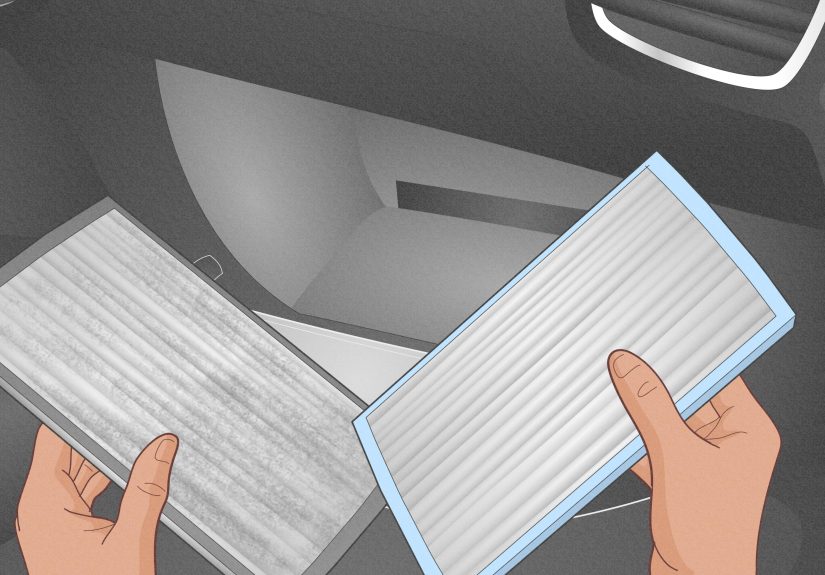
- Replace cabin air filter and check the HVAC intake area for debris.
- If there’s any chance exhaust is entering the cabin, don’t delayexhaust exposure is not a “character-building” experience.
DIY Detective Checklist (Before You Spend Money)
If you want to troubleshoot like a calm, capable adult (or at least pretend), here’s a simple sequence:
- Identify where the smell is strongest: tailpipe/outside, under the hood, or inside the cabin.
- Note when it happens: cold start, hard acceleration, after fueling, in traffic, or only with A/C on.
- Check the dashboard: check engine light? flashing? any battery/charging warning?
- Scan for codes: P0420/P0430 suggests converter efficiency; mixture/misfire codes point upstream.
- Look for obvious leaks: oily residue, coolant smell, transmission fluid drips, or corrosion around the battery.
- Smell test safely: don’t shove your face into anything hotuse caution near the battery and exhaust.
Bring these notes to a mechanic. A good shop loves specifics. “It smells weird sometimes” is a mystery novel.
“It started right after a fill-up and gets worse on hills” is a service ticket with a plot.
How to Prevent the Rotten Egg Smell From Coming Back
- Don’t ignore misfires: prolonged misfires can damage the catalytic converter fast.
- Keep up with basic tune-up items: spark plugs, air filters, and addressing intake leaks.
- Fix oil/coolant burning issues promptly: contamination can shorten catalytic converter life.
- Service transmission fluid on schedule: and repair leaks early.
- Pay attention to your battery: corrosion, swelling, and weird smells deserve immediate attention.
- Use consistent, quality fuel: and if a particular station triggers the odor repeatedly, switch.
Real-World Experiences: What This Smell Actually Looks Like Day-to-Day (Extra 500+ Words)
Here’s the part nobody tells you: the rotten egg smell rarely shows up in a perfectly dramatic, movie-ready way. It’s usually more like
a weird, intermittent cameo that appears when you’re already late. Based on the kinds of scenarios drivers commonly describe,
these are the “classic” rotten-egg storylinesand what they typically mean.
Experience #1: “It Only Smells When I Floor It”
This is a big one. A driver merges onto the highway, gives it some throttle, and suddenly the cabin smells like a cursed breakfast.
Often, that points to a catalytic converter that’s struggling under loador an engine that’s running rich when demand increases.
The reason it happens under acceleration is simple: more fuel + more exhaust flow = more stress on the emissions system. If the converter
is marginal, it may keep up during gentle cruising but “tap out” when you ask for power. People also report this more on uphill climbs or
when towing. The fix usually starts with scanning for codes and checking fuel trims/misfires, because replacing a converter without solving
the root cause is how you end up paying twice.
Experience #2: “It Started Right After I Got Gas”
This scenario feels suspiciously personal, like your car is mad about your choice of fuel station. In many cases, it’s temporary: a tank of fuel
with higher sulfur content or certain additives can make the odor more noticeable. Drivers often say it fades as the tank empties, and then it’s gone.
But here’s the twist: if it doesn’t go away, that “bad gas” might have just exposed an emissions system that was already borderline.
The practical move is to switch stations for the next fill-up and watch for patterns. If it repeats across multiple tanks, it’s not the fuelit’s your car.
Experience #3: “The Smell Is Strongest Under the Hood at a Stoplight”
This is the one you don’t ignore. When drivers describe a sharp, sulfur smell that seems to come from the front of the car, especially while idling,
the battery and charging system jump to the top of the list. A battery that’s overcharging can vent gases and heat up, and people sometimes notice it
after a longer drive or right after jump-start attempts. The “experience” is usually: you park, pop the hood, and the smell hits you like a cartoon stink cloud.
The right response is to avoid messing with the battery terminals, ventilate the area, and have the battery/alternator tested. It’s not just about inconvenience
it’s about safety.
Experience #4: “It Smells Inside the Cabin When the A/C Is On”
When the odor seems to come through the vents, drivers naturally assume something died in the ventilation system (whichsometimestrue).
But an exhaust leak can also route fumes into the cabin through the HVAC intake, especially when stopped or moving slowly. People often describe the smell as
“worse at idle” and “better once I’m moving,” because airflow changes where fumes go. A cabin air filter packed with debris can make any odor more intense,
too, by basically storing yesterday’s stink and reheating it for your enjoyment. This is one of those cases where “I’ll deal with it later” is a bad plan:
exhaust leaks are not a comfort issuethey’re a health issue.
Experience #5: “My Car Also Shifts Weird, and Then the Smell Shows Up”
Drivers with transmission issues often report a harsh smell after driving in traffic, climbing hills, or on hot days. If fluid is overheating or leaking onto
hot exhaust components, the smell can become intense and drift into the cabin when the car is stopped. The “experience” usually includes delayed shifts,
slipping, or a feeling that the car hesitates before it commits to a gear. When that’s paired with an odor, it’s a strong hint to check transmission fluid
condition and inspect for leaks. It’s not glamorous maintenance, but it beats turning your transmission into a very expensive paperweight.
Bottom line: that rotten egg smell is rarely random. It tends to show up in patternsacceleration, idle, HVAC on, after fueling, or after a long drive.
If you pay attention to the pattern, you’ll shorten the diagnosis and usually save money. Your nose is annoying, but it’s not dumb.
Conclusion
A rotten egg smell is your car’s way of saying, “Hey, something in the fuel/emissions/charging universe is not okay.” Most of the time, the biggest suspects are
the catalytic converter, a rich-running condition, or a battery problemplus a handful of “supporting characters” like transmission fluid leaks or exhaust leaks
feeding fumes into the cabin.
If the smell is persistent, gets worse, or comes with warning lights or drivability issues, get it checked sooner rather than later. The earlier you catch the root cause,
the more likely the fix is manageable (and the less likely you are to accidentally roast your catalytic converter into an expensive life lesson).







 Close
Close