
Table of Contents >> Show >> Hide
- Mask bans are sold as narrow. Their effects are anything but.
- The freedom to protect your health is still freedom
- The right to protest includes the right not to become a target
- Public safety matters. But blunt-force laws are bad tools.
- Mask bans fit a larger American trend
- The strongest democracy is not the one that panics at covered faces
- What this debate feels like in real life
- Conclusion
America loves to describe itself as the land of liberty, individual rights, and rugged self-determination. We put freedom on coffee mugs, campaign signs, and probably a suspicious number of pickup-truck decals. So it is more than a little strange that some politicians have recently decided the newest frontier of “freedom” involves telling people they cannot cover their own faces in public.
That is the strange logic behind the new wave of mask bans. On paper, supporters say these rules are about public safety, accountability, or stopping intimidation at protests. In practice, they often do something much broader and much messier: they give the government more power over peaceful protest, more discretion to police personal health decisions, and more room to harass people whose bodies, beliefs, or politics already make public life harder than it should be.
That is why mask bans are not just culture-war theater with a fresh coat of paint. They are part of a larger pattern in American life: more surveillance, more selective enforcement, more pressure to conform, and less room for ordinary people to protect their health, privacy, and speech. Freedom is supposed to mean you can move through public life without asking permission to breathe safely, speak anonymously, or avoid becoming a target. A mask ban flips that idea upside down.
Mask bans are sold as narrow. Their effects are anything but.
Supporters of mask restrictions usually present them as common-sense tools aimed at criminals or violent agitators. That pitch sounds tidy. Reality is not tidy. Once the state claims authority to decide whose face covering is suspicious and whose is acceptable, the law stops being surgical and starts acting like a blunt instrument.
We saw this clearly in the debate over North Carolina’s 2024 legislation. Lawmakers originally pushed to remove a pandemic-era health exemption for wearing masks in public, after criticism and political pressure built around masked campus protests. The bill was later reworked to preserve a health-related exemption, but the episode revealed the core instinct behind the policy push: in moments of public unrest, some officials are eager to make concealment itself look guilty. That approach can chill peaceful conduct long before it stops actual wrongdoing.
Nassau County, New York, went even further in 2024, approving a mask ban framed as a way to stop people from hiding their identity in public. The ordinance included exceptions for health, medical, religious, and cultural reasons. Supporters called it reasonable. Critics saw a predictable problem: exceptions sound comforting until a police officer, security guard, or hostile stranger becomes the one deciding whether your reason is “good enough.” Freedom begins to look awfully fragile when it depends on roadside theological review and amateur epidemiology.
The freedom to protect your health is still freedom
One of the most bizarre features of mask-ban politics is the way it treats health-protective behavior as suspicious behavior. The Centers for Disease Control and Prevention still says masks can reduce the spread of respiratory viruses and help protect the wearer from infectious particles, especially when better-fitting respirators such as N95s or KN95s are used. In other words, masks are not contraband. They are a basic risk-reduction tool.
That matters because respiratory risk did not vanish when the public got tired of hearing about it. Immunocompromised people still exist. Cancer patients still exist. Transplant recipients still exist. People with asthma, autoimmune conditions, long-term respiratory problems, and medically fragile relatives still exist. A government that says, “Sure, you can maybe wear a mask, but be prepared to justify yourself in public,” is not expanding liberty. It is narrowing it.
Disability-rights advocates have been warning about this from the start. Their argument is not abstract. Mask bans can turn daily life into a gauntlet for people who rely on masks to lower the risk of infection. Even with medical exemptions, the burden often shifts onto disabled people to explain private health needs to strangers, police officers, or employers. That is not dignity. That is forced disclosure dressed up as public order.
And here is where the rhetoric of “choice” suddenly disappears. In many debates, Americans are told health decisions should be personal. But when the personal decision is to wear a mask in a crowded train car, at a protest, in a waiting room, or while caring for a vulnerable family member, some politicians suddenly discover a deep passion for state intervention. Apparently freedom is sacred until it fogs your glasses.
The right to protest includes the right not to become a target
Mask bans also collide with another core American freedom: the right to speak, assemble, and dissent without inviting retaliation. Anonymous speech has deep roots in American history. The nation practically began with pamphlets, pseudonyms, and political actors who understood that public dissent can carry private consequences.
Modern protest is no different. People cover their faces for many reasons: to avoid doxxing, job retaliation, stalking, online harassment, political targeting, and facial-recognition surveillance. These are not paranoid fantasies. Civil-liberties groups and watchdogs have documented how law enforcement and other agencies monitor protests, sweep up social media posts, and circulate intelligence on demonstrations. When that surveillance environment already exists, mask bans do not create transparency. They create exposure.
That exposure is not evenly distributed. A wealthy executive with a forgiving employer may feel comfortable marching barefaced. A teacher in a politically divided district, a student on a scholarship, an immigrant with family concerns, a federal contractor, or a queer teenager in a hostile town may calculate the risk very differently. The point of freedom is not to protect only the people who can afford consequences. It is to protect people who cannot.
Critics of mask bans have also pointed out the obvious double standard: ordinary civilians can be told masking is threatening, while heavily equipped authorities often operate with cameras, databases, and broad legal cover. The message is impossible to miss. The public should be visible; the state should be powerful. That is not a free society’s best look.
Public safety matters. But blunt-force laws are bad tools.
To be fair, supporters of mask bans are not inventing every concern from thin air. Communities do have legitimate interests in preventing intimidation, hate-fueled harassment, property destruction, or violence carried out under cover of anonymity. Nobody has a constitutional right to assault someone and then blame the fabric.
But that is exactly why broad mask bans are the wrong tool. America already has laws against assault, harassment, vandalism, trespassing, threats, and disorderly conduct. If someone commits a crime while masked, prosecutors can charge the crime. If lawmakers want a more tailored law against masked harassment with specific intent to threaten people, they can write one carefully. In fact, some proposals have tried to move in that narrower direction by focusing on menacing conduct rather than blanket public masking itself.
The problem comes when lawmakers skip precision and go straight for symbolism. Broad anti-mask measures are politically dramatic, visually satisfying, and easy to sell on cable news. They also invite selective enforcement, constitutional challenges, and confusion for people whose conduct is peaceful, legal, and nonthreatening. Bad laws are often the ones that sound strong in a speech and collapse in real life.
Freedom gets weaker when enforcement gets more subjective
Once enforcement depends on an officer deciding whether your reason for masking looks acceptable, the law becomes vulnerable to bias. Does a Black protester get the same benefit of the doubt as a suburban shopper? Does a disabled person have to disclose a diagnosis? Does a religious covering get respected consistently? Does a journalist in a chaotic crowd get treated as press, or as a problem? Rules that rely on subjective suspicion have a habit of landing hardest on people with the least institutional protection.
This is one reason disability-rights groups and civil-liberties advocates have objected so strongly. A supposed exemption is not a shield if accessing it requires humiliation, confrontation, or policing. Rights that only work for the confident, healthy, and socially favored are not really rights. They are club memberships.
Mask bans fit a larger American trend
Look around and the pattern becomes clearer. Across American politics, officials increasingly claim they are defending public order while expanding surveillance, narrowing protest rights, and placing more personal decisions under government scrutiny. The issue might be books, classrooms, bodies, speech, apps, or face coverings. The sales pitch changes. The instinct does not.
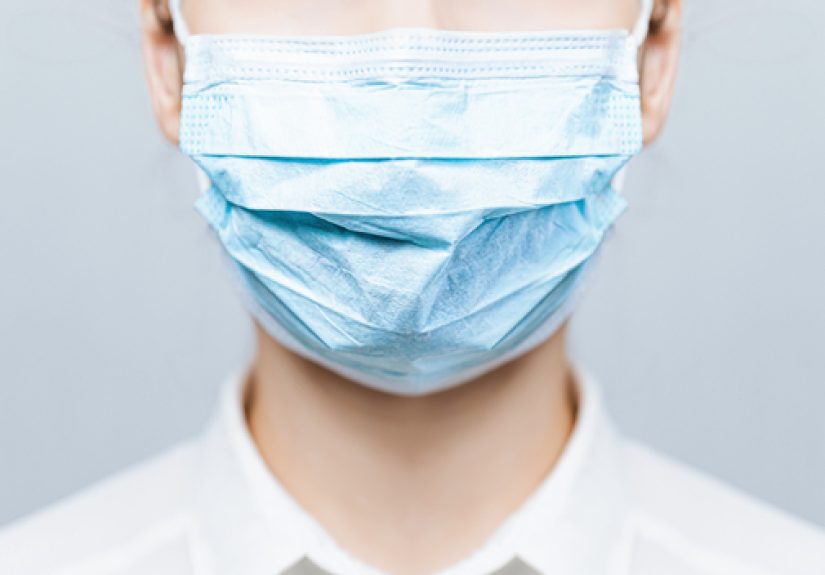
Mask bans are especially revealing because they target something simple and visible. A mask is a small object, but it represents several freedoms at once: the freedom to protect your health, the freedom to manage your privacy, the freedom to enter public space without revealing everything about yourself, and the freedom to dissent without volunteering for a digital dragnet. Restricting all of that under the banner of “freedom” is not subtle. It is political wordplay with police power attached.
That is why the fight over masks is bigger than masks. It asks whether Americans still believe liberty includes unpopular choices, precautionary choices, disabled people’s choices, and dissidents’ choices. Or whether liberty now means whatever the loudest official says it means on a Tuesday morning.
The strongest democracy is not the one that panics at covered faces
A confident democracy should be able to distinguish between a criminal act and a face covering. It should be able to punish threats without criminalizing caution, and maintain order without degrading privacy. It should know that someone wearing an N95 on a train is not an enemy of the state, and that a protester who fears retaliation is not automatically plotting chaos.
Americans do not need more laws built on the assumption that visibility equals virtue and concealment equals guilt. Life is more complicated than that. Cancer wards are complicated. Religious practice is complicated. Political dissent is complicated. Caring for an elderly parent is complicated. Living in a country with cameras everywhere is complicated. Liberty worth defending has to be roomy enough for those complications.
So yes, public safety matters. Accountability matters. But freedom matters too, and not just the bumper-sticker version. The real version. The version that protects a person’s ability to move through public life without surrendering health, identity, or conscience at the door. Mask bans fail that test. They turn a practical tool into probable cause, and a personal choice into a political offense. For a nation that never stops talking about freedom, that should be embarrassing.
What this debate feels like in real life
Policy arguments can sound sterile until you imagine the people living under them. Picture a woman with a compromised immune system standing outside a pharmacy on a humid August afternoon. She is not staging a revolution. She is trying to pick up a prescription, get back to work, and avoid the virus that could flatten her for weeks. She wears a high-filtration mask because it helps her feel safer in crowded indoor places. Under a mask-ban culture, that ordinary act becomes tense. Will someone glare? Will an employee challenge her? Will a police officer decide her explanation is not convincing enough? Freedom feels different when a basic errand starts to resemble a legal negotiation.
Now picture a college student heading to a protest. He believes deeply in the cause, but he also knows employers search social media, classmates take screenshots, and facial-recognition tools do not ask whether your future should be derailed by one afternoon in a crowd. He covers his face not to threaten anyone, but to preserve a little distance between his civic life and the permanent memory of the internet. A mask ban tells him that anonymous participation is suspicious by default. That lesson reaches far beyond one march. It teaches young people that dissent is allowed only when it is convenient for power.
Or think about a parent riding a city bus with a child who has asthma. The parent sees coughing passengers, hears the old line that “COVID is over,” and keeps the masks on anyway because caution is cheaper than an emergency room bill. In a free country, that should be the end of the story. Instead, mask-ban politics invites the public to treat that family like a problem to be solved. The social pressure is subtle until it is not. A joke, a sneer, a demand to remove the mask, a security guard with an attitude, a stranger filming on a phone. None of that looks dramatic in a legislative memo. It feels very dramatic when it is your kid.
Even people with no medical issue at all can feel the shift. They start to notice that a government comfortable policing face coverings may become comfortable policing other forms of visible difference too. Once the official position is that ordinary self-protection looks suspicious, trust erodes. People stop assuming the law is there to leave peaceful citizens alone. They begin to assume they must justify themselves first and exercise rights second.
That is the real experience underneath the headlines. Mask bans do not simply regulate fabric. They regulate atmosphere. They make public space feel narrower, less forgiving, and more conditional. And when everyday Americans begin to feel that their health choices, private fears, and peaceful political participation all depend on official approval, freedom has already lost ground.
Conclusion
Mask bans may be marketed as order-restoring measures, but their deeper effect is to narrow the practical space in which Americans can live freely. They pressure vulnerable people to reveal private health concerns, expose protesters to retaliation, and hand broad discretion to authorities who may enforce the rules unevenly. That is not a recipe for liberty. It is a recipe for chilled speech and conditional citizenship.
If the United States wants to defend freedom in any meaningful sense, it should reject lazy laws that punish precaution, stigmatize anonymity, and confuse visibility with virtue. A confident democracy can handle a covered face. What it should fear more is a government that keeps demanding one more reason why ordinary people do not deserve to be left alone.




 Close
Close