
Table of Contents >> Show >> Hide
- Why This Story Hit Such a Nerve Online
- The Delivery Room Is a Medical Space, Not a Family Lounge
- Birth Plans Are Not Diva Demands
- Why Comfort Matters During Labor
- The Husband’s Role: Partner First, Son Second
- Why the Colonoscopy Comparison Worked
- Grandparent Excitement Is Real, But It Has Limits
- How Expecting Parents Can Set Delivery Room Boundaries
- When “No” Is the Whole Sentence
- The Bigger Lesson: Privacy Is Not Rejection
- Experiences Related to Delivery Room Boundaries
- Conclusion
- SEO Tags
Some family disputes arrive politely, carrying a casserole. Others burst through the door wearing orthopedic sandals and announcing, “I deserve to be in the delivery room.” The viral story behind the headline “Witness Him Getting A Colonoscopy” belongs firmly in the second category.
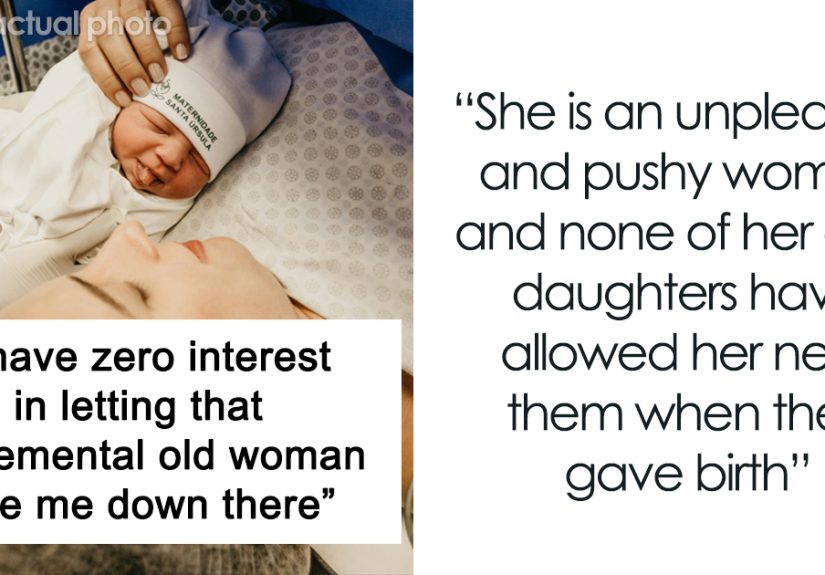
In the now-famous online post, a pregnant woman explained that her mother-in-law wanted to be present during the birth of her grandchild. Not just in the waiting room. Not nearby with a phone charger, snacks, and anxious-grandma energy. She wanted a front-row seat for labor and delivery. The expectant mother, however, had no interest in turning one of the most vulnerable moments of her life into a family theater production.
Her comeback was sharp, memorable, and oddly educational: she told her husband she would consider allowing his mother into the delivery room only if he agreed to let her father watch him get a colonoscopy first. Suddenly, the lights came on. The husband, who had been wobbling under his mother’s pressure, began to understand the point. Medical vulnerability is not entertainment. Birth is not a spectator sport. And “but I’m the grandma” is not a hospital access badge.
Why This Story Hit Such a Nerve Online
The reason this story traveled so far is simple: many people recognized the pattern. A major life event happens, and suddenly relatives confuse excitement with entitlement. Weddings, pregnancies, home purchases, baby names, and delivery rooms can all become battlegrounds when boundaries are unclear or ignored.
In this case, the pregnant woman’s boundary was not petty. It was deeply personal. Labor can involve pain, fear, nausea, medical exams, blood, sweat, tears, and noises no one would choose as their ringtone. Even smooth births require focus, privacy, and trust. The people in the room should make the birthing parent feel safer, not observed, judged, or emotionally cornered.
The colonoscopy comparison worked because it flipped the script. It made the husband imagine himself as the exposed patient, not the neutral referee between two women. That is why the example was clever. It took an abstract argument“I need privacy”and turned it into a vivid, uncomfortable picture. Sometimes empathy needs a visual aid. Preferably one involving hospital gowns and a sudden loss of enthusiasm.
The Delivery Room Is a Medical Space, Not a Family Lounge
One of the biggest misunderstandings in these conflicts is the idea that birth is mainly a family event. Emotionally, yes, a baby’s arrival affects the whole family. Medically, though, labor and delivery revolve around the patient giving birth and the baby being born.
That distinction matters. The birthing parent is not a prop in someone else’s grandparent fantasy. She is the patient. Her comfort, safety, and consent come first. A support person should support. That means offering calm, encouragement, advocacy, water, counter-pressure, or simply quiet presence. It does not mean hovering with opinions, making faces during contractions, giving unsolicited medical advice, or whispering, “In my day, we did it without all this drama.”
Hospitals also have practical limits. Delivery rooms can become crowded quickly with nurses, doctors, midwives, anesthesiology staff, pediatric teams, and equipment. During certain procedures, visitors may be asked to leave. During a C-section, many hospitals allow only one support person. In other words, even when a family wants a parade, the medical team may have room for a very small marching band.
Birth Plans Are Not Diva Demands
A birth plan is often misunderstood as a rigid wish list written in glitter pen. In reality, it is a communication tool. It helps the care team understand the patient’s preferences: who should be present, what pain relief options are preferred, what environment feels calming, whether photos are allowed, and what should happen after birth if medically possible.
Including delivery room boundaries in a birth plan is practical, not dramatic. The expectant parent can list approved support people, state that no visitors are allowed during labor, and ask nurses not to share room information with unapproved guests. This gives the medical team a clear roadmap before emotions are running high.
Of course, birth plans must stay flexible. Babies are famous for ignoring paperwork. A labor plan may change because of induction, stalled labor, fetal monitoring needs, emergency interventions, or a C-section. But flexibility about medical care is different from surrendering privacy to someone who makes the patient anxious.
Why Comfort Matters During Labor
Comfort during labor is not just a luxury. Stress can affect how a person experiences pain, communicates with staff, and copes through contractions. A supportive environment helps the birthing parent feel more grounded. A tense environment can make everything feel harder.
That is why the “who gets to be there?” question matters so much. The right person might remind you to breathe, hold your hand, speak up when you are overwhelmed, or tell you that you are doing great even when you are convinced you have transformed into a sweaty dragon. The wrong person might ask if the baby is here yet every six minutes, critique your pain management choices, or tell the nurse that she “knows how this works” because she gave birth in 1987.
The delivery room should not require emotional crowd control. If someone’s presence means the patient must manage that person’s feelings, expectations, or ego, that person is not helping. They are adding unpaid labor to actual labor.
The Husband’s Role: Partner First, Son Second
The husband in this story became a central character because he initially struggled to hold the boundary. That is common. Many adult children find it difficult to say no to a parent who cries, guilt-trips, or claims they are being “excluded.” But becoming a parent requires a shift. The new family unit needs protection.
A spouse or partner in the delivery room is not there as a family diplomat. He is there as the birthing parent’s support person. His job is not to keep his mother happy. His job is to help his partner feel safe, respected, and heard.
That may mean saying, “Mom, we love that you are excited, but this is not up for debate.” It may mean refusing to pass along guilt messages. It may mean telling hospital staff, “Only these people are allowed in.” And yes, it may mean surviving the awkward silence that follows. Welcome to parenthood, where awkward silence is still easier than a newborn at 3 a.m.
Why the Colonoscopy Comparison Worked
Was the comparison outrageous? Absolutely. That was the point. A colonoscopy and childbirth are not identical experiences, but both involve medical vulnerability, bodily exposure, and a patient’s right to decide who is present. The woman’s point was not that giving birth is exactly like a colonoscopy. Her point was that people understand privacy very quickly when the exposed body is theirs.
Many commenters praised the comparison because it revealed a double standard. The husband saw his mother’s request as sentimental. But when asked to imagine a relative watching his private medical procedure, he suddenly saw the intimacy, embarrassment, and loss of control involved.
That is a useful lesson for families. If you would not want an audience for your vulnerable medical moment, do not demand access to someone else’s. Love does not require a viewing angle.
Grandparent Excitement Is Real, But It Has Limits
To be fair, many grandparents feel intense excitement before a baby is born. They may see the arrival as a family milestone, a continuation of legacy, or a chance to relive the wonder of early parenthood without the diaper math. That excitement is understandable.
But excitement does not override consent. Wanting to witness a birth is not the same as being invited. A grandparent can be loving, involved, and cherished without being present for the actual delivery. They can meet the baby afterward, bring food, fold laundry, walk the dog, or protect the parents from unnecessary visitors. Frankly, showing up with dinner after the birth is often more heroic than showing up during contractions with opinions.
Healthy grandparent relationships begin with respect for the parents’ decisions. If the first grandparent move is to bulldoze a boundary, it sets a troubling tone for future issues: feeding choices, sleep routines, discipline, holidays, screen time, and the sacred question of whether the baby needs socks.
How Expecting Parents Can Set Delivery Room Boundaries
1. Decide Early Who Is Allowed In
Do not wait until contractions are five minutes apart to decide whether Aunt Carol gets access. Discuss support people during pregnancy. Choose people who bring calm, not chaos. Put the decision in writing if possible.
2. Use Clear Language
Avoid soft phrases like “We’ll see” if the answer is no. Try: “We are keeping the delivery room private. We will let everyone know when we are ready for visitors.” Clear does not have to be cruel.
3. Let the Hospital Staff Know
Nurses have seen everything. They can help enforce visitor rules, especially if a relative tries to sneak in or pressure the patient. Some parents even register privately or ask that no information be shared with visitors.
4. Make the Partner the Gatekeeper
The person giving birth should not have to argue between contractions. The partner or chosen support person should handle calls, texts, waiting room updates, and boundary enforcement.
5. Offer Alternatives
If appropriate, relatives can wait for a text update, meet the baby during a scheduled visit, or video call after everyone has rested. Boundaries are easier to accept when people know what they can expect.
When “No” Is the Whole Sentence
One of the healthiest lessons from this story is that “no” does not need a courtroom defense. The pregnant woman did not owe her mother-in-law a detailed explanation of her tattoos, her comfort level, her medical anxieties, or her feelings about being watched. “No, I am not comfortable with that” should be enough.
Unfortunately, some people treat boundaries like opening offers in a negotiation. They push, cry, complain, recruit other relatives, or accuse the parents of being selfish. That is when the boundary needs repetition, not expansion. The more explanations you give to someone determined to argue, the more material they have to debate.
A simple script can help: “We understand you are disappointed. This decision is final. We will tell you when we are ready for visitors.” Repeat as needed. If necessary, add: “If you keep pressuring us, we will pause updates until after the birth.” That is not punishment. That is peacekeeping.
The Bigger Lesson: Privacy Is Not Rejection
Many family conflicts come from confusing privacy with rejection. A mother-in-law may hear, “You cannot be in the delivery room,” and translate it as, “You are not loved,” “You are not important,” or “You are not a real grandmother.” But that is not what the boundary means.
It means the birthing parent gets to choose the conditions under which she feels safest. It means the baby’s arrival is not a performance. It means medical privacy matters even when relatives are excited. It means the new parents are allowed to begin parenthood by making decisions as a team.
In fact, respecting the boundary can strengthen family relationships. A grandparent who says, “I understand, I’ll be here when you’re ready,” sends a powerful message: I care more about your well-being than my wish list. That is the kind of grandparent energy every baby deserves.
Experiences Related to Delivery Room Boundaries
Many parents who have gone through childbirth say they did not fully understand the importance of delivery room boundaries until labor began. Before birth, it can be easy to imagine the day as soft lighting, happy tears, and a playlist called “Baby Arrival Vibes.” Then reality walks in wearing compression socks. Labor can be long, unpredictable, and physically intense. People who seemed harmless during pregnancy may suddenly feel overwhelming in the room.
One common experience is the relative who believes helpfulness means constant commentary. During early labor, she may ask whether contractions “really hurt that much.” During active labor, she may suggest breathing differently. During pushing, she may begin narrating events like a sports announcer with no medical license. Even if she means well, that energy can be distracting. Support should reduce stress, not create a live podcast.
Another common experience is the waiting room pressure campaign. A couple may decide to keep labor private, only to receive nonstop texts: “Any update?” “How far along?” “Did she get the epidural?” “Send pictures!” The partner, already trying to support the birthing parent, becomes the unpaid communications department. This is why many experienced parents recommend delaying the announcement that labor has started. Sometimes the calmest birth update is the one sent after the baby is already here.
Some parents also describe the relief of having nurses enforce boundaries. Labor and delivery nurses are often expert gatekeepers. They can redirect visitors, limit interruptions, and protect the patient’s space without turning the family conflict into a dramatic hallway scene. A simple request such as “Please do not allow anyone in unless I approve them” can make a huge difference.
There are also positive stories. Some mothers-in-law are wonderful birth supporters because they understand the assignment. They stay quiet when needed, encourage without controlling, respect medical staff, and leave when asked. The issue is not the title “mother-in-law.” The issue is behavior. A calm, trusted MIL may be a blessing. A pushy, judgmental MIL may be a contraction with shoes.
Parents who set boundaries early often report feeling more confident afterward. Saying no to delivery room pressure becomes practice for future parenting decisions. If you can say, “No, you may not watch me give birth,” it becomes easier to say, “No, we are not giving the newborn water,” “No, we are not waking the baby for visitors,” or “No, we are not changing the name because you prefer something with more vowels.”
The strongest lesson from these experiences is that childbirth is not the time to prioritize politeness over peace. A person giving birth deserves privacy, dignity, and support. The people who truly love the new family will understand that meeting the baby five hours later, five days later, or whenever the parents are ready does not make the bond less meaningful. Babies do not check timestamps before loving their grandparents.
Conclusion
The “witness him getting a colonoscopy” comeback went viral because it was funny, bold, and brutally effective. Beneath the humor, though, was a serious truth: medical vulnerability belongs to the patient. No one is owed access to another person’s body, pain, or private health experience just because they are excited, related, or emotionally persuasive.
A delivery room should be filled with people who help the birthing parent feel safe. Sometimes that includes a partner, a mother, a doula, a friend, or even a beloved mother-in-law. Sometimes it includes only medical staff and one trusted person. Both choices are valid.
The best gift relatives can give new parents is not a demand to be present. It is respect. Respect the birth plan. Respect the no. Respect the recovery. Respect the fact that the baby’s first lesson in family should not be that love means pressure. And if anyone still needs help understanding, well, there is always the colonoscopy comparison. It seems to work wonders.







 Close
Close