
Table of Contents >> Show >> Hide
- 1. Decluttering Is Easier When Every Item Has to “Apply for a Job”
- 2. Photos Matter More Than I Wanted to Admit
- 3. Honest Descriptions Sell Better Than “Perfect Condition!!!”
- 4. Pricing Is a Tiny Psychology Experiment
- 5. Bundles Are Closet-Clearing Magic
- 6. Shipping Is Not Hard, But It Does Require a System
- 7. Fast Communication Prevents Tiny Problems From Becoming Big Ones
- 8. Safety and Platform Rules Are Not Optional Background Noise
- 9. Resale Changed the Way I Shop
- 10. The Emotional Payoff Is Bigger Than the Money
- Extra Experience Notes: What I Would Do Differently Next Time
- Conclusion: Selling on Vinted Is Part Cash, Part Closet Therapy
There is a very specific kind of optimism that arrives when you decide to declutter your wardrobe. Suddenly, every blazer you have not worn since “business casual” meant wearing jeans with confidence becomes a potential income stream. Every dress with the tag still attached whispers, “I could be rent money.” Every pair of shoes you bought for a fantasy version of yourself who attends rooftop brunches becomes a tiny business opportunity.
That was me. I opened my closet, faced the avalanche, and decided to sell my decluttered wardrobe on Vinted. I imagined a smooth, glamorous process: list a few pieces, sip coffee, watch the offers roll in, and become the kind of person who says, “Oh, I just resell my clothes online,” with casual elegance.
Reality was slightly less cinematic and much more lint-roller-based.
Selling on Vinted taught me that online resale is part decluttering project, part customer service job, part shipping department, and part emotional therapy session for anyone who still owns jeans from five body-confidence eras ago. But it also taught me that a cleaner closet, extra cash, and a more intentional relationship with clothes are absolutely possible.
Here are the 10 biggest lessons I learned after selling my decluttered wardrobe on Vinted, including the practical tips I wish I had known before I turned my bedroom floor into a temporary fulfillment center.
1. Decluttering Is Easier When Every Item Has to “Apply for a Job”
The first lesson came before I listed anything: decluttering your closet gets much easier when you stop asking, “Do I like this?” and start asking, “Does this still work for my real life?”
I liked plenty of things in my wardrobe. I liked the idea of the satin blouse that wrinkled if I looked at it too emotionally. I liked the heels that made me feel powerful for six minutes and then betrayed both ankles. I liked the jacket that technically fit, as long as I did not breathe deeply, wave, or exist with enthusiasm.
But liking something is not the same as wearing it. Selling on Vinted helped me create a simple decision system:
- Have I worn this in the last year?
- Does it fit my current body and lifestyle?
- Would I buy it again today?
- Is it in good enough condition to sell?
- Would someone else enjoy it more than I do?
That last question changed everything. Instead of feeling guilty about letting clothes go, I started seeing resale as a practical way to move pieces into someone else’s rotation. A dress buried in my closet could become another person’s favorite weekend outfit. A barely worn sweater could have an actual social life again. Good for her.
2. Photos Matter More Than I Wanted to Admit
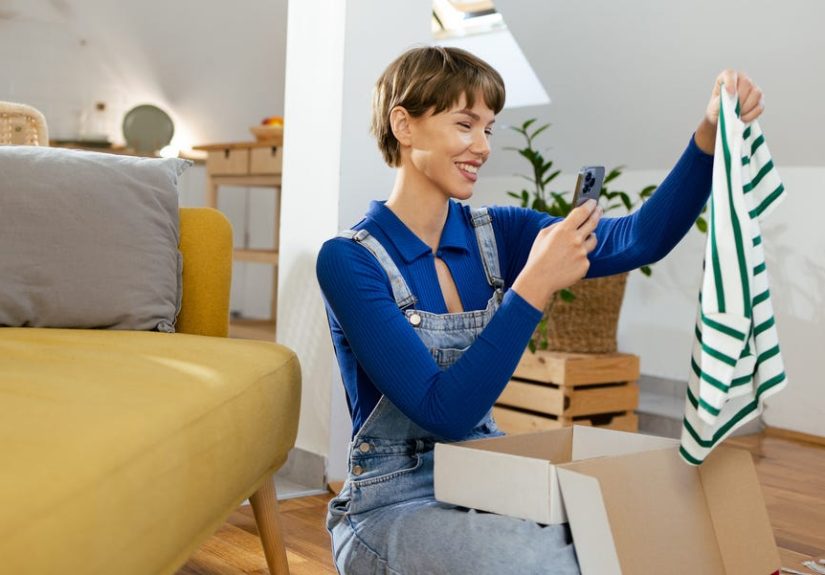
I wanted to believe my charming descriptions would carry the listings. Surely buyers would be moved by phrases like “cute little top” and “great for fall.” They were not. They wanted photos. Good ones. Clear ones. Photos that did not look like they were taken inside a cave during a mild earthquake.
After a few quiet listings, I retook my photos and noticed the difference. Natural light helped. A clean background helped. Showing the front, back, label, fabric texture, flaws, buttons, zippers, cuffs, hems, and tags helped even more.
My simple Vinted photo checklist
- Take photos in daylight near a window.
- Use a plain wall, door, hanger, or clean flat surface.
- Show the full item from the front and back.
- Include close-ups of labels, size tags, fabric, and details.
- Photograph flaws honestly instead of hoping buyers own a microscope.
The best listings do not just make an item look attractive. They answer questions before the buyer has to ask them. Is the sweater cropped? Is the color more cream or white? Does the dress have lining? Is that a design detail or a stain? The camera should do the heavy lifting.
3. Honest Descriptions Sell Better Than “Perfect Condition!!!”
The fastest way to create a problem is to describe every item as “perfect” when it has clearly survived laundry, life, and possibly one aggressive encounter with a tote bag zipper.
Buyers on resale platforms do not expect every item to be brand new. They do expect honesty. If there is pilling, fading, a tiny pull, a missing belt loop, or a mark that only appears under the judgmental glow of bathroom lighting, mention it. You can still sell the item. You just need to sell the truth.
A strong Vinted description includes the brand, size, fit, condition, color, fabric feel, measurements when useful, and styling ideas. For example, instead of writing:
“Nice black dress. Good condition.”
Try:
“Black midi dress from [brand], size medium. Soft stretchy fabric with a fitted waist and slight A-line skirt. Worn twice and in very good condition. No stains or holes. Great for work, dinner, or travel because it does not wrinkle easily.”
That kind of description helps your item appear in searches and makes the buyer feel less like they are gambling with their closet.
4. Pricing Is a Tiny Psychology Experiment
Pricing was where my confidence briefly left the group chat. Price too high, and the item sits there like a museum exhibit. Price too low, and you start wondering why you are packing a sweater, printing a label, and walking to the drop-off point for the price of a fancy coffee.
The sweet spot depends on brand, condition, demand, season, and how quickly you want the item gone. I learned to search similar sold or active listings before pricing anything. If six similar tops are listed for $8 to $12, my $28 masterpiece is probably having delusions of grandeur.
What worked for me
I priced items slightly above my lowest acceptable amount so I had room for offers. If I wanted $15, I might list at $18. That way, a buyer could negotiate, feel victorious, and I could still avoid whispering “why did I do this?” into a shipping bag.
I also learned not to overvalue items just because I paid full price. Resale value is not based on my emotional attachment to a cardigan or the fact that I once wore it during a productive Monday. Buyers care about current demand, condition, brand appeal, and price.
5. Bundles Are Closet-Clearing Magic
One of the best parts of selling a decluttered wardrobe on Vinted is the bundle feature. Buyers can group several items from your closet into one order, which can make shipping more efficient and help you move more pieces at once.
Bundles worked especially well for basics: T-shirts, kids’ clothing, activewear, simple sweaters, accessories, and same-size pieces. A buyer who likes one item may browse your closet and realize you are basically their size twin with slightly better impulse-control recovery.
To encourage bundles, I made my listings feel connected. I used consistent photo backgrounds, clear descriptions, and fair pricing. I also grouped similar items mentally: workwear, weekend basics, seasonal pieces, and “things I bought while trying to become a minimalist, which is objectively funny.”
My biggest bundle lesson: do not treat every item like a separate emotional farewell ceremony. If your goal is to declutter, selling three items together at a reasonable price is often better than waiting months for each one to sell individually for two extra dollars.
6. Shipping Is Not Hard, But It Does Require a System
Before selling on Vinted, I thought shipping would be the scary part. In practice, the platform’s integrated shipping options made it manageable, especially because buyers typically choose and pay for shipping while sellers receive the label or instructions.
Still, you need a system. After my first few sales, I created a mini shipping station with polymailers, recycled boxes, tissue paper, tape, scissors, a marker, and a lint roller. The lint roller deserves its own office and dental plan. It carried the operation.
My packing routine
- Inspect the item one more time.
- Remove lint, hair, loose threads, and pocket surprises.
- Fold neatly so the package looks intentional.
- Use clean, protective packaging.
- Double-check the label and item before sealing.
- Ship promptly and keep proof of drop-off when available.
A clean package does not need to look like a luxury boutique unboxing. It just needs to be secure, tidy, and respectful. Nobody wants to receive a blouse that looks like it fought a raccoon in transit.
7. Fast Communication Prevents Tiny Problems From Becoming Big Ones
Selling online taught me that buyers appreciate quick, calm communication. You do not need to be glued to your phone like a stock trader watching candle charts, but replying within a reasonable time helps.
Some buyers ask for measurements. Some ask whether a color is more beige or gray. Some send offers so low you briefly wonder if they meant to buy one sleeve. Stay polite. You can accept, decline, or counter. The goal is to sell, not audition for a courtroom drama.
I also messaged buyers when I shipped, especially if I dropped off quickly. A short “Thanks, I shipped this today” creates confidence. Positive experiences can lead to good reviews, and good reviews make future buyers more comfortable purchasing from you.
8. Safety and Platform Rules Are Not Optional Background Noise
Vinted is built around in-app transactions, buyer protection, shipping systems, catalog rules, and support processes. The big lesson: keep the transaction on the platform. Do not move conversations to random payment apps, do not accept unusual payment requests, and do not share personal codes or sensitive information.
Marketplace scams often rely on urgency, confusion, or moving people outside the protected system. A buyer who insists on paying another way, asks for verification codes, or sends suspicious links is not being “creative.” They are a walking red flag wearing a trench coat.
It is also important to understand what you can and cannot sell. For a wardrobe declutter, this mostly means sticking to allowed clothing, shoes, accessories, and related items that are clean, accurately described, and compliant with the platform’s rules. Avoid anything counterfeit, unsafe, unhygienic, or misrepresented.
Trust is the whole business. Honest listings, proper categories, real photos, and safe payment behavior protect both buyer and seller.
9. Resale Changed the Way I Shop
The most surprising lesson was not about selling. It was about buying.
Once I had photographed, described, priced, packed, and shipped my old clothes, I became much more aware of what I bring into my wardrobe. Selling a $70 impulse-buy blouse for $12 will teach you more about shopping habits than any minimalist quote printed over a beige sunrise.
I started asking better questions before buying new clothes:
- Will I wear this at least 20 times?
- Does it match what I already own?
- Is it comfortable enough for real life?
- Is the care label realistic, or does it require the lifestyle of a Victorian housekeeper?
- Would I still want this if it were not on sale?
Reselling helped me see the full life cycle of clothing. A purchase does not end at checkout. It ends when the item is worn, repaired, donated, resold, recycled, or discarded. That made me slower, pickier, and less vulnerable to “limited-time” discounts that somehow return every weekend.
10. The Emotional Payoff Is Bigger Than the Money
Yes, making money from a decluttered wardrobe feels fantastic. Even small sales add up, especially when the alternative is letting clothes sit unworn for another year. But the bigger payoff was space.
My closet became easier to use. I could see what I owned. Getting dressed took less time. Laundry felt less dramatic. My style became clearer because the “maybe someday” pieces were no longer shouting over the clothes I actually loved.
Selling on Vinted also made decluttering feel productive instead of wasteful. I was not just throwing things away. I was recirculating usable clothing, earning back a little money, and learning what not to buy next time.
That final part matters. The cleanest closet is not the one you empty once in a heroic weekend. It is the one you stop overfilling in the first place.
Extra Experience Notes: What I Would Do Differently Next Time
After selling my decluttered wardrobe on Vinted, I realized the process becomes much easier when you treat it like a small project instead of a chaotic Sunday mood. My first attempt was enthusiastic but messy. I pulled everything out, made a giant pile, became overwhelmed, and briefly considered solving the problem by moving.
Next time, I would sort in smaller batches. One category at a time works better: jeans first, then sweaters, then dresses, then shoes. Smaller batches help you make better decisions and avoid the classic decluttering trap where your bedroom looks worse than when you started and you are trapped on the bed like it is a life raft.
I would also prepare listings in groups. Photograph 10 items, write 10 descriptions, then upload them. Switching between tasks slowed me down. Batch work made the process smoother because I stayed in one mode at a time. Photo mode. Description mode. Pricing mode. Shipping mode. Snack mode, obviously.
Another thing I would do differently is measure more items before buyers asked. Measurements are especially helpful for jeans, trousers, jackets, dresses, and anything with a fitted shape. Tag sizes are inconsistent across brands, years, and mysterious fashion math. A medium in one brand can be a small, large, or emotional challenge in another. Adding waist, inseam, bust, length, and shoulder measurements reduced back-and-forth messages and helped buyers make decisions faster.
I also learned to keep listed items in one dedicated bin or section. At first, I listed items and returned them to my closet, which created unnecessary confusion. When something sold, I had to hunt for it like a detective in a very soft crime scene. A “listed for sale” bin keeps inventory separate, clean, and easy to ship.
Seasonality matters more than I expected. Coats, boots, sweaters, and party dresses performed better when listed before people needed them, not after the season was already over. Lightweight tops and linen pieces made more sense before warm weather. If you list a wool coat during a heat wave, buyers may still be interested, but they are probably too busy sweating to imagine themselves as chic winter people.
Finally, I would lower prices faster on items I truly wanted gone. In the beginning, I held out for ideal prices. Later, I realized that the goal was not to win a resale trophy. The goal was to clear space, recover some value, and move on. If an item had been sitting for weeks with likes but no sale, a small price drop or a bundle discount often helped.
The biggest experience-based lesson is this: Vinted works best when you are honest about your goal. If your goal is maximum profit, you may need patience, stronger photos, more detailed listings, and careful pricing. If your goal is decluttering, you may prefer quicker sales, bundle deals, and lower prices. Both goals are valid, but mixing them up can make the process frustrating.
For me, the real win was not becoming a resale mogul. It was opening my closet and seeing clothes I actually wear. It was knowing that my unused pieces had a second chance. It was learning that the best wardrobe is not the biggest one, but the one that supports the life you are living now.
Conclusion: Selling on Vinted Is Part Cash, Part Closet Therapy
Selling my decluttered wardrobe on Vinted taught me more than how to upload a sweater and ship a package. It taught me how to evaluate what I own, describe items clearly, price realistically, communicate politely, and shop with more intention.
The process is not effortless. You will take more photos than expected. You will learn the emotional weight of a lowball offer. You will develop strong opinions about packaging. You may even apologize to a dress for neglecting it since 2021.
But if you want to declutter your wardrobe, earn extra money, and give your clothes a second life, Vinted can be a practical and surprisingly satisfying place to start. Begin with a small batch, take clear photos, be honest, ship promptly, and let go of the idea that every item needs to sell for what you originally paid.
Your closet gets lighter. Your shopping habits get smarter. And your once-forgotten clothes get another chance to be worn, loved, and hopefully not stored behind a suitcase for three years.






 Close
Close