
Table of Contents >> Show >> Hide
- Why Cat Sleeping Positions Matter
- 22 Cat Sleeping Positions and What They Mean
- 1. The Classic Loaf
- 2. The Sphinx Pose
- 3. The Curled Crescent
- 4. The Nose-to-Tail Ball
- 5. The Side Sleeper
- 6. The Belly-Up Sleep
- 7. The Superman Stretch
- 8. The Full-Body Sprawl
- 9. The Pretzel Twist
- 10. The Paw-Over-the-Eyes Pose
- 11. The Face-Tucked Sleep
- 12. Sitting Up While Dozing
- 13. The Half-Off-the-Couch Dangle
- 14. Sleeping on a High Perch
- 15. Sleeping in a Box or Covered Bed
- 16. Sleeping With Half-Open Eyes
- 17. Sleeping on Your Chest
- 18. Sleeping on Your Pillow or Head
- 19. Sleeping Between Your Legs
- 20. Sleeping Back-to-Back or Pressed Against You
- 21. Sleeping in a Cat Pile With Another Cat
- 22. The Low, Tucked, Tense Hunch
- How to Tell Whether a Cat Sleeping Position Is Normal
- Experience-Based Observations From Living With Sleepy Cats
- Final Takeaway
If cats had résumés, “professional nap strategist” would absolutely be listed under special skills. One minute your cat is shaped like a perfect loaf of sourdough, the next they are dangling off a chair like modern art. It is funny, adorable, and occasionally a little confusing. What exactly is your cat trying to say with all these dramatic sleeping positions?
The short answer: quite a lot, but not always in a one-size-fits-all way. A cat’s sleeping posture can offer clues about comfort, temperature, trust, mood, and how alert they want to remain while resting. In other words, your cat’s nap style is part body language, part survival instinct, and part “because this laundry pile felt right.”
Understanding cat sleeping positions can help you read feline body language more accurately. It can also help you spot the difference between a relaxed, happy sleeper and a cat whose posture suddenly seems tense, uncomfortable, or unusual. Below, we break down 22 common cat sleeping positions and what they often mean.
Why Cat Sleeping Positions Matter
Cats spend a huge chunk of the day sleeping, so their sleep posture is not random. Even during rest, many cats balance comfort with caution. Some positions help them conserve heat. Others protect vulnerable organs. Some let them pop up in half a second if they hear a suspicious sound, like a bag of treats opening three rooms away.
That said, context matters. A curled-up cat in winter may simply be staying warm. A curled-up cat hiding, eating less, and acting withdrawn may be telling a different story. The position is a clue, not a diagnosis. The smartest way to interpret cat sleep behavior is to consider the full picture: energy level, appetite, breathing, age, environment, and how your cat normally acts.
22 Cat Sleeping Positions and What They Mean
1. The Classic Loaf
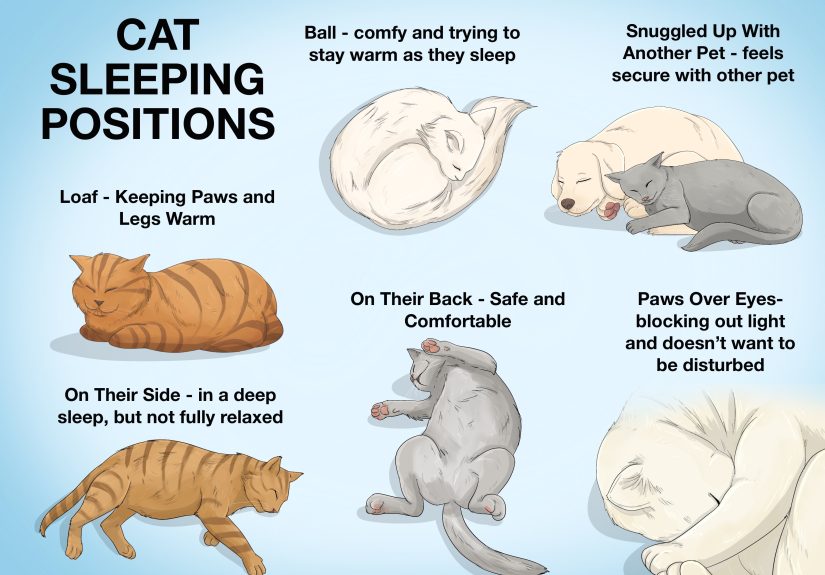
The cat loaf is the celebrity of feline sleeping positions. Your cat tucks their paws under the body and sits like a tidy little bread roll. This usually means your cat feels relaxed but not fully off-duty. They are comfortable enough to rest, yet alert enough to spring into action if necessary. Think of it as “casual mode,” not “deep coma nap.”
2. The Sphinx Pose
In this position, your cat rests on the belly with the front paws stretched neatly in front. It often signals calmness and mild alertness. Cats in the sphinx pose may be drifting in and out of light sleep, especially in rooms where they want to monitor the action without fully participating in it.
3. The Curled Crescent
This is the classic curled-up sleeping position with the tail wrapped close and the body forming a crescent. It is one of the most common cat sleep postures because it helps conserve warmth and protects the belly. When your cat curls up like this, they are usually cozy, secure, and trying to stay comfortable.
4. The Nose-to-Tail Ball
A tighter version of the crescent, this position looks like your cat is trying to become a furry cinnamon roll. It often means the same things as curling up, but with a little extra emphasis on warmth and security. You will see this a lot in cool weather, during quiet naps, or when a cat wants maximum coziness.
5. The Side Sleeper
When a cat lies flat on one side with the legs stretched out, that is usually a strong sign of comfort. The body is more exposed, which means the cat feels safe enough to relax more deeply. Many cats choose side sleeping when they are in familiar environments and feel no need to stay guarded.
6. The Belly-Up Sleep
Ah yes, the dramatic “paint me like one of your French girls” pose. A cat sleeping on their back with the belly exposed is often displaying trust and deep relaxation. The belly is a vulnerable area, so many cats only sleep this way when they feel very secure. Important side note: belly-up sleep does not automatically mean “please rub my stomach.” Cats remain wonderfully inconsistent on that topic.
7. The Superman Stretch
In this pose, your cat lies on the belly with the front legs and back legs stretched outward. It can mean your cat is relaxed, warm, and enjoying a light doze without wanting to curl up. Some cats also seem to love this position after a burst of play, as if they ran out of fuel and landed exactly where they stopped.
8. The Full-Body Sprawl
When a cat stretches out long across the floor, couch, or bed, they are often prioritizing comfort and temperature control. A sprawled-out cat may be cooling off, loosening up after activity, or simply enjoying the luxury of taking up more space than seems physically fair for a ten-pound animal.
9. The Pretzel Twist
Some cats sleep in positions that appear to ignore the laws of anatomy. A twisted spine, upside-down head, one leg in the air, and general noodle energy usually mean only one thing: your cat is extremely comfortable. If the cat wakes easily, moves normally, and seems fine otherwise, the weirdness is usually just peak cat behavior.
10. The Paw-Over-the-Eyes Pose
If your cat covers the face with a paw, it may be blocking light, staying warm, or settling into a more sheltered-feeling sleep. It can also be part of a calming routine. In plain English, your cat may be saying, “Please dim the room, I am having private nap time.”
11. The Face-Tucked Sleep
Some cats tuck the face down into the chest, blanket, or bed edge. This often helps them conserve warmth and reduce stimulation. It can be especially common in cooler rooms or in cats that prefer sleeping in soft, enclosed spaces. A face-tucked cat often wants fewer interruptions and more peace.
12. Sitting Up While Dozing
Yes, cats can sleep while sitting upright. This posture usually suggests light sleep rather than deep rest. It is common when a cat wants to stay semi-alert, especially in a busy household or near a window where neighborhood gossip is always unfolding.
13. The Half-Off-the-Couch Dangle
One paw hanging down, back legs sliding off the cushion, tail in the air like a misplaced scarf. This tends to mean your cat is totally relaxed and not remotely worried about looking elegant. Cats often do this when they feel safe and supported, even if the rest of us would need a chiropractor afterward.
14. Sleeping on a High Perch
Whether it is a cat tree, shelf, or the top of the couch, a high perch provides security and a good vantage point. Cats that sleep elevated often enjoy feeling protected while still keeping an eye on their environment. It is a comfort-and-control combo, which is basically the feline brand.
15. Sleeping in a Box or Covered Bed
If your cat prefers enclosed sleeping spaces, that often reflects a desire for warmth, safety, and lower stress. Boxes and covered beds mimic sheltered den-like spaces. Cats who love these nap spots may simply enjoy the cozy privacy, especially if the home is active or noisy.
16. Sleeping With Half-Open Eyes
This one can look spooky, but it is often just a sign of light sleep. Cats are excellent at napping in short bursts and staying partially aware of their surroundings. If your cat seems calm and wakes normally, half-open eyes are often nothing more than a weird little feline quirk.
17. Sleeping on Your Chest
This position usually signals trust, affection, and a love of warmth. Your chest is soft, warm, and moves rhythmically with your breathing, which many cats seem to find soothing. It can also mean your cat wants closeness and enjoys your scent. In cat terms, this is a very solid compliment.
18. Sleeping on Your Pillow or Head
Plenty of cats choose the pillow zone. Some want warmth, some want your familiar scent, and some simply prefer prime real estate. This position often reflects bonding and security. Your cat may also like being close to your face because it is one of the warmest, least mobile parts of the bed once you are asleep.
19. Sleeping Between Your Legs
This is another trust-heavy sleeping position. Your legs create a snug little nest, and the spot tends to stay warm and stable through the night. Cats who sleep here usually want closeness without being completely squished by your midnight tossing and turning.
20. Sleeping Back-to-Back or Pressed Against You
When a cat leans into your side or sleeps against your back, it often suggests comfort and social bonding. Physical contact can make a cat feel safe and settled. It is also a clever way to steal body heat without making a huge production out of it. Efficient and affectionate: very cat.
21. Sleeping in a Cat Pile With Another Cat
If bonded cats sleep curled together, that usually reflects social comfort, shared warmth, and mutual trust. Cats do not casually share prime nap territory with just anyone. A cat pile is often a sign that the relationship is peaceful and familiar, especially if the cats groom each other when awake too.
22. The Low, Tucked, Tense Hunch
This is the one position to watch more carefully. A cat resting low to the ground with a tightly tucked posture, tense body, or unusual stillness may be cold, stressed, or uncomfortable. On its own, it does not prove a problem. But if it is new for your cat, and especially if it comes with hiding, restlessness, reduced appetite, or changes in breathing or activity, it is worth paying attention and checking with a veterinarian.
How to Tell Whether a Cat Sleeping Position Is Normal
The best way to understand what your cat’s sleeping posture means is to learn your cat’s baseline. Some cats are lifelong loafers. Others are dramatic belly-up sleepers from kittenhood. A few seem committed to sleeping like dropped spaghetti. Normal is often highly personal.
In general, relaxed cat body language during sleep includes loose muscles, calm breathing, neutral ears, and easy waking. Positions that suddenly change, look tense, or appear paired with hiding, vocal changes, limping, or low energy deserve more attention. If your cat is sleeping more than usual and seems different overall, that matters more than any single cute pose.
Experience-Based Observations From Living With Sleepy Cats
Anyone who has lived with cats for a while learns that sleeping positions become a kind of daily language. You start noticing patterns. The morning loaf in the kitchen often means, “I am awake enough to supervise breakfast but not awake enough to help.” The afternoon side-sprawl in the sunny spot usually means your cat feels completely at home. The midnight appearance on your pillow means your personal space has been legally reclassified as communal property.
One of the biggest real-life lessons cat owners report is that trust changes sleep posture over time. Newly adopted cats often begin with cautious positions: tucked paws, partial hiding, upright dozing, or sleeping in enclosed beds. As they settle in, the body language softens. They stretch out more. They sleep on their sides. Some eventually flop onto their backs in a way that practically screams, “Yes, I pay zero rent, and yes, I feel fantastic about it.” Watching that transition can be one of the sweetest signs that a cat finally feels safe.
Another common experience is that weather changes everything. In cooler months, cats tend to become little heat-seeking missiles. They curl tighter, bury their noses, and hunt for blankets, laundry baskets, and laps. In warm weather, the same cat may suddenly become a long-haired puddle on the tile floor, stretched from nose to tail like they are auditioning for a yoga calendar. Owners often worry that the change means something is wrong, when it may simply reflect temperature and comfort.
Multi-cat homes also teach people that sleeping positions reveal relationships. Cats that nap in the same room but keep distance may be peacefully coexisting. Cats that sleep in a heap, touch noses, or drape tails over one another are usually operating at a much closer social level. And when one cat steals the best nap spot while the other settles for the armchair, that too tells a story, just not a very democratic one.
Senior cats can add another layer of nuance. Many owners notice that older cats may sleep longer, choose softer surfaces, or favor positions that seem easier on the joints. A cat who once slept upside down on a windowsill may start choosing a supportive bed instead. That kind of change can be totally normal with age, but it is also why paying attention matters. Sleep posture is not just cute trivia. It can be part of understanding your cat’s comfort and quality of life.
Perhaps the most useful experience-based takeaway is this: no sleeping position should be judged in isolation. A curled cat can be content. A curled cat can be chilly. A curled cat can want solitude after zooming through the house for twenty minutes. The meaning becomes clearer when you pair the position with the cat’s mood, routine, and environment. The more you observe, the easier it gets to tell the difference between “I am blissfully napping” and “something feels off.” Cats may not use words, but they are not exactly subtle once you learn their style.
Final Takeaway
Cat sleeping positions are more than adorable photo opportunities. They can reveal how safe, warm, social, or alert your cat feels in the moment. The loaf suggests relaxed readiness. The curled ball points to warmth and comfort. The side sleeper and belly-up flopper often signal deeper trust. Positions involving you, your pillow, or your legs usually mean your cat sees you as part heater, part furniture, and part emotional support human.
Most importantly, use sleeping positions as clues, not hard rules. A cat’s normal habits, age, environment, and overall behavior matter just as much as the pose itself. Learn your cat’s favorite nap styles, enjoy the ridiculous ones, and pay attention when something changes. Your cat may never file a written report, but their sleeping posture says more than you think.






 Close
Close