
Table of Contents >> Show >> Hide
- Meet Loki: the adopted “vampurr” with a rescue backstory
- Why Loki looks like he’s plotting your downfall (and what’s actually going on)
- The “evil look” effect: why we misread cats (and why it’s kind of adorable)
- If you adopt a “spooky-looking” cat, here’s how to set them up for success
- How Loki’s internet fame helps more than just Loki
- Quick “vampire cat” checklist: when quirky is cute, and when it’s a vet question
- Conclusion: the most evil look… and the sweetest outcome
- Adoption Experiences: What It’s Like Living With a “Vampire Cat” Vibe
Some cats have a “resting grump face.” Some have a “resting angel face.” And then there’s Lokiwho looks like
he just got done drafting a tiny villain monologue and is now waiting for you to say something foolish so he can
dramatically swivel in his swivel chair.
But here’s the twist: the internet’s most “evil-looking” vampire cat is also a rescue with a surprisingly tender
backstory, and his spooky smile is the perfect reminder that looks can be hilariously misleadingespecially when
fangs are involved.
Loki backstory sources
Meet Loki: the adopted “vampurr” with a rescue backstory
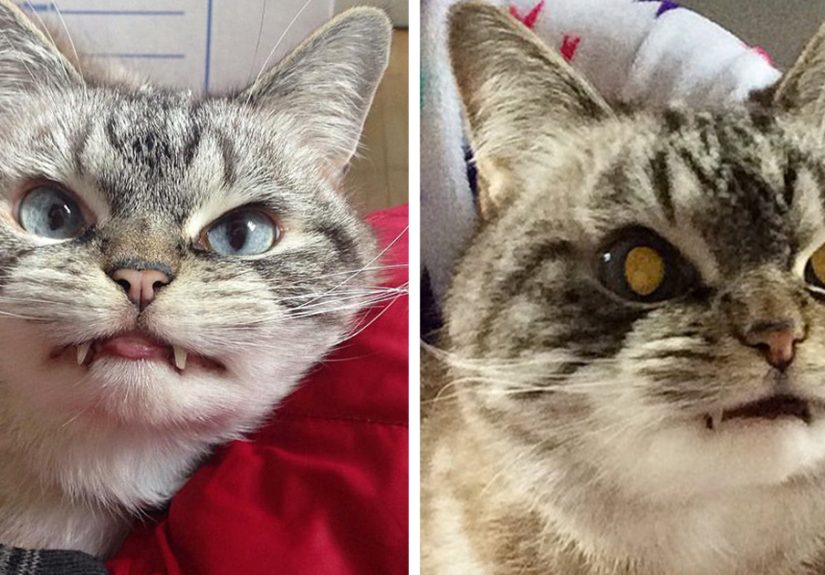
Loki’s signature look is the kind of expression that makes strangers whisper, “Is that cat judging me?” (Answer:
yes. But politely.) The “vampire” vibe comes from the way his teeth and jaw line up, creating a fang-forward grin
that reads as equal parts spooky and adorable.
The story gets even better once you learn Loki wasn’t born into internet fame. He was adopted from a humane society
in Vermont, after living in a staff office because other cats were reportedly picking on him. When his adopter first
met him, he was tucked away in a desk drawerbasically a tiny furry Dracula hiding in plain sight.
He originally had a softer name, but it didn’t quite match the “I have fangs and I’m not afraid to use them (for kibble)”
energy. So he became Lokinamed for the Norse god of mischiefbecause if you’re going to look like a cartoon villain,
you might as well commit to the bit.
Loki and his human ended up in Portland, Maine, where his toothy grin helped him build a huge online following. And while
his face screams “final boss,” his day-to-day life is much more relatable: naps, snacks, photogenic staring contests, and
the occasional “please don’t touch my belly” boundary-setting.
Loki also has a minor eye issue and can’t fully close one eyeanother detail that adds to the dramatic, always-alert
expression. (If you can’t blink normally, you might as well stare through people’s souls.)
Why Loki looks like he’s plotting your downfall (and what’s actually going on)
Loki’s “vampire cat” grin is a perfect example of how feline faces can trick our human brains. We’re wired to read
expressions like a comic strip: frown = mad, wide eyes = shocked, showing teeth = aggressive. Cats, however, are
basically living reminders that evolution never signed up for your social cues.
In Loki’s case, his teeth and jaw alignment appear to create a permanent fang-forward lookmore “snaggle-tooth charm”
than “I will drink your blood.” (Also: cats are famously picky. If it’s not served at the right temperature in the right
bowl, they’re not drinking anything.)
The dental and jaw reasons “fangs” can stick out
When a cat’s bite doesn’t line up normally, it’s called a malocclusion. Some malocclusions are mild and mostly cosmetic;
others can cause trauma to the gums, palate, or other teeth and may need treatment. Veterinary references describe both
skeletal and dental malocclusions, including underbites and mispositioned canine teeth.
Another common contributor is retained “baby teeth.” If a deciduous tooth doesn’t fall out when a permanent tooth erupts,
the adult tooth can be forced into an odd angle or position, creating crowding or a funky bite that makes canines more
noticeable.
And yeswhile it sounds like a joke, severe oral malformations sometimes require veterinary dental intervention that can
include orthodontic approaches. The point isn’t cosmetics; it’s preventing pain and helping the cat eat comfortably.
Don’t forget the boring-but-important part: dental disease
Cute “teefies” can be harmless. But protruding teeth, drooling, trouble eating, or a sudden change in mouth comfort can
also point to dental disease. Cornell’s feline health experts highlight that common cat dental problems include gingivitis,
periodontitis, and tooth resorptionconditions that can be painful and affect appetite and quality of life.
Cats are also masters of hiding discomfort (the animal kingdom’s most committed “I’m fine” performers). So changes may be
subtle: slower chewing, avoiding hard food, pawing at the mouth, or bad breath.
The practical takeaway: a vampire look can be purely quirky, but it’s still smart to have a veterinarian check oral health,
especially in rescued adult cats whose early history may be unknown.
The “evil look” effect: why we misread cats (and why it’s kind of adorable)
Loki’s face works like a magic trick. Your brain sees fangs and a stern little frown, then fills in the rest:
“This cat is up to something.” In reality, most cats are up to the same three things: food, naps, and trying to
sit on the one object you’re currently using.
What makes Loki special is that his look starts conversations. People who might scroll past yet another “cute cat”
stop to stareand then, ideally, they learn something bigger: rescued animals don’t need to be perfect, symmetrical,
or Instagram-filter-friendly to be loved.
If you adopt a “spooky-looking” cat, here’s how to set them up for success
1) Start with a safe room and a slow intro to your home
Many adoption organizations recommend giving a new cat a smaller, quiet space at firstfood, water, litter box,
scratcher, cozy hiding spotso they can decompress and learn that your home isn’t a surprise haunted house.
In the first days, a cat may hide, eat less, or act cautious. That’s normal. The goal is to build predictability:
calm voice, gentle routine, and letting the cat come to you on their timeline.
2) Book the vet visitespecially if the look involves teeth or eyes
With any newly adopted cat, a baseline veterinary check is a good move. And if your cat has unusual teeth, a persistent
snaggle, or any sign of mouth discomfort, that visit becomes even more valuable. Regular dental care mattersprofessional
guidance consistently emphasizes that tooth brushing is one of the most effective ways to support oral health between cleanings.
If brushing sounds like a wrestling match you didn’t consent to, start small: let your cat taste pet-safe toothpaste,
touch the lips, then build up gradually. The goal is progress, not perfectionand not losing a finger to a creature
that weighs eight pounds but has the confidence of a mountain lion.
3) Introduce other pets like you’re defusing a tiny furry bomb (slowly)
For multi-pet homes, many humane organizations advise slow, staged introductionsseparate spaces at first, scent swapping,
calm behavior as the green light, and moving forward only when both pets are relaxed.
This matters for cats like Loki’s early shelter experience suggests: if a cat has been stressed by other cats before,
a careful re-introduction to feline roommates can be the difference between “peaceful household” and “dramatic reality show.”
4) If your cat looks like a tiny vampire, use it for good
Here’s the fun part: the “spooky” aesthetic can actually help cats get noticed. Shelters and adopters often use themed photos,
cute nicknames, and story-driven posts to help overlooked animals stand out. Loki’s popularity shows how a unique face can
turn into a spotlightand spotlights can turn into adoptions.
This is especially meaningful for cats that face stigma. Animal welfare groups continue to point out that black cats can be
adopted at lower rates due to lingering superstition and biasdespite being just as sweet and adoptable as any other coat color.
How Loki’s internet fame helps more than just Loki
Viral animal stories can be fluff, surebut they can also be a gateway. Someone laughs at Loki’s “evil look,” then learns
he’s a rescue. Someone shares the post, then considers adopting. Someone with a snaggle-toothed cat realizes they should ask
their vet about oral health. That’s not just entertainment; it’s a tiny ripple of better outcomes.
The veterinary world has also been pushing harder on feline oral health in recent years, including new guideline releases
designed to improve standards and empower caregivers to participate in their cat’s dental care. More awareness means more
comfort, fewer hidden pain issues, and more happy cats doing what they do best: acting like they pay rent.
Quick “vampire cat” checklist: when quirky is cute, and when it’s a vet question
- Probably just quirky: stable snaggle-tooth, normal eating, normal grooming, normal energy.
- Worth asking your vet: drooling, pawing at the mouth, foul breath, appetite changes, bleeding gums, sudden tooth position changes.
- Always worth checking: any eye issue that prevents full blinking, since the surface of the eye needs protection and comfort.
Loki’s story is the cheerful version of this lesson: a weirdly dramatic face can still belong to a cat who’s doing just fineespecially
with attentive care and regular checkups.
Conclusion: the most evil look… and the sweetest outcome
Loki may look like he’s starring in “Cats: The Gothic Reboot,” but the real story is simpler and sweeter: a rescue cat with unusual teeth,
a memorable expression, and a home that turned his quirks into something celebrated instead of “fixed.”
If Loki has a superpower, it’s this: making people stop, smile, and rethink what “cute” is supposed to look like. Sometimes the best pets
aren’t the ones with perfect symmetrythey’re the ones with personality you can spot from across the room… and fangs you can see from space.
Adoption Experiences: What It’s Like Living With a “Vampire Cat” Vibe
Ask people who’ve adopted a snaggle-toothed, stern-faced, or “spooky aesthetic” cat, and you’ll hear the same theme repeated in a hundred different
ways: the look gets the attention, but the personality gets the devotion.
Many adopters describe the first week as a comedy of misunderstandings. Friends come over, see the fangs, and do that nervous laugh that says,
“He’s… adorable. And also I think he might hex me.” Meanwhile the cat is doing something extremely non-vampiriclike falling asleep mid-blink, or
getting frightened by a grocery bag that moved “suspiciously.”
There’s also a very real “public relations” phase. People tend to project a mood onto a cat’s face, so adopters become accidental spokespeople:
“He looks angry, but he’s actually shy.” “She’s not plotting anything; that’s just her teeth.” “Yes, he’s called Loki. No, he has not summoned
thunder. Yet.” Over time, that little explanation becomes a point of pridebecause it turns a quirky appearance into a story of care.
One common experience is the “first vet visit reality check.” Adopters often bring in their vampire-faced cat partly for reassurance: is the bite
normal, are the teeth healthy, does the mouth look comfortable? When the vet confirms things are fineor lays out a simple plan for dental carepeople
visibly relax. It’s the same relief you feel when a weird sound in your car turns out to be a loose water bottle instead of an engine issue, except your
car doesn’t purr at you afterward.
Then comes the photo era. Cats with dramatic looks often become the easiest to photograph because every image tells a mini-story. The fang peek. The tiny
scowl. The “I cannot believe you served dinner two minutes late” stare. Adopters talk about how these photos help family members bond with the cat faster
especially people who didn’t think they were “cat people.” A single hilarious picture can turn skepticism into affection, and affection into a routine of
playtime, treats, and gentle trust-building.
Holidays can be peak vampire-cat season. People lean into the theme with safe, low-stress fun: a bat toy, a pumpkin-shaped scratcher, or a cozy blanket that
looks like a cape. But most adopters also mention a quieter truth: the best moment isn’t the costume joke. It’s the calm evening when the “evil-looking” cat
finally chooses to sit near you, then beside you, then on youlike a tiny, warm declaration that you’re officially theirs.
And that’s the lasting experience of living with a Loki-type cat: the face may look like mischief, but the bond feels like pure luck.





 Close
Close