
Table of Contents >> Show >> Hide
- Why Slow-Cooker Brisket Works So Well
- Best Slow-Cooker Brisket Recipe
- What Makes This the Best Slow-Cooker Brisket Recipe?
- Pro Tips for Tender, Flavorful Brisket
- Common Mistakes to Avoid
- What to Serve with Slow-Cooker Brisket
- How to Store and Reheat Brisket
- Final Thoughts
- Extra Kitchen Experience: What Slow-Cooker Brisket Really Feels Like at Home
If comfort food had a board of directors, brisket would definitely chair the meeting. It is rich, hearty, dramatic in the best way, and somehow manages to feel both holiday-worthy and lazy-Sunday-friendly. Better yet, slow-cooker brisket is proof that great cooking does not always require a culinary degree, a smoker the size of a pickup truck, or a playlist called “Serious Meat Decisions.” Sometimes all you need is a good cut of beef, a pile of onions, a flavorful braising liquid, and enough patience to let low heat do the heavy lifting.
The beauty of this slow-cooker brisket recipe is that it leans into what brisket actually wants. This is not a cut that responds well to rushing, pep talks, or aggressive optimism. Brisket gets tender when you cook it low and slow, allowing the tough connective tissue to soften into silky richness. The result is meat that slices beautifully, tastes deeply beefy, and turns an ordinary dinner into a “Who made this?” moment.
Below, you will find a reliable, flavorful, and very doable recipe for the best slow-cooker brisket, along with tips for choosing the right cut, building a better sauce, avoiding common mistakes, and serving leftovers that somehow taste even better the next day. In other words: dinner is handled.
Why Slow-Cooker Brisket Works So Well
Brisket comes from the lower chest of the cow, which means it is a hard-working muscle with plenty of connective tissue. That is great news for flavor and less great news if you try to cook it like a steak. The secret is moist, gentle heat over several hours. In a slow cooker, brisket slowly braises in its own juices plus a savory liquid, becoming tender without drying out.
This method also makes life easier. You can brown the meat, build a sauce, set the cooker, and then go do something else. Pay bills. Fold laundry. Pretend you are going to fold laundry. The slow cooker does not judge.
Another reason this easy brisket recipe wins? It is naturally make-ahead friendly. In fact, brisket often tastes even better after resting overnight in its juices, because the flavors settle in and the fat is easier to remove. That means less stress for dinner parties, holidays, and those nights when you want to look wildly competent with minimal last-minute effort.
Best Slow-Cooker Brisket Recipe
Ingredients
- 1 beef brisket, 4 to 5 pounds, preferably flat cut or first cut
- 2 teaspoons kosher salt
- 1 teaspoon black pepper
- 2 teaspoons smoked paprika
- 1 teaspoon garlic powder
- 2 tablespoons olive oil
- 3 large yellow onions, thinly sliced
- 6 garlic cloves, minced
- 2 tablespoons tomato paste
- 1 1/2 cups low-sodium beef broth
- 2 tablespoons Worcestershire sauce
- 2 tablespoons apple cider vinegar
- 2 tablespoons brown sugar
- 4 sprigs fresh thyme, or 1 teaspoon dried thyme
- 2 bay leaves
- 3 large carrots, cut into chunks (optional, but very welcome)
- 1 tablespoon cornstarch mixed with 1 tablespoon cold water, if you want a thicker sauce
- Chopped parsley, for serving
How to Make Slow-Cooker Brisket
- Season the brisket. Pat the brisket dry with paper towels. Mix the salt, pepper, smoked paprika, and garlic powder, then rub the mixture all over the meat. If you have time, let it sit for 30 minutes at room temperature or refrigerate it overnight for deeper flavor.
- Sear for better flavor. Heat the olive oil in a large skillet over medium-high heat. Sear the brisket for 4 to 5 minutes per side until nicely browned. This step is not technically mandatory, but it makes the finished brisket taste much more robust and less like it just woke up from a nap.
- Build the onion base. Scatter the sliced onions in the slow cooker. Place the brisket on top, fat side up if possible. Add the garlic and carrots around the meat.
- Make the braising liquid. In a bowl, whisk together the tomato paste, beef broth, Worcestershire sauce, apple cider vinegar, and brown sugar. Pour the mixture around the brisket, not directly over the top, so you do not wash away your seasoning. Add the thyme and bay leaves.
- Cook low and slow. Cover and cook on LOW for 8 to 10 hours or on HIGH for 5 to 6 hours, until the brisket is fork-tender. If it still feels stubborn, keep cooking. Brisket has a personality. Sometimes it needs more time.
- Let it rest. Transfer the brisket to a cutting board and rest it for 15 to 20 minutes. This helps the juices stay where they belong instead of running all over your board like they are escaping a bad relationship.
- Finish the sauce. Remove the bay leaves and thyme stems from the slow cooker. Skim excess fat from the surface. If you want a thicker sauce, pour the liquid into a saucepan, bring it to a simmer, and whisk in the cornstarch slurry. Cook until glossy and lightly thickened.
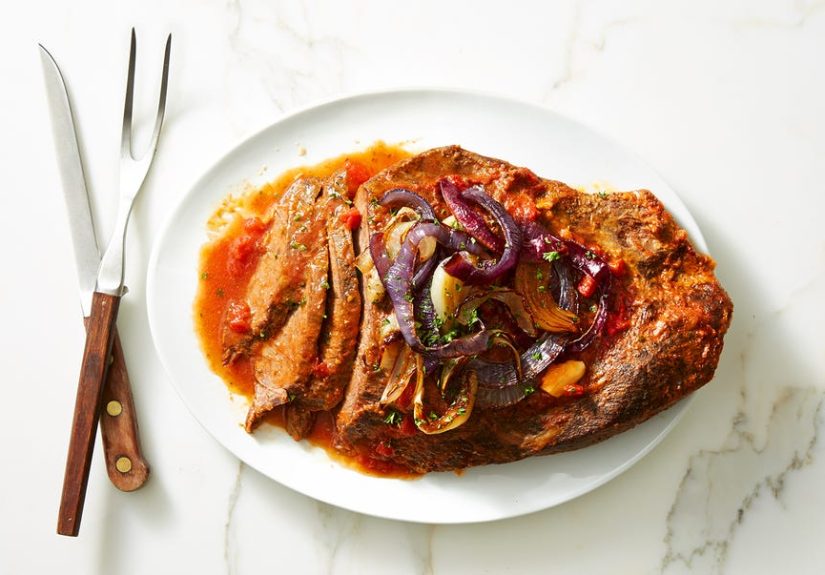
- Slice and serve. Slice the brisket thinly against the grain. Spoon the onions and sauce over the top, sprinkle with parsley, and serve warm.
What Makes This the Best Slow-Cooker Brisket Recipe?
A truly great slow-cooker beef brisket balances three things: deep savory flavor, tender texture, and a sauce worth dragging bread through when nobody is looking. This version gets there by layering flavor instead of dumping everything in and hoping for magic.
First, the brisket is seasoned and seared. Browning creates the kind of richness that makes people assume you spent all day fussing over a Dutch oven. Second, onions do a lot of the heavy lifting. As they cook down, they sweeten naturally and melt into the braising liquid, creating a built-in sauce. Third, the liquid hits several flavor notes at once: broth for body, Worcestershire for umami, tomato paste for depth, vinegar for brightness, and brown sugar for balance.
The final touch is slicing the brisket properly. This matters more than many home cooks realize. Even a beautifully cooked brisket can feel chewy if you slice with the grain. Cut across those long muscle fibers, and suddenly the whole thing becomes tender, juicy, and dangerously easy to keep eating.
Pro Tips for Tender, Flavorful Brisket
1. Choose the right cut
Flat cut brisket is usually the easiest choice for slicing neatly. It is leaner, more uniform in shape, and fits into a slow cooker more gracefully. Point cut has more fat and can be even richer, but it is less tidy. Either can work, as long as it fits comfortably.
2. Do not skip the onions
If the brisket is the lead singer, the onions are the backup band that makes the whole show sound better. They soften, sweeten, and turn the cooking liquid into something much more luxurious than plain broth ever could.
3. Resist the urge to flood the slow cooker
Brisket is not soup. You want enough liquid to braise the meat, not enough to send it snorkeling. As the brisket cooks, it releases juices of its own, so a moderate amount of liquid is usually perfect.
4. Cook until tender, not until the timer beeps
Every brisket is a little different. Size, thickness, and even the particular slow cooker can affect timing. If the meat is still firm, keep going. The difference between “a little tough” and “melts beautifully” is often just another 30 to 60 minutes.
5. Make it a day ahead
If you can, cook the brisket ahead of time and chill it in the sauce overnight. The flavor improves, slicing becomes easier, and the chilled fat on top can be lifted off cleanly. This is one of those rare kitchen tricks that makes life easier and the food better. We love a multitasker.
Common Mistakes to Avoid
Using frozen meat in the slow cooker: Always thaw brisket before slow cooking. Starting with frozen meat can keep it in an unsafe temperature range for too long and also leads to uneven cooking.
Skipping the rest: Resting the brisket is not optional theater. It helps the juices redistribute so the slices stay moist.
Slicing too thick: Thick slabs can feel heavy and chewy. Thin slices are more tender and better for serving with sauce.
Ignoring the grain: This is the most common brisket tragedy. Find the direction the muscle fibers run, then slice across them.
Over-reducing the sauce before tasting: Since the braising liquid can already be concentrated, always taste before adding more salt or reducing too aggressively.
What to Serve with Slow-Cooker Brisket
The best side dishes for slow-cooker brisket are the ones that know how to handle a glorious sauce. Mashed potatoes are an obvious winner, because fluffy potatoes plus savory gravy is a love story with excellent chemistry. Buttered egg noodles, creamy polenta, rice, or thick slices of crusty bread are also smart choices.
For vegetables, roasted carrots, green beans, braised cabbage, or a crisp salad all work nicely. If you want a deli-style vibe, serve the brisket with pickles, mustard, and soft rolls. Leftovers also make fantastic sandwiches, tacos, hash, or grain bowls. In fact, leftover brisket may be one of the strongest arguments in favor of cooking more than you need on purpose.
How to Store and Reheat Brisket
Once cooked, brisket should not linger on the counter all evening while everyone tells themselves they will put it away in “just a minute.” Refrigerate leftovers within 2 hours, ideally in shallow containers with some of the sauce to keep the meat moist. Stored properly, it keeps well in the refrigerator for about 4 days.
To reheat, place the brisket and sauce in a covered baking dish or skillet over gentle heat until warmed through. Add a splash of broth if needed. Avoid blasting it into submission in a way that dries it out. Low and slow got you here; low and gentle will keep things lovely.
Final Thoughts
If you have been looking for the best slow-cooker brisket recipe, this is the kind of dependable, crowd-pleasing version worth saving. It is rich without being fussy, easy enough for a weeknight with planning, and impressive enough for holidays and dinner guests. Most importantly, it respects what brisket needs: time, moisture, seasoning, and a sharp knife used correctly.
Make it once, and you will understand why slow-cooked brisket inspires such devotion. Make it twice, and you will probably start casually volunteering to host dinner just to show off. That is the power of a good braise.
Extra Kitchen Experience: What Slow-Cooker Brisket Really Feels Like at Home
One of the most relatable things about making brisket in a slow cooker is that it almost always begins with a little doubt. You season this giant hunk of beef, lower it into the cooker, pour in what looks like a suspiciously modest amount of liquid, and think, “That cannot possibly turn into dinner.” Several hours later, your kitchen smells like a restaurant that charges for cloth napkins, and suddenly your earlier skepticism feels deeply embarrassing.
There is also a very real emotional arc to brisket day. Early on, you feel organized and mature. Midway through, you lift the lid for a quick peek and wonder whether anything is happening beyond onion sweating. Near the end, the transformation becomes obvious: the meat relaxes, the onions collapse into sauce, and the whole thing looks like it should be carried to the table on a platter with unnecessary confidence. This is one reason people love slow-cooker brisket. It asks for patience, but it rewards that patience in a way that feels dramatic and generous.
Another common experience is discovering that brisket can be both forgiving and strangely particular. It forgives a slightly imprecise onion slice, a different brand of broth, or the fact that your thyme springs are more “twig-adjacent” than ideal. But it is particular about time. Pull it too early and it is firm. Slice it the wrong way and it acts offended. Reheat it carelessly and it gets dry in protest. Once you have cooked brisket a couple of times, you start to realize that success is less about culinary genius and more about respecting the process. Brown it well. Give it enough time. Slice against the grain. These become the kitchen commandments.
Then there is the leftover phase, which may actually be the best part. Day-one brisket is impressive. Day-two brisket is wise. The sauce tastes deeper, the meat slices more cleanly, and suddenly you are building sandwiches with pickles and mustard like a person who owns a very expensive apron. Many home cooks end up planning brisket specifically because the leftovers are so useful. A tray of reheated brisket with mashed potatoes can feel like a second holiday. Tucked into tacos with onions and cilantro, it becomes a completely different meal. Chopped into hash with crispy potatoes and a fried egg, it turns breakfast into a situation.
And finally, there is the social side of brisket. It is one of those dishes that makes people hover in the kitchen and ask questions they never ask about salad. “What is that smell?” “How long did this cook?” “Why is it so tender?” It has a built-in sense of occasion, even when the table is casual and the side dish is whatever vegetable survived the week in the refrigerator. Slow-cooker brisket feels generous. It feeds a crowd, stretches into leftovers, and somehow makes an ordinary dinner feel like a small event. That is probably why so many people come back to it. Not just because it is delicious, although it absolutely is, but because it creates the kind of meal people remember a little longer than they remember the average Tuesday.




 Close
Close