
Table of Contents >> Show >> Hide
- What “Best” Means (and Why Your Grill Has Opinions)
- Start With the Meat: Your Burger’s Entire Personality
- Patty Science: Shape It Like You Mean It (But Don’t Over-Mean It)
- Seasoning: The Easiest Way to Accidentally Change the Texture
- Grill Setup: Gas vs. Charcoal (Both Can Win)
- The Best Homemade Burgers on the Grill: A Repeatable Blueprint
- Timing and Doneness: Use This as a Starting Point (Not a Promise)
- Food Safety Without the Lecture (Just the Stuff That Matters)
- Common Burger Mistakes (AKA: Why Your Friend “Hates Grilling”)
- Toppings and Assembly That Don’t Turn Into a Mess
- Troubleshooting: Quick Fixes for Real Life
- Conclusion: The “Best Burger” Is a System, Not a Secret
- Grill-Side Experiences: of Burger Lessons I Learned the Hard Way
The best homemade burgers on the grill are a perfect mix of three things: crust, juiciness, and confidence. Crust is that browned, savory “oh wow” layer. Juiciness is the part that makes everyone quiet for a second. Confidence is knowing you’re not about to serve a hockey puck… or a suspiciously pink mystery.
This guide is the no-fuss, backyard-tested blueprint for juicy grilled burgers that actually taste like beef, not breadcrumbs, not “a blend of spices,” and definitely not panic. We’ll cover meat choice, patty shaping, seasoning timing, grill setup (gas and charcoal), burger internal temperature, cheese-melting tricks, bun strategy, toppings that stay put, and the small mistakes that quietly ruin a cookout.
What “Best” Means (and Why Your Grill Has Opinions)
“Best” isn’t a single recipeit’s a set of decisions that stack the odds in your favor:
- Right fat level so the burger stays juicy and flavorful.
- Gentle handling so it’s tender, not springy like a stress ball.
- Hot, steady grill so you get browning before the inside overcooks.
- A thermometer so “I think it’s done?” becomes “It’s done.”
- Smart assembly so the burger doesn’t turn into a slip-and-slide in your hands.
Start With the Meat: Your Burger’s Entire Personality
Pick the right ratio
If you want the classic “best grilled burger recipe” vibejuicy, beefy, and not greasyaim for 80/20 ground beef (about 80% lean, 20% fat). The fat is your built-in insurance policy: it melts, it bastes, and it carries flavor.
Too lean (like 90/10) can work, but it’s easier to dry out on the grillespecially over high heat or if you’re cooking past medium. Too fatty can flare up and char the outside before the inside catches up.
Fresh matters more than fancy
You don’t need a secret blend of “three cuts and a fairy tale.” You need ground beef that smells clean, looks bright, and hasn’t been sitting around thinking about its life choices. If you can, buy it the day you grill. If you’re grinding at home, you can control texture and keep it super fresh.
Keep it cold
Warm beef = smeary fat. Smeary fat = dense burger. Dense burger = sadness. Keep the meat cold until you’re ready to shape. If it starts feeling sticky, pop it back in the fridge for 10 minutes.
Patty Science: Shape It Like You Mean It (But Don’t Over-Mean It)
Size and thickness
A great all-purpose burger is 5 to 6 ounces and about 3/4 to 1 inch thick. That’s thick enough to stay juicy, but not so thick that the outside burns while the inside is still negotiating.
Handle the meat less than your phone
Overworking ground beef compresses it. Compressed beef cooks up tight. Tight beef is not the goal. Gently form patties until they just hold togetherno kneading, no vigorous “mixing,” no meatball energy.
Make the dimple (yes, really)
Press a shallow dimple in the center of each patty (about the width of a couple fingers). This helps the burger stay flatter as it cooks, instead of doming up like it’s trying to become a meat muffin.
Seasoning: The Easiest Way to Accidentally Change the Texture
Salt at the right time
Salt is magicuntil it’s early. Salting ground beef too far in advance (especially mixing it into the meat) can make burgers firmer and sausage-like. For classic tender burgers, shape first, then season the outside generously with kosher salt and pepper right before grilling.
Keep it simple (and actually taste the beef)
My default is kosher salt + black pepper. That’s it. If you want extras, add them as accents, not as a cover-up: garlic powder, onion powder, smoked paprikasmall pinches on the outside.
Grill Setup: Gas vs. Charcoal (Both Can Win)
You can make amazing homemade burgers on the grill with either setup. The key is consistent heat and a clean grate. Burgers are a direct-heat game, but having a “safe zone” helps you manage flare-ups and finish thicker patties without scorching.
For gas grills
- Preheat with the lid closed for 10–15 minutes.
- Aim for medium-high heat (often around 375–450°F depending on your grill).
- Create a two-zone setup if you can: one side hotter, one side a little cooler.
- Brush grates clean, then lightly oil them (folded paper towel + tongs + a little oil).
For charcoal grills
- Build a two-zone fire: pile coals on one side for high heat, leave the other side cooler.
- Wait for coals to be hot (mostly ashed over) before cooking.
- Clean and oil the grate. Charcoal flavor is great; last week’s fish residue is not.
The Best Homemade Burgers on the Grill: A Repeatable Blueprint
Ingredients (serves 4)
- 1 1/2 pounds 80/20 ground beef (chuck is a great choice)
- Kosher salt and freshly ground black pepper
- 4 burger buns (potato rolls or sturdy brioche are reliable)
- Butter or mayo for toasting buns (optional but highly recommended)
- 4 slices cheese (American, cheddar, pepper jackyour call)
- Toppings: lettuce, tomato, onion, pickles
Simple “house sauce” (optional, but people will ask about it)
- 1/3 cup mayo
- 2 tbsp ketchup
- 1 tbsp pickle relish (or finely chopped pickles)
- 1 tsp Worcestershire sauce
- Pinch of black pepper
Steps
- Preheat and prep the grill. Heat to medium-high. Clean the grates and lightly oil them. Set up two zones if possible (hot side + cooler side).
- Shape the patties. Divide beef into 4 portions (5–6 oz each). Gently form into patties 3/4–1 inch thick and slightly wider than the buns. Press a shallow dimple in the center.
- Season right before grilling. Sprinkle both sides generously with kosher salt and black pepper.
- Grill the first side. Place patties on the hot zone. Let them cook undisturbed until they release easily and you’ve got strong browning. This is usually about 3–5 minutes depending on heat and thickness.
- Flip (and only press your luck, not your burger). Flip once. Do not smash down with a spatula unless you enjoy watching flavor drip into the fire.
- Cook to temperature, not vibes. Start checking internal temp after a couple minutes on side two. For food safety with store-bought ground beef, aim for 160°F in the center. If flare-ups happen, move burgers to the cooler zone to finish.
- Melt the cheese like a pro. In the last 30–60 seconds, add cheese and close the lid to melt quickly.
- Toast the buns. Spread butter or mayo on cut sides, then toast over the cooler zone until golden.
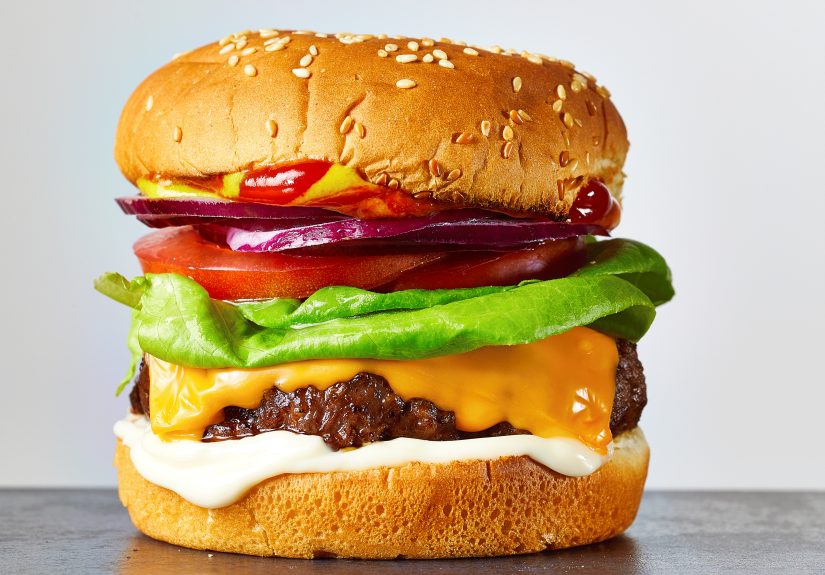
- Rest briefly, then build smart. Rest burgers 2 minutes. Sauce the bun, add lettuce first (it’s a moisture barrier), then burger, then tomato/onion/pickles.
Timing and Doneness: Use This as a Starting Point (Not a Promise)
Grill times depend on patty thickness, grill temperature, wind, and whether your grill is currently in a dramatic mood. As a rough guide for 3/4–1 inch patties on medium-high:
- First side: 3–5 minutes for browning
- Second side: 2–5 minutes, then check temp
- Cheese: last 30–60 seconds with lid closed
The real win is internal temperature. An instant-read thermometer removes guesswork and prevents overcooking. Also remember carryover cooking: burgers can rise a few degrees after leaving the grill.
Food Safety Without the Lecture (Just the Stuff That Matters)
Ground beef isn’t like a steak. Anything on the surface gets mixed throughout, which is why safety guidance is stricter. For typical store-bought ground beef, the widely recommended safe target is 160°F. Don’t rely on colorbrowning can happen before it’s safe, and pink can hang around after it’s safe.
If you choose to cook below 160°F for a pink-centered burger, understand the risk and consider safer approaches, like grinding your own meat from whole cuts with excellent sanitation practices. When feeding a crowd (kids, older adults, pregnant people, anyone immunocompromised), cooking to 160°F is the simplest, safest move.
Common Burger Mistakes (AKA: Why Your Friend “Hates Grilling”)
Mistake #1: Overworking the meat
If your burger feels like a rubbery protein puck, it was probably packed too tight. Be gentle. Let the grill do the work.
Mistake #2: Salting too early
Early salt can change texture. Season the outside right before grilling for the classic tender bite.
Mistake #3: Pressing down on the patty
Pressing squeezes out fat and juicesyour burger’s “moisture budget.” Save the smashing for a griddle-style smash burger, not the grill.
Mistake #4: Dirty grates
Sticking isn’t your burger’s fault. It’s last weekend’s char. Clean, preheat, oil lightly, then cook.
Mistake #5: No plan for flare-ups
Fat drips. Fire happens. Have a cooler zone ready. Move burgers, close the lid, and let the flames calm down. (Do not attack the fire with your spatula like it owes you money.)
Toppings and Assembly That Don’t Turn Into a Mess
Toast the bun (this is structural engineering)
Toasting adds flavor and creates a barrier so the bun doesn’t instantly absorb burger juices and collapse. Butter or mayo both work; mayo browns fast and evenly.
Build a “non-slip” burger
- Bottom bun: sauce
- Then lettuce: it blocks moisture
- Then burger + cheese
- Then tomato/onion/pickles
- Top bun: more sauce if you’re feeling brave
Example combos that always work
- Classic: American cheese + pickles + onion + ketchup/mustard
- BBQ-ish: cheddar + grilled onions + BBQ sauce + crispy bacon
- “Fancy but easy”: pepper jack + jalapeños + house sauce
Troubleshooting: Quick Fixes for Real Life
My burgers are dry
- Use 80/20 beef and avoid overcookingcheck temp earlier.
- Make patties thicker (3/4–1 inch) and don’t press them.
- Rest 2 minutes before serving so juices redistribute.
My burgers are falling apart
- Meat might be too warmkeep it cold.
- Handle gently but form firmly enough to hold together.
- Flip when they release from the grates; don’t force it early.
My burgers are burning outside, raw inside
- Grill is too hotuse a two-zone setup and finish on the cooler side.
- Patties are too thickflatten slightly and use the lid to cook through.
- Check internal temperature instead of extending time blindly.
Conclusion: The “Best Burger” Is a System, Not a Secret
The best homemade burgers on the grill don’t come from a mystical spice blend or a sacred family scroll. They come from the basics done well: 80/20 beef, gentle shaping, a center dimple, seasoning at the right moment, a hot clean grill, and cooking by temperature. Nail that, and you’ll be the person everyone suddenly wants to “help” at the next cookout (by hovering near the grill holding a beverage).
Grill-Side Experiences: of Burger Lessons I Learned the Hard Way
The first time I tried to “level up” my grilled burgers, I did what many well-meaning people do: I treated the patty like a craft project. I mixed in seasonings, kneaded the beef until it looked uniform, and proudly shaped these picture-perfect rounds. They were gorgeous. They were also… bouncy. Like, “could probably survive a tennis match” bouncy. That was my first lesson: burgers aren’t meatloaf. The moment you start working ground beef like dough, you’re basically telling it, “Please become dense.”
My second lesson arrived in a cloud of smoke. I’d heard somewhere that pressing burgers “helps them cook faster,” and I believed it because it sounded like something a confident person would say while wearing an apron that says KISS THE COOK. So I pressed. The grill responded by turning into a tiny volcano. Fat dripped, flames jumped, and the best part of the burger (the juicy part) ran away to live a better life in the bottom of the firebox. The patties cooked, surebut the flavor had been donated to the charcoal gods. Now I treat pressing on a grilled burger the same way I treat texting my ex: it’s never the move.
Lesson three was about timing and patience. I used to flip too early because I was afraid of sticking, which is like pulling a cake out of the oven because you’re worried it might… become cake. If the grate is hot and lightly oiled, the burger will release when it’s ready. When I finally forced myself to wait, I got better browning, cleaner grill marks, and a burger that didn’t look like it had been dragged across the yard.
The biggest upgrade, though, was the thermometer. Before that, I played Doneness Roulette: cut into a burger, peek, re-grill, repeat. It worked about as well as guessing a password by vibes. Once I started checking internal temperature, everything got calmer. I could pull burgers at the right moment, melt cheese with the lid closed like I actually knew what I was doing, and serve a batch that was consistentno overcooked edges, no questionable centers. It also made me braver about thickness: I could make a slightly thicker patty, sear it hot, then slide it to the cooler side to finish without fear.
And finally, I learned that a burger is more than the patty. Toasting buns felt “extra” until I tasted the difference: crisp, warm bread that didn’t dissolve under sauce. Building with lettuce as a barrier felt silly until my burger stopped sliding around like it was trying to escape. Now, even when I’m grilling for a crowd, I keep the routine simple: cold 80/20 beef, gentle patties, a dimple, salt-and-pepper at the last second, hot clean grates, thermometer check, quick rest. The result is the same every timejuicy grilled burgers that disappear fast enough to make you wonder if you even made enough.







 Close
Close