Table of Contents >> Show >> Hide
- What Exactly Is the Ifuji Oval Box – Black?
- From Shaker Pantries to Japanese Studios: A Brief History
- Meet Masashi Ifuji: The “Box Tailor”
- Time-Honored Techniques Behind the Oval Box
- Why the Black Oval Box Works in Real Homes
- Sizes, Stacks, and Styling Ideas
- How to Care for Your Ifuji Oval Box – Black
- Is the Ifuji Oval Box – Black Worth It?
- Living with the Ifuji Oval Box – Black: Experiences and Impressions
- Conclusion: A Small Box with a Big Presence
Some storage solutions scream for attention with labels, handles, and 14 different compartments.
The Ifuji Oval Box – Black does the opposite. It sits quietly on a shelf or dresser, looking like
a small minimalist sculpture… and only later do people realize it’s actually where you keep the truly
important stuff: love letters, sewing notions, your favorite fountain pen, or that mysterious spare key
you swear you’ll remember someday.
Handcrafted in Japan by woodworker Masashi Ifuji, this black oval box combines centuries-old Shaker
design with Japanese precision and restraint. The result is a piece of functional art that feels at home
in a pared-back modern apartment, a cozy farmhouse, or a design-obsessed studio where even paperclips
deserve a beautiful container.
What Exactly Is the Ifuji Oval Box – Black?
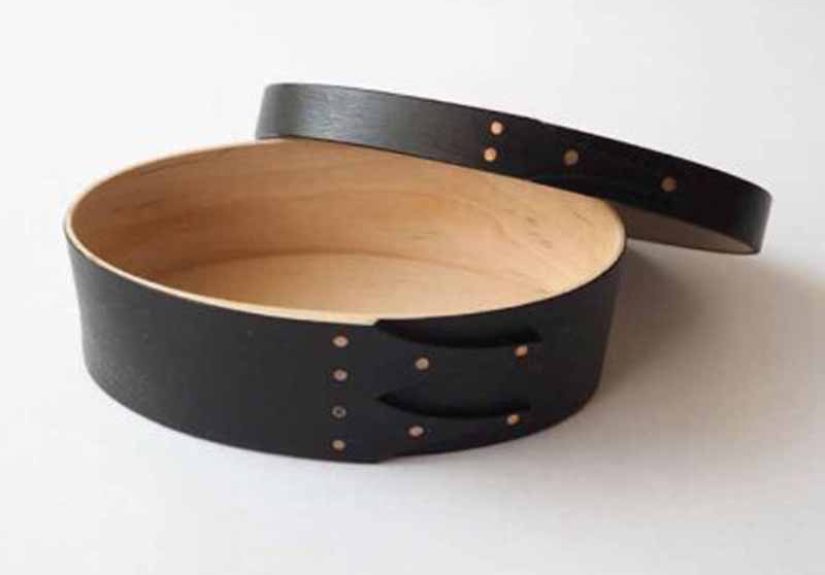
At first glance, the Ifuji Oval Box – Black looks deceptively simple: a smooth black oval with a lid that
fits perfectly, a pale interior, and a line of tiny tacks along the side. Look closer and you start to see
the details that design lovers obsess over:
- Material: Typically crafted from finely grained Japanese maple or similar hardwood, chosen for its strength and smooth finish.
- Shape: A classic elongated oval, originally designed for efficient storage and easy stacking.
- Construction: Thin wood is bent into the oval shape, and the overlapping seam is secured with small copper tacks and graceful “swallowtail” fingers.
- Finish: A deep black, often created with vegetable-dyed or painted surfaces that highlight the grain while giving a quiet, matte presence.
- Sizes: Usually produced in numbered sizes (often from 0 to 9), which can nest or stack into those photogenic towers you see in design shops.
The black exterior paired with the light interior wood creates a subtle contrast that feels refined rather
than flashy. It’s the storage equivalent of a little black dress: simple, versatile, and always appropriate.
From Shaker Pantries to Japanese Studios: A Brief History
The Ifuji Oval Box – Black may live on your modern console table, but its roots stretch back to 18th- and
19th-century Shaker communities in the United States. Shakers were known for their deeply held values of
simplicity, utility, and honesty in craftsmanship. They developed oval “pantry” boxes by bending thin wood
around a form and securing it with overlapping fingers and tiny tacks. These boxes stored everything from
sewing supplies and dried herbs to bonnet ribbons and seeds.
The Shaker boxes were never meant to be “designer objects.” They were tools, prized because they were
strong, lightweight, and space-efficient. Ironically, that strict practicality is exactly what later
attracted collectors, museums, and design lovers. Today, original Shaker boxes sit in historic collections,
and contemporary craftspeople, including Masashi Ifuji, study those examples to recreate the proportions
and construction with the same reverence people reserve for fine furniture.
Many modern Ifuji boxes are modeled on classic Shaker patterns, including those used in well-known communities
like Canterbury and New Lebanon. The gentle curve of the sides, the graceful taper of the fingers, and the
pleasing ratio of width to height are all part of that inherited design language.
Meet Masashi Ifuji: The “Box Tailor”
Masashi Ifuji runs his studio in Matsumoto, in Japan’s Nagano Prefecture, a region known for its clear light
and mountain airexactly the sort of place you imagine a meticulous woodworker quietly bending strips of maple
over steam. He designs and crafts tableware, trays, and furniture, but his reputation is especially tied to
his oval boxes.
Rather than treating the boxes as nostalgic reproductions, Ifuji approaches them as living objects for
contemporary homes. His philosophy leans toward “form follows function,” but with a distinctly Japanese
sensitivity to atmosphere and ritual. The goal is not just to make storage containers; it’s to create pieces
that bring a sense of calm to everyday routinesa small pause each time you slide off the lid.
In Tokyo, his “box tailor” concept allows clients to customize boxes with different sizes, woods, and colors
to suit specific purposes. Think of it as bespoke clothing, but for your possessions: a particular box for
your tea ritual, another for your favorite watch, another for that small stack of paper ephemera you can’t
quite throw away.
Time-Honored Techniques Behind the Oval Box
The Ifuji Oval Box – Black might be a small object, but making one is a multi-day, multi-step process. While
details vary by piece, the general approach follows traditional Shaker methods:
- Selecting the wood: Boards are chosen for even grain and flexibility so they can be bent without cracking.
- Boiling or steaming: Thin strips are boiled or steamed to soften the fibers, making them pliable.
- Bending and shaping: The softened wood is wrapped around a form, creating the oval and the overlapping “swallowtail” fingers.
- Drying in molds: The bent pieces are held in a mold for a couple of days, allowing them to dry, set, and hold their shape.
- Fastening: Copper tacks secure the fingers and add just enough visual punctuation without disrupting the clean lines.
- Finishing: The box may be painted, stained, or dyedhere, a deep blackthen sanded and finished to highlight the subtle texture of the wood.
Every box is slightly different because wood is slightly different. Tiny variations in grain, color, and texture
are part of the charm. Unlike machine-stamped storage bins, these boxes carry faint traces of the human hands
that shaped them.
Why the Black Oval Box Works in Real Homes
It’s easy to love the Ifuji Oval Box – Black in a product photo. But what makes it so satisfying in everyday
life? Three things: versatility, tactility, and visual calm.
1. Versatility: From Pantry to Nightstand
The original Shaker boxes lived in pantries and workrooms; Ifuji’s boxes are just as adaptable. Depending on
the size you choose, the black oval box can hold:
- Tea packets, small jars, or snack pouches in the kitchen.
- Thread, needles, and embroidery floss for a sewing or mending kit.
- Stationery, stamps, and washi tape for letter-writing or journaling.
- Jewelry or watches on a dresser.
- Charging cables and earbuds on a desk (yes, even cables can be curated).
Because the box is fully opaque and topped with a flat lid, it also works as a subtle riser in shelf stylingstack
a favorite candle or small vase on top and you suddenly have a little still life.
2. Tactility: The Pleasure of Everyday Use
One of the underrated joys of the Ifuji Oval Box – Black is the way it feels in your hands. The edges are soft
and smooth; the lid lifts with gentle resistance and settles back into place with a muted tap. The contrast
between the black exterior and pale interior creates a small moment of surprise every time you open it.
The copper tacks that secure the swallowtail joint aren’t just structurally importantthey add a subtle rhythm
along the side of the box. Your fingers naturally find them when you pick it up, a reminder that this object
wasn’t stamped out on a factory line.
3. Visual Calm: Minimalist but Warm
The black finish keeps the box from feeling overly rustic. Instead, it comes across as quietly graphic: a dark,
oval accent that cuts through visual clutter. In a pale, Scandinavian-style interior, the box adds a hit of contrast.
In a darker, moodier space, it simply melts into the composition, letting the texture and shape carry the design.
It’s a rare decorative object that looks equally appropriate next to a stack of art books, a ceramic tea pot, or
a small speaker. The box never shouts “Look at me!” but somehow your eye always finds it.
Sizes, Stacks, and Styling Ideas
Ifuji produces oval boxes in a range of sizes, often from small “No. 0” boxes to large “No. 9” or “No. 10” versions.
Smaller sizes are perfect for jewelry, paperclips, or sewing notions; larger boxes can hold scarves, stationery sets,
or small keepsakes. The numbered system means you can build a collection over time, stacking or nesting them like
sculptural Russian dolls.
Some favorite styling approaches:
- Single statement: Place one mid-sized black oval box on a console with a single branch in a vase and a slim lamp for a minimalist vignette.
- Stacked tower: Combine three or more sizes in a vertical stack to showcase the iconic Shaker silhouette.
- Bedside pair: Use a small box for jewelry and a larger one for hand cream, eye mask, and other bedside essentials.
- Desk companion: Keep one on your work table to corral necessities so your space reads as “intentional” instead of “scattered.”
How to Care for Your Ifuji Oval Box – Black
Although the box looks delicate, it’s sturdy enough for daily useIF you treat it kindly. Fortunately, care is
low-maintenance and very in line with the overall calm vibe:
- Dust gently: Use a soft, dry cloth to remove dust and fingerprints from the black surface.
- Avoid moisture: Keep it away from sinks, steam, and damp surfaces. If it does get slightly wet, wipe it dry promptly.
- Watch the sun: Prolonged direct sunlight can fade finishes or warp wood over time, so display the box where it gets indirect light.
- Skip harsh cleaners: No sprays, solvents, or abrasive padsthese can damage the finish.
- Handle with intention: It’s a functional object, but not a lunchbox. Treat it as you would a fine piece of wooden tableware.
Follow these basics and your oval box will age gracefully, developing a soft patina rather than obvious wear.
Is the Ifuji Oval Box – Black Worth It?
Let’s be honest: you can buy a plastic storage container for a few dollars. The Ifuji Oval Box – Black is not
trying to compete with that. It’s an investment piececloser to a small piece of furniture or art than a typical
organizing bin.
What you’re paying for is:
- Hand craftsmanship: Each box is shaped, bent, and finished by hand using time-tested methods.
- Design heritage: The form draws directly from Shaker patterns that have been refined over centuries.
- Material quality: Carefully selected hardwood, natural finishes, and solid construction.
- Emotional value: A piece that you actually enjoy seeing and touching every day.
For people who love slow-made objects and thoughtful interiors, the Ifuji oval box often becomes an “heirloom in
training”something you can imagine passing down, full of letters, photographs, or small treasures.
Living with the Ifuji Oval Box – Black: Experiences and Impressions
So what does it actually feel like to live with an Ifuji Oval Box – Black day after day? Imagine this: you come home,
drop your keys on the counter, and instead of clinking into a random bowl or disappearing into pocket-limbo, they slip
into a smooth wooden box that closes with a soft click. The clutter is gone, replaced by one simple, elegant form.
Owners often describe their first week with the box as a kind of mini “reset.” You start looking around and realizing
how many tiny, unglamorous things actually shape your space: USB drives, random receipts, spare batteries, the measuring
tape you can never find. The box becomes an invitation to gather those things into one intentional place. Suddenly, your
open shelves feel curated instead of chaotic.
In a studio or home office, the black oval box can quietly anchor a workspace. Picture a pale wooden desk, a laptop, a
simple ceramic cup of pens, and the box guarding all the visual noisepaper clips, sticky notes, flash drives, and
cables. Opening it before starting your workday becomes part of the ritual. Box open: brain on. Box closed: work done.
In the bedroom, the experience is different but equally satisfying. A smaller size on the nightstand can hold jewelry,
a sleep mask, lip balm, and the tiny bits that usually float around on the tabletop. At night, instead of scrambling to
find a safe spot for your ring or watch, everything goes into the oval box. In the morning, lifting the lid and seeing
your everyday essentials neatly corralled sets a calmer tone than knocking over a pile of hair ties and receipts.
There’s also something subtly emotional about filling an Ifuji box with more personal itemsticket stubs, handwritten
notes, a small piece of fabric from a meaningful garment, or photos that didn’t make it into frames but still matter.
The black exterior gives the box a sense of privacy and gravitas. It looks almost ceremonial, like a place where you
’d expect important things to live. Opening it can feel a little like stepping back into a particular season of your life.
Over time, the box develops tiny signs of use: a faint sheen where your hands rest, a softening of the edges, maybe
a hairline scratch that proves it’s part of real life and not just a shelf prop. Instead of ruining the look, these
changes make it feel more personalless “perfect object from a gallery,” more “companion that’s moved through time with me.”
And perhaps the biggest surprise is how often visitors notice it. People who don’t typically comment on design will
pick it up, turn it in their hands, and say, “What is this? It’s so nice.” Then you get to tell the story: Shaker
origins, Japanese craftsmanship, wood boiled and bent by hand. The box becomes a conversation piece, but not a loud onea
little reminder that good design doesn’t have to shout to be remembered.
In short, living with the Ifuji Oval Box – Black is less about having another container and more about introducing
a small ritual object into your daily landscape. It holds your things, yes, but it also holds a mood: calm, intentional,
and just a bit poetic.
Conclusion: A Small Box with a Big Presence
The Ifuji Oval Box – Black is proof that storage can be more than a necessary evil. Rooted in Shaker history and refined
in a Japanese studio, it distills centuries of craft into a single understated object. It keeps your essentials close,
tames your clutter, and quietly elevates whatever room it inhabits.
Whether you choose one box as a meaningful daily companion or slowly build a stack over time, you’re not just buying
a place to put thingsyou’re investing in a piece of design that will age with you, absorb your stories, and look good
the whole way through.