
Table of Contents >> Show >> Hide
- What Did the New Study Actually Find?
- What Is NAION, the Rare Eye Disease in Question?
- How Might Ozempic and Wegovy Be Linked to a Rare Eye Disease?
- How Big Is the Risk, Really?
- What If You’re Taking Ozempic or Wegovy Right Now?
- Could Screening or Eye Exams Help Reduce Risk?
- Balancing Fear, Facts, and Your Own Health Priorities
- Real-World Experiences and Patient Perspectives
- Bottom Line: Stay Informed, Not Terrified
- SEO & Publishing Details
If you’ve spent any time on social media lately, you’ve probably seen
Ozempic and Wegovy mentioned right alongside “weight loss miracle,”
“side effects,” and “my doctor said…”. Now there’s a new phrase joining
the conversation: a rare eye disease that can cause vision loss.
Recent studies suggest that semaglutide the active ingredient in
Ozempic and Wegovy may be associated with a higher risk of a rare eye
condition called nonarteritic anterior ischemic optic neuropathy (NAION),
a type of damage to the optic nerve that can cause sudden vision loss.
Before you panic and throw your injection pens into the trash, take a breath.
These studies describe an association, not proof of cause and effect.
The condition is still considered very rare, and for many people,
the benefits of Ozempic or Wegovy in managing diabetes or obesity may
still outweigh the risks.
Let’s unpack what this new research actually found, what NAION is, what we
know (and don’t know) so far, and what questions to ask your healthcare
team if you’re using or considering these drugs.
What Did the New Study Actually Find?
The headline: higher risk of a rare eye disease
A landmark study led by researchers at Massachusetts Eye and Ear and
published in JAMA Ophthalmology looked at thousands of patients
prescribed semaglutide (Ozempic, Wegovy) and compared them with
people on other diabetes or weight loss medications. They found that people
taking semaglutide had a higher risk of developing NAION than those
using other treatments.
In plain English: among patients at that large eye hospital, NAION showed up
more often in people using Ozempic or Wegovy than in patients using
non–GLP-1 medications. That’s a signal not a verdict.
Other studies are seeing similar patterns
The Harvard-led study wasn’t a one-off. A large Danish registry study
involving more than 400,000 people with diabetes found that those using
once-weekly semaglutide had about double the five-year risk of NAION
compared with people not using the drug.
Another observational analysis comparing GLP-1 receptor agonists (like
semaglutide) to SGLT2 inhibitors found an approximately 85% higher
relative risk of presumed NAION after starting a GLP-1 drug, though the
absolute risk remained small.
A consumer-focused summary from Verywell Health noted that across more
than 60,000 people included in one study, only 32 cases of NAION were
observed a reminder that we’re still talking about a rare event, even if
the relative risk is higher.
Regulators are taking notice
In Europe, the European Medicines Agency’s safety committee (PRAC) reviewed
the data and concluded that NAION should be listed as a “very rare” side
effect of semaglutide medicines, including Ozempic, Wegovy, and Rybelsus
estimating that it may affect up to about 1 in 10,000 patients.
In the United States, as of mid-2025, the FDA has not added a specific
black box warning for NAION to Ozempic or Wegovy. However, the agency
has acknowledged receiving more adverse event reports related to vision
problems and continues to monitor safety data.
The American Academy of Ophthalmology (AAO) has also weighed in, saying that
current evidence suggests a possible increased risk of NAION but emphasizing
that the condition is rare and that people should not stop medications
suddenly without talking to their prescriber.
What Is NAION, the Rare Eye Disease in Question?
NAION stands for nonarteritic anterior ischemic optic neuropathy try
saying that three times fast. Thankfully, we can just call it NAION.
A quick anatomy refresher
Your optic nerve is the cable that carries visual information from your eye
to your brain. In NAION, blood flow to the front part of that nerve drops
suddenly, causing damage. Think of it like a mini “stroke” of the optic
nerve (though technically it’s not the same as a brain stroke).
People with NAION usually notice:
- Sudden, painless loss of vision in one eye
- Vision that looks dim, foggy, or missing in part of the field
- Symptoms often upon waking in the morning
The condition often stabilizes after the initial event, but any vision loss
that remains is typically permanent. That’s why even a very rare risk gets
so much attention.
Who is usually at risk for NAION?
Even before semaglutide came onto the scene, NAION had a known risk profile.
It is more likely in people who:
- Are over 50
- Have diabetes or high blood pressure
- Have sleep apnea or cardiovascular disease
- Smoke or formerly smoked
- Have a structurally “crowded” optic nerve (something an eye doctor can see)
In other words, many people who qualify for Ozempic or Wegovy because of
diabetes or obesity already have several NAION risk factors. That makes it
tricky to untangle whether the drug itself adds risk or whether it’s simply
tagging along with other underlying issues.
How Might Ozempic and Wegovy Be Linked to a Rare Eye Disease?
Researchers have theories, but not definitive answers yet. Several
hypotheses are being explored:
Rapid metabolic changes
One idea is that very rapid improvements in blood sugar or
blood-pressure-related changes could stress delicate small blood vessels,
including those that supply the optic nerve. Rapid shifts can sometimes be
tough on microcirculation, especially in people whose vessels were already
compromised by years of diabetes or hypertension.
Effects on blood vessels and inflammation
GLP-1 receptor agonists like semaglutide interact with receptors in many
tissues, not just the pancreas. Some early lab and animal studies suggest
they may influence blood vessel function, inflammation, and nerve health.
Most of the data there are actually reassuring some studies even hint at
potential protective effects in other parts of the eye but the NAION
signal suggests the story is more complex.
Individual “stacked” risk factors
It may be that semaglutide alone isn’t enough to cause NAION, but in people
who already have multiple risk factors older age, diabetes, sleep apnea,
vascular disease, and a crowded optic nerve it could be one more “straw”
on an already loaded camel’s back.
At this point, these mechanistic ideas are still under investigation. We
know there is an association; we don’t yet know exactly why it exists or
how strong it is in different types of patients.
How Big Is the Risk, Really?
When we hear “drug linked to blindness,” our brains go straight to worst
case scenarios. But for medical decisions, both relative risk and
absolute risk matter.
Relative vs. absolute risk
Studies from Harvard and Denmark have shown roughly a 2–4 times higher
relative risk of NAION in people using semaglutide compared with some
control groups. That sounds huge until you look at the
absolute numbers.
NAION is rare in the general population, and even in these studies the
absolute number of events was small. In one analysis cited earlier,
only 32 NAION cases occurred among more than 60,000 people, even though the
risk was higher in the semaglutide group.
So for any individual:
- The risk is still low, but not zero.
- The risk may be higher if you already have multiple NAION risk factors.
- The potential benefits of better diabetes or weight control also change the equation.
Benefits still matter
Semaglutide has been shown to:
- Improve blood sugar control in type 2 diabetes
- Support significant weight loss in obesity
- Lower the risk of certain cardiovascular events in high-risk patients
Diabetes and obesity themselves are major drivers of vision-threatening eye
disease (like diabetic retinopathy) and cardiovascular problems. So stopping
Ozempic or Wegovy because of fear alone may increase other risks if
there’s no alternative plan in place.
What If You’re Taking Ozempic or Wegovy Right Now?
First rule: don’t stop abruptly on your own. Talk to the healthcare
professional who prescribed it. They know your medical history and your
other risk factors and can help you weigh pros and cons.
Symptoms to watch for
Contact an eye doctor or emergency care right away if you notice:
- Sudden, painless vision loss in one eye
- A dark or gray “shadow” in part of your vision
- Vision that seems dimmer in one eye compared with the other
- Any abrupt change in vision that feels “not right,” especially upon waking
The AAO and other experts emphasize that early evaluation by an eye
specialist matters if NAION or other serious eye issues are suspected.
Questions to ask your doctor
- “Given my age and health history, what is my estimated risk of NAION?”
- “Do I have other eye diseases or a crowded optic nerve that increase my risk?”
- “Are there alternative medications or lifestyle strategies that could replace or complement semaglutide?”
- “How often should I see an eye doctor while I’m on this medication?”
For some people, the answer may be to continue the medication with close
monitoring. For others, especially those with a history of NAION in one eye
or significant optic nerve concerns, the best choice may be different.
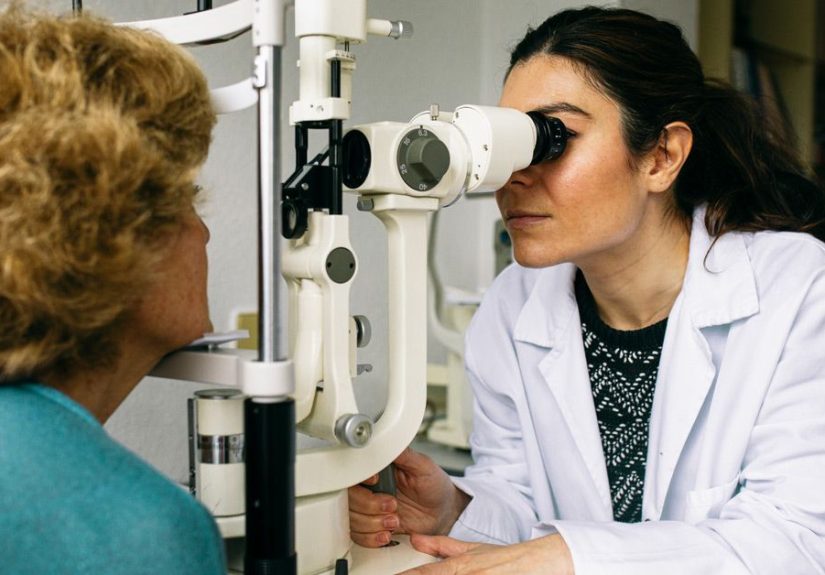
Could Screening or Eye Exams Help Reduce Risk?
There’s no perfect screening test that predicts NAION, but regular eye care
can help identify baseline optic nerve anatomy and other eye problems.
Practical steps you can take
-
See an eye doctor (optometrist or ophthalmologist) when starting or
soon after starting Ozempic or Wegovy, especially if you already have
diabetes or high blood pressure. -
Ask whether your optic nerves appear “crowded” or otherwise at higher
risk, and whether more frequent monitoring makes sense. -
Work with your primary care doctor to address other risk factors:
blood pressure, cholesterol, sleep apnea, and smoking.
While we don’t yet have official guidelines that say everyone on semaglutide
must have extra eye exams, many clinicians are leaning toward a more
proactive approach in people with multiple risk factors.
Balancing Fear, Facts, and Your Own Health Priorities
A medication can be both transformative and imperfect. Ozempic and
Wegovy have helped many people bring A1C levels down, lose significant
weight, and reduce long-term cardiovascular risk. At the same time, we are
still learning about their rarer side effects including this possible link
to NAION.
The key questions aren’t just “Is there a risk?” but:
- How big is that risk for me personally?
- What are my alternatives if I don’t use this drug?
- How can I reduce my overall risk eye health and otherwise?
That’s the kind of nuanced conversation best had with a healthcare team
that includes your prescribing clinician and, ideally, an eye specialist.
Real-World Experiences and Patient Perspectives
News stories and social media have amplified personal accounts of people who
say they developed vision problems after starting Ozempic, Wegovy, or other
GLP-1 medications. Some describe “waking up blind in one eye,” while others
notice a dark shadow or patch in their vision that doesn’t go away.
These stories can be frightening to read, especially if you’re already on
semaglutide. It’s important to remember a few things at once:
- People who have serious side effects are more likely to speak out.
- For every dramatic story, there are many people who use these drugs without major issues.
- Individual stories don’t prove cause and effect but taken together, they can point researchers toward real safety signals.
Imagine three different composite patients not real individuals, but
realistic scenarios that reflect what clinicians are seeing and what
research is exploring:
Case 1: The motivated weight-loss patient
Alex is 42, has obesity and borderline diabetes, and starts Wegovy after
years of struggling with lifestyle changes alone. Over six months, Alex
loses a significant amount of weight, blood pressure improves, and energy
levels are better than they’ve been in a decade. No vision issues arise.
For someone like Alex, the net effect may be strongly positive lower
future risk of heart attack, stroke, and diabetic eye disease, plus a better
quality of life now. The small NAION risk signal is something to know about,
not necessarily a reason to stop therapy.
Case 2: The higher-risk eye profile
Maria is 63 with long-standing type 2 diabetes, high blood pressure, and
sleep apnea. She already has diabetic retinopathy and a “crowded” optic
nerve noted on past eye exams. When her doctor suggests Ozempic, both
agree it could help with glucose and weight, but they also bring an eye
specialist into the conversation.
Together, the team decides that Maria will start semaglutide with:
- A careful review of her optic nerve appearance
- Close follow-up eye exams
- A clear plan for what to do if any sudden vision changes appear
In a case like this, same drug, very different risk discussion and
closer monitoring can help catch problems early if they do occur.
Case 3: The patient who experiences NAION
Jordan is 55, starts Ozempic for diabetes and weight management, and after a
few months wakes up with dimmer vision in one eye. There’s no pain, so
Jordan assumes it’ll clear up. After a couple of days without improvement,
they finally see an eye doctor, who suspects NAION and confirms the
diagnosis.
Looking back, Jordan wishes they’d been told to treat any sudden vision
change as urgent from day one. Even though there’s no treatment that can
fully restore lost vision, earlier evaluation may help rule out other
causes, guide next steps, and document what happened for future care.
These types of scenarios illustrate why patient education matters so
much. Knowing the early signs of NAION, understanding that it is rare but
serious, and having a plan with your care team turns fear into a more
manageable, informed vigilance.
Many people who use Ozempic or Wegovy report overwhelmingly positive
experiences: easier blood sugar control, less joint pain as weight comes
off, more ability to exercise, and improved emotional wellbeing. Others
struggle with nausea, GI side effects, or feel pressure from the constant
online chatter about “skinny shots.” Adding the possibility of a rare eye
disease into the mix doesn’t mean everyone should abandon these drugs. It
does mean the decision to start or continue semaglutide deserves the same
respect you’d give any major health decision: careful thought, good
information, and collaborative planning.
If you’re currently on Ozempic or Wegovy, the most practical “experience
tip” is this: partner with your healthcare team, including an eye
specialist if possible, and be vocal about any changes you notice in your
vision or overall health. You are not being dramatic by calling about
sudden vision changes you are doing exactly what the research and eye
health experts suggest.
Bottom Line: Stay Informed, Not Terrified
The emerging research on Ozempic, Wegovy, and NAION is a serious safety
signal that deserves attention, especially for people already at higher risk
of eye disease. At the same time, the condition remains very rare, and
for many patients the benefits of semaglutide in treating diabetes and
obesity are substantial.
Instead of thinking in all-or-nothing terms “miracle drug” vs. “dangerous
poison” this is a moment to:
- Ask questions
- Stay on top of eye exams
- Watch for any sudden vision changes
- Make shared decisions with your healthcare team
And if you’re scrolling headlines about “blindness” and feeling anxious,
remember: the headlines are designed to grab attention. Your health decisions
should be designed to serve you your risks, your goals, and your life.
SEO & Publishing Details
meta_title: Ozempic, Wegovy and Rare Eye Disease: What to Know
meta_description:
New research links Ozempic and Wegovy to a rare eye disease. Learn what NAION is,
who is at risk, and what questions to ask your doctor.
sapo:
A new wave of research suggests that Ozempic and Wegovy blockbuster
semaglutide drugs for diabetes and weight loss may be linked to a rare
eye disease called nonarteritic anterior ischemic optic neuropathy (NAION),
which can cause sudden vision loss. The risk appears to be higher in people
with existing vascular or eye risk factors, but the condition is still
considered very rare. This in-depth guide breaks down what the studies
actually found, how big the risk really is, what symptoms to watch for, how
to talk with your doctor, and how real-world experiences can inform smarter,
more confident decisions about starting or continuing Ozempic or Wegovy.
keywords:
Ozempic eye disease, Wegovy vision loss, semaglutide NAION risk,
Ozempic side effects, rare eye disease study, GLP-1 eye complications
News navigation for further reading on this evolving topic
:







 Close
Close