
Table of Contents >> Show >> Hide
- What “Wasteful” Really Means on a Film Set
- 1) Cleopatra (1963): The Epic That Nearly Sank a Studio
- 2) Waterworld (1995): Floating Sets, Sinking Money
- 3) Apocalypse Now (1979): The Shoot That Became the War
- 4) Heaven’s Gate (1980): When Perfectionism Goes Full-Scale
- 5) Titanic (1997): Record-Breaking Spectacle, Record-Breaking Pressure
- So… Did Hollywood Learn Anything?
- Conclusion: Spectacle Is Fun. Waste Is Optional.
- Field Notes (): What It Feels Like When a Shoot Turns Wasteful
Movies are basically magic tricks with invoices. Sometimes that’s glorious: a practical set so convincing you can smell the mahogany, costumes so detailed you forget modern zippers exist, stunts that make your palms sweat through the popcorn bucket. And sometimes… it’s a bonfire made of perfectly good lumber, overtime hours, and the shredded remains of “the schedule.”
This list isn’t about dunking on ambitious art (ambition is how we got great cinema). It’s about the moments when ambition ate the call sheet, swallowed the contingency fund, and asked for seconds. These five productions became famous not just for what ended up on screen, but for how much time, money, and material got vaporized getting there.
What “Wasteful” Really Means on a Film Set
“Waste” in filmmaking isn’t only a ballooning budget (though the accountants would like to speak to you in the hallway, privately, forever). It usually shows up in a few repeating patterns:
- Time waste: endless resets, reshoots, weather delays, or rewriting scenes after the crew has already built the world.
- Material waste: sets built, rebuilt, then demolished; costumes made for scenes that get cut; props purchased “just in case.”
- Logistical waste: moving entire productions because of location problems, illnesses, or creative pivots midstream.
- Energy and emissions: trucks, generators, travel, and the general reality that “we’ll fix it in post” still has a carbon footprint.
With that in mind, let’s open the vault of Hollywood cautionary tales and admire the receipts.
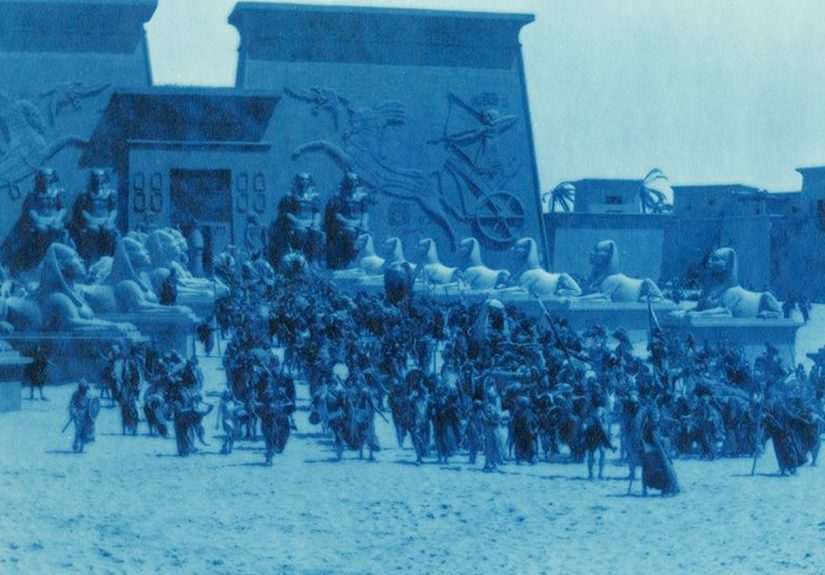
1) Cleopatra (1963): The Epic That Nearly Sank a Studio
If film shoots had a Hall of Fame for wastefulness, Cleopatra would have its own wing, with velvet ropes and an attendant fanning it with a stack of budget memos.
What got wasted
- A staggering budget: reporting at the time pegged the production in the low-$40-million rangemassive money for the era.
- Scrapped work and rebuilt sets: major production upheavals forced the film to reboot key pieces, including building new sets after a move.
- Studio-scale consequences: the financial pressure was so intense that Fox famously sold off a huge chunk of its back lotland that became Century City.
Why it spiraled
Cleopatra became a perfect storm of schedule disruptions, big creative ambitions, and production chaos. A shift in filming plans, medical setbacks, and staffing changes meant the movie wasn’t simply “delayed”it was repeatedly reconfigured. One of the most quietly expensive sentences in Hollywood is: “We’ll just move the production.” Because “move” usually translates to “rebuild everything you thought you already finished.”
The modern takeaway
The lesson isn’t “don’t make epics.” It’s “lock the plan before you build the pyramid.” When story direction, logistics, and leadership are all in motion at once, you don’t just lose daysyou lose entire constructed worlds.
2) Waterworld (1995): Floating Sets, Sinking Money
Waterworld didn’t just film on the oceanit tried to become the ocean. The result: a production that turned the phrase “money pit” into a documentary genre.
What got wasted
- A mega-set that was wildly expensive to build: the film’s floating “atoll” set was reported as enormous and costly, involving massive amounts of steel and complex construction.
- Weather-driven destruction: storms and rough conditions damaged or sank set pieces, forcing retrieval and rebuilding.
- A budget that ballooned into legend: the film’s overall cost became notorious, helping cement its reputation as one of the era’s most overextended productions.
Why it spiraled
Ocean shoots are the cinematic equivalent of juggling knives on a trampoline: technically possible, emotionally questionable. A big practical set on water doesn’t just need to look goodit needs to survive waves, wind, corrosion, and the universe’s personal vendetta against anything with a deadline.
Add a moving schedule, a not-fully-locked script (never a soothing phrase), and the harsh reality that every “quick fix” is now a fix that must be done on a floating platform… and suddenly you’re not making a movie. You’re running a maritime construction company with a camera problem.
The modern takeaway
Practical effects are awesomeuntil nature becomes an uncredited co-director. Modern productions often blend practical builds with miniatures, controlled tanks, and VFX not because they’re “cheating,” but because it’s frequently the least wasteful path to the same visual result.
3) Apocalypse Now (1979): The Shoot That Became the War
Some movies depict chaos. Apocalypse Now reportedly hosted chaos, fed it craft services, and gave it a walkie-talkie. The film’s behind-the-scenes saga has become almost as famous as the finished masterpiece.
What got wasted
- Time on an epic scale: what was planned as a much shorter production stretched into a grueling, months-long shoot.
- Reshoots from major casting changes: replacing a lead partway through meant redoing scenes already completed.
- Set destruction: a typhoon reportedly damaged or destroyed a huge portion of the sets, forcing long delays and rebuilds.
- Budget escalation: the production cost climbed into the tens of millionssubstantial for the eraunder the weight of delays and resets.
Why it spiraled
Apocalypse Now is a case study in how expensive “uncertainty” is. The production faced a chain reaction: reshoots led to schedule strain, schedule strain magnified the cost of every weather event, and disasters made rebuilding inevitable. When you’re shooting in demanding locations, time is not just moneyit’s also your ability to keep the whole machine from overheating.
The modern takeaway
Sometimes great art is born from brutal circumstances. But the cost isn’t romantic when it’s measured in exhausted crews, repeated construction, and months of sunk effort. Today, productions try to protect themselves with stronger contingency planning, clearer milestones, and sustainability reporting that makes “we’re rebuilding this for the third time” feel as alarming as it should.
4) Heaven’s Gate (1980): When Perfectionism Goes Full-Scale
Heaven’s Gate has become shorthand for a production where spending and schedule slipped so far off course that the ripple effects were felt across Hollywood’s business culture.
What got wasted
- A budget far above the era’s norm: contemporary reporting highlighted how enormous the film’s final cost looked compared to typical studio features at the time.
- A shoot that expanded dramatically: accounts from people close to the production describe an originally shorter schedule stretching into many months.
- Opportunity cost for a studio: the film’s financial fallout became part of the larger story of how studios recalibrated risk and control.
Why it spiraled
Waste doesn’t always arrive wearing a hurricane. Sometimes it shows up as “one more take,” “one more tweak,” and “we’ll rebuild that corner so the period-accurate dirt looks more period-accurate.”
On an ambitious historical epic, tiny changes are rarely tiny. Repainting a street might sound minor until you remember that the “street” is a constructed town, staffed by crews, dressed by costumers, filled with extras, and scheduled around sunlight you can’t negotiate with.
The modern takeaway
Craft matters. So does governance. Clear budget authority, locked creative targets, and realistic schedules aren’t “anti-art” they’re how you keep a production from turning into a cautionary business legend.
5) Titanic (1997): Record-Breaking Spectacle, Record-Breaking Pressure
Titanic is the rare production disaster story with a happy ending at the box office. But during filming, the narrative was closer to: “Everyone is sweating, and someone is doing math about college tuition.”
What got wasted
- A budget that became headline news: industry coverage framed the film as the most expensive in Hollywood history at the time, with intense daily scrutiny.
- Massive physical infrastructure: large-scale ship builds, huge tanks, and complex water work meant the production required extraordinary material and logistical resources.
- Extended schedules and harsh conditions: big water sequences are slow, physically demanding, and prone to setbacksturning “one more day” into “one more week.”
Why it spiraled
Water is a diva. It demands additional safety, resets, pumping, lighting, drying, continuity checks, and sometimes a small prayer circle. On Titanic, the scale of practical builds and the complexity of water work meant each change had a price tag with extra zeros.
And when a movie becomes a media narrative before it even releases“it’s doomed,” “it’s over budget,” “it’s too long”that external pressure can also feed waste. People rush, panic, make hasty calls, and accidentally spend more trying to spend less.
The modern takeaway
Big spectacle can be worth it, but it needs modern discipline: smarter previs, tighter iteration loops, and sustainability planning that treats waste reduction as part of “quality,” not an optional side quest.
So… Did Hollywood Learn Anything?
Slowly, yes. The industry has put real effort into green production practicestracking emissions, cutting fuel use, reducing single-use plastics, and diverting materials from landfill through donation and reuse programs. Sustainability groups and studio coalitions now publish toolkits and measurement frameworks to help productions plan smarter.
What smarter (and less wasteful) shoots tend to do
- Lock scripts earlier: fewer late rewrites means fewer build-and-burn cycles.
- Plan for reuse at strike: sets and materials can be donated, resold, or repurposed instead of trashed.
- Measure what matters: when productions quantify fuel use, travel, and waste streams, “invisible” waste becomes visibleand fixable.
- Choose controlled environments when possible: a tank stage or volume can reduce weather risk and the cascading waste that comes with it.
- Build sustainability into the schedule: if the plan assumes chaos, chaos becomes the plan.
None of this eliminates the inherent unpredictability of filmmaking. But it shifts the default away from “we’ll just rebuild it” toward “we’ll build it once, use it well, and keep it out of the trash.”
Conclusion: Spectacle Is Fun. Waste Is Optional.
The irony of these famously wasteful film shoots is that many of them produced iconic images. The goal isn’t to drain cinema of ambitionit’s to keep ambition from eating the planet, the crew, and the studio’s real estate.
Today’s best productions aim for the same wow-factor with better planning, better measurement, and fewer “we tore it down and started over” moments. Because if there’s one thing Hollywood should stop doing, it’s treating landfill like a wrap party.
Field Notes (): What It Feels Like When a Shoot Turns Wasteful
Picture this: you’re a production assistant on a big, splashy movie with a director who says “one more take” the way normal people say “hello.” Your day starts at 4:30 a.m. in the dark, holding a walkie-talkie that crackles like it’s haunted. Craft services offers coffee that tastes like determination and regret. Someone hands you a call sheet that already feels outdated, like a newspaper from last week.
The first sign things are getting wasteful is how often the sentence “We’re pivoting” shows up before breakfast. The art department finishes dressing a gorgeous setperfect period signage, weathered textures, props so detailed they could have their own IMDb pages. Then the rewrite arrives. Suddenly the scene is now “in a different location,” which is a polite way of saying: everything you just built is now a very expensive practice run.
Next comes the reset spiral. A water effect doesn’t hit the mark, so we reset. Reset means drying gear, swapping wardrobe, rechecking continuity, pumping water, repositioning lights, and moving a small army of people so the camera can try again. Somebody inevitably says, “We’re almost there,” which is set-language for “we are not there, but please keep believing.” The crew remains professional, because the crew always remains professional but you can feel the tension in the quiet moments when someone stares at the horizon like they’re negotiating with the laws of physics.
Waste also has a sound. It’s the beep-beep-beep of trucks backing up with new materials while yesterday’s materials are hauled away. It’s the hum of generators running while everyone waits for a cloud to move. It’s the clatter of unopened bottled water being tossed into a bin because the label changed or the cooler was in the wrong place. None of it feels dramatic in the moment. It feels routine, which is the scary part.
The strangest thing is how fast people adapt. Day three of chaos feels alarming; day ten feels normal. The schedule slips, so the schedule becomes a suggestion. Costs rise, so costs become abstract. You stop thinking in dollars and start thinking in “how many extra trucks does this decision require?” and “how many hours will we ask the crew to donate to the gods of continuity?”
Then, occasionally, someone makes a small, smart choice and the whole vibe shifts: reusable water stations show up, set pieces get tagged for donation, departments coordinate so resets are fewer, and the day ends with less trash, fewer exhausted faces, and a sense that the production is finally steering the ship instead of chasing it. And you realize: the most magical part of filmmaking isn’t the illusion on screen. It’s when a hundred people align, do it once, do it right, and don’t throw away a week of work to prove a point.






 Close
Close