
Table of Contents >> Show >> Hide
- What Exactly Was the Gateway Process?
- How the CIA and Army Got Interested in “Hacking” Consciousness
- Inside the Gateway Playbook: How It Was Supposed to Work
- Did the Gateway Process Actually “Work”?
- The Monroe Institute Today: Retreat Center, Not Secret Base
- Why the Gateway Process Went Viral Decades Later
- What Science Says Now About “Hacking Consciousness”
- Experiences and Stories Around the Gateway Process
- So, Did the CIA Hack Human Consciousness?
If you’ve ever seen a headline like “Declassified CIA Document Proves Astral Projection Is Real,” you’ve met the
internet version of the Gateway Process half science, half New Age fever dream, sprinkled with a generous
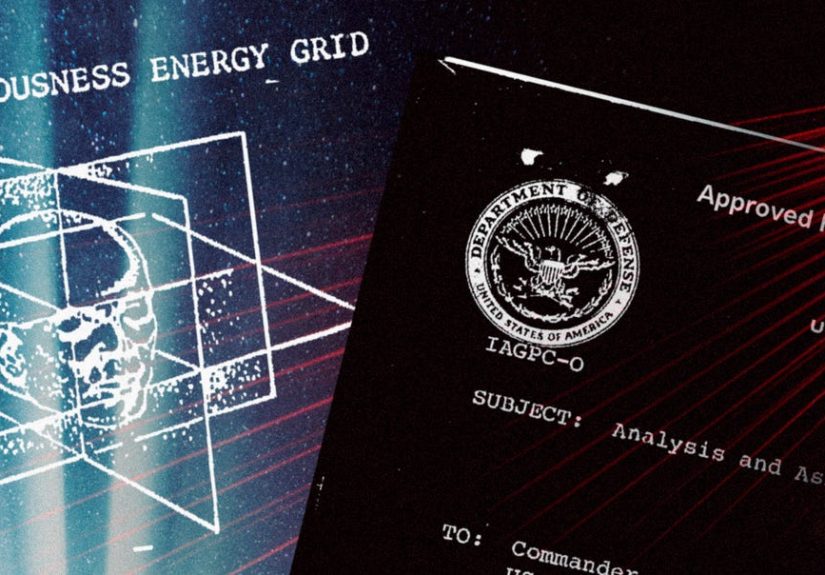
dose of Cold War paranoia. At the center is a real 1983 U.S. Army/CIA report called
“Analysis and Assessment of Gateway Process”, written by Lt. Col. Wayne McDonnell and later
declassified through the CIA FOIA Reading Room.
The report tries to wrap meditation, hypnosis, quantum physics, and fringe ideas about “holographic reality” into a
single theory of consciousness and then asks if the U.S. military can weaponize it. It sounds wild, because it is.
But beneath the memes and conspiracy YouTube channels, there’s a surprisingly grounded story about brainwaves,
stress reduction, and the limits of human imagination.
In this article, we’ll unpack what the Gateway Process actually was, how the CIA got involved, what the science says
now, and what modern practitioners and critics think. Think of it as a guided tour through one of the strangest
footnotes in U.S. intelligence history minus the tinfoil hat.
What Exactly Was the Gateway Process?
The Gateway Process grew out of the work of Robert Monroe, an American radio executive turned
consciousness explorer. In the 1950s and 1960s, Monroe began experimenting with sound patterns to influence sleep,
learning, and mental states. He reported a series of intense “out-of-body experiences” that led him to found
The Monroe Institute in Virginia, dedicated to exploring altered states of consciousness.
Monroe’s team developed Hemi-Sync (short for hemispheric synchronization), an audio technology based
on binaural beats. When you play slightly different audio frequencies in each earsay 100 Hz in one
and 104 Hz in the otheryour brain “hears” a 4 Hz difference tone. That frequency corresponds to a particular
brainwave range associated with relaxation, meditation, or sleep. The idea is that the brain locks onto that rhythm,
nudging you into a specific state.
The Gateway Experience was Monroe’s flagship training system, delivered through guided audio tapes.
Participants would lie in dark rooms, wear headphones, and listen to layered sounds and instructions designed to:
- Induce deep physical relaxation
- Synchronize brain hemispheres (left and right)
- Enhance focus and internal imagery
- Support experiences like lucid dreaming or “out-of-body” sensations
According to McDonnell’s Army report, the Gateway Experience was designed to “bring enhanced strength, focus, and
coherence to the amplitude and frequency of brainwave output between the left and right hemispheres so as to alter
consciousness” and potentially move it “outside the physical sphere.”
How the CIA and Army Got Interested in “Hacking” Consciousness
To understand why the U.S. military cared about meditation tapes, you have to zoom out to the Cold War. Both the
U.S. and the Soviet Union spent serious money on “psychic” research remote viewing, telepathy, psychokinesis not
because they believed it all worked, but because they were terrified the other side might find something first.
Programs like Project STARGATE explored remote viewing the idea that trained psychics could
describe distant targets (like missile sites) using only their minds. The Monroe Institute’s reputation for
structured consciousness training and its claims about out-of-body experiences made it a natural curiosity for
analysts looking for any edge, no matter how weird.
In 1983, McDonnell was tasked by the U.S. Army Operational Group at Fort Meade to evaluate the Gateway Process. His
memo attempted to build a grand theoretical framework connecting:
- Brainwave entrainment (via Hemi-Sync)
- Quantum physics and holographic universe ideas (inspired partly by physicist David Bohm and writer Itzhak Bentov)
- Consciousness research, hypnosis, and biofeedback
- New Age concepts like astral projection and energy fields
The question wasn’t just “Does this relax soldiers?” but “Could this be a tool for intelligence collection,
problem solving, or even accessing information beyond ordinary space-time?” Ambitious, to put it politely.
Inside the Gateway Playbook: How It Was Supposed to Work
Step 1: Relax Harder Than You’ve Ever Relaxed
Gateway training starts like a very intense meditation or yoga nidra session. Participants are guided to relax each
part of their body while listening to layered sounds that slowly shift their brainwaves from normal waking
beta into alpha and theta ranges, associated with relaxation and
dreamlike imagery.
The goal is what Monroe called “Focus 10” “mind awake, body asleep.” From there, more advanced
levels like Focus 12 (“expanded awareness”) and beyond are introduced, each with different exercises and audio
patterns.
Step 2: Sync the Hemispheres
McDonnell, summarizing Monroe’s claims, argues that when the two hemispheres of the brain are synchronized, the mind
becomes more coherent and powerful, like a laser instead of a flashlight. The report cites EEG studies suggesting
that Hemi-Sync audio could encourage this pattern of synchronized activity.
Today, studies of binaural beats are mixed but somewhat more grounded: some research finds that specific beat
frequencies can modestly reduce anxiety, help with pain perception, or support relaxation, while other studies show
minimal or inconsistent effects. None confirm literal astral travel, but some do suggest that sound can nudge brain
states in useful directions.
Step 3: Explore Nonphysical States (Optional, but Very On-Brand)
Once the participant reaches deeper states, the Gateway tapes introduce more ambitious goals:
- Visualizing leaving the body
- “Traveling” to distant locations or nonphysical environments
- Communicating with guides or energy patterns
- Accessing information, insights, or emotional healing
McDonnell leans heavily into a holographic universe model, arguing that consciousness interacts
with a vast informational field. In theory, a trained mind could “tune in” to distant events, other minds, or even a
timeless “Absolute” beyond space and time.
Did the Gateway Process Actually “Work”?
Here’s where we leave the sci-fi trailer and come back to Earth.
First, even within the CIA and Army, results around psychic or nonlocal abilities remained underwhelming. A later
evaluation of remote viewing programs concluded that while some results were “statistically significant,” they
weren’t consistently reliable or actionable for intelligence operations.
Second, mainstream scientists and skeptical investigators have repeatedly noted that:
- Claims of astral projection and remote viewing have no solid empirical backing.
- Positive findings often vanish under tighter controls or fail replication.
- Many of the theoretical claims about quantum physics and holograms are metaphorical at best, and misleading at worst.
A detailed critical review of the Gateway document points out that the report is more of a speculative essay than a
rigorous scientific analysis. It cherry-picks ideas from physics and consciousness studies and stretches them to
support pre-existing beliefs about out-of-body experiences.
That said, there are elements that hold up better under modern scrutiny:
-
Relaxation & stress reduction: Guided audio, slow breathing, and structured visualization are
well-known ways to calm the nervous system and reduce anxiety, regardless of your views on astral travel. -
Enhanced focus and introspection: Many people report better self-awareness, emotional processing,
or creativity after immersive meditation-trained programs, including those unrelated to Monroe. -
Subjective “mystical” experiences: Deep meditation, psychedelics, sensory isolation, or even
sleep deprivation can all produce vivid, seemingly “otherworldly” experiences. That doesn’t prove external travel,
but it does show how flexible our brains are in constructing reality.
The Monroe Institute Today: Retreat Center, Not Secret Base
The Monroe Institute still exists in Virginia and now operates more like a consciousness retreat center than a
shadowy government contractor. It hosts programs on lucid dreaming, expanded awareness, and spiritual growth, with
Hemi-Sync style audio still at the core of many workshops.
Participants describe week-long “Gateway Voyage” retreats as a mix of:
- Group lectures and debriefs
- Multiple daily sessions in dark, quiet rooms with headphones
- Guided journeys focused on emotional healing, life review, or exploration of symbolic landscapes
While some attendees leave convinced they’ve visited other dimensions, others frame the experience as powerful
guided meditation, a structured way to access states they previously brushed off as “daydreaming.” Even many fans
acknowledge that Gateway is best treated as a tool for personal growth rather than a literal teleportation system.
Why the Gateway Process Went Viral Decades Later
The Gateway document was quietly declassified in the early 2000s, but it didn’t truly explode online until the age
of TikTok, Reddit, and conspiracy-flavored self-help. Screenshots of diagrams from the report showing toroidal
universes, holographic brains, and “the Absolute” proved irresistible meme fuel.
Add in a catchy hook like “How to Escape Space and Time, According to the CIA,” and you have the perfect viral
cocktail. Articles and videos often skip the caveats and uncertainties, jump straight to the wildest claims, and
quietly ignore the fact that the CIA never endorsed Gateway as proven truth it just studied the idea because, in
the Cold War, almost nothing was too weird to at least look at.
In other words, the CIA didn’t “verify” astral projection. It did what bureaucracies do: it commissioned a dense,
slightly overconfident report, filed it, and moved on.
What Science Says Now About “Hacking Consciousness”
Today’s mainstream neuroscience doesn’t support the idea that you can literally leave your body, travel through
time, or touch an infinite cosmic data cloud using audio tapes. That part of the Gateway mythology falls firmly into
the “unproven and highly unlikely” category.
But Gateway still intersects with several research areas that are taken seriously:
-
Brainwave entrainment: Studies of binaural beats and rhythmic stimulation show modest but real
effects on mood, attention, and perceived stress in some participants. -
Meditation and default mode network: Deep meditation can alter how brain regions communicate with
each other, sometimes producing feelings of ego-dissolution or timelessness experiences that sound a lot like
Monroe’s descriptions, minus the sci-fi framing. -
Placebo and expectation effects: If you go into a program convinced it will change your life, your
brain often works hard to make that true, especially in domains like pain, anxiety, or meaning-making.
The safest, most evidence-based way to think about the Gateway Process is this: it’s an elaborate, story-rich form
of guided meditation and relaxation, wrapped in mid-20th-century physics metaphors and Cold War mystique.
Experiences and Stories Around the Gateway Process
While hard data is limited, there’s no shortage of personal stories from people who’ve tried Gateway-style audio,
Monroe-inspired retreats, or similar brainwave-entrainment tools. These accounts don’t prove the CIA hacked
consciousnessbut they do show why the idea continues to grab people.
Anecdotes from Retreats and Home Experiments
Imagine this composite scenario, based on real-world descriptions from Monroe alumni and Gateway experimenters: a
stressed-out software engineer books a week at the Monroe Institute after stumbling on a YouTube video about the CIA
files. He arrives skeptical but curious, half expecting bunk and half hoping for enlightenment.
On the first couple of days, nothing dramatic happens. He falls asleep during a few sessions, fights the urge to
check his phone, and mostly feels like he’s just lying in a fancy dorm listening to whooshing sounds. But by day
three or four, something shifts. The combination of routine, silence, group energy, and focused audio work starts to
pull him out of his usual mental chatter.
He describes one session where his body feels impossibly heavy, but his sense of self feels like it has floated
upward. Colors and shapes swirl behind closed eyes; memories pop up in rapid succession; emotions he’d pushed down
for years suddenly surface. Was it an out-of-body experience, or a vivid altered state generated by a tired brain in
a highly suggestible environment? From a scientific standpoint, those are two ways of describing the same raw
experience.
Others report more grounded benefits:
- Finally learning how to quiet racing thoughts before sleep
- Processing grief, trauma, or big life transitions in a safe, structured setting
- Boosts in creative insight or problem solving after sessions
A meditation teacher who has incorporated Hemi-Sync-style audios into addiction recovery work has noted that the
technology can help people who “can’t meditate” get a first taste of a quieter mind, which then gives them
confidence to explore more traditional practices.
The Internet Gateway: DIY Consciousness Hacking
Outside of official programs, countless people have experimented with binaural beats and “Gateway-inspired” audio
at home. Some download pirated copies of old tapes; others use modern apps that promise focus, sleep, or
“transcendence” with a few taps.
Reported experiences range from:
- “This just helped me relax after work.”
- “I had a wild hypnagogic trip and saw landscapes I’ve never imagined.”
- “Nothing happened; I just got annoyed at the whooshing sounds.”
The variability itself is a clue: our expectations, mood, mental health, and environment all shape what we
experience. Two people can listen to the same track and come away with totally different stories. That doesn’t make
those stories meaninglessbut it does mean we should resist turning them into proof of cosmic hacking.
How to Approach Gateway Without Losing the Plot
If you’re drawn to the Gateway Process because it sounds mysterious and edgy, you’re not alone. The combination of
“declassified CIA” plus “altered states” is catnip for the curious brain. But there’s a balanced way to explore this
territory:
- Treat Gateway as guided introspection, not a guaranteed portal to other dimensions.
-
Pay attention to how it affects your mood, sleep, and stress levelsthings you can actually track in everyday
life. -
If you have a history of serious mental health conditions, talk with a qualified professional before diving into
intense altered-state work.
The real value for most people won’t be in “escaping time and space,” but in discovering that your everyday
consciousness is more flexible than you realized. You can learn to shift gears, slow down, zoom out, and see your
own life from a wider angle. You don’t need clearance for that.
So, Did the CIA Hack Human Consciousness?
Short answer: no. Longer answer: the Gateway Process is what happens when sincere spiritual seekers, ambitious
self-experimenters, and Cold War intelligence officers collide.
The CIA and Army looked into the Monroe Institute and Hemi-Sync not because they had proof that astral projection
was real, but because they couldn’t afford to ignore even a tiny chance that it might be usefuland because the
psychological benefits of stress-reduction and focus training were interesting in their own right.
Today, the Gateway Process stands as:
- A quirky historical artifact of U.S. intelligence culture
- A forerunner of modern brainwave-entrainment apps and immersive meditation programs
- A cautionary tale about over-interpreting speculative physics metaphors
- And, for some people, a genuinely meaningful framework for personal exploration
Human consciousness may turn out to be stranger and richer than current science can fully explainbut whatever the
ultimate truth, there’s no shortcut past the basics: rest, reflection, emotional honesty, and a willingness to sit
quietly with your own mind. The Gateway tapes can’t hack you into enlightenment. At best, they can hand you a pair
of headphones, dim the lights, and invite you to start paying attention.







 Close
Close