
Table of Contents >> Show >> Hide
- Why 155mm Artillery Matters So Much
- The Main Western-Caliber Artillery Vehicles Ukraine Uses
- RCH 155: A Glimpse of the Next Generation
- Bohdana: Ukraine’s Own 155mm Answer
- The Ammunition Problem: Vehicles Are Only Half the Story
- Why Mobility Is the New Armor
- Training and Maintenance: The Invisible Battlefield
- How Western-Caliber Artillery Fits Ukraine’s Broader Strategy
- Western Support Is Evolving from Donation to Co-Production
- What This Means for the War
- Experiences and Lessons from Ukraine’s Artillery Transition
- Conclusion
Ukraine’s artillery park is no longer the museum-meets-workshop collection it was forced to rely on during the early months of Russia’s full-scale invasion. The country is now fielding a growing mix of Western-caliber artillery vehicles, especially 155mm self-propelled howitzers, and that shift is changing more than the shape of the guns on the battlefield. It is changing logistics, training, maintenance, ammunition supply, industrial partnerships, and the way Ukraine plans for a long war.
That may sound like a subject made entirely of steel, smoke, and acronyms that look like someone dropped a keyboard. But the story is surprisingly human: a country under pressure learning to replace Soviet-era systems with NATO-standard equipment while keeping units supplied, mechanics trained, crews alive, and factories running. In plain English, Ukraine is trying to turn artillery from a patchwork emergency tool into a modern, Western-compatible force.
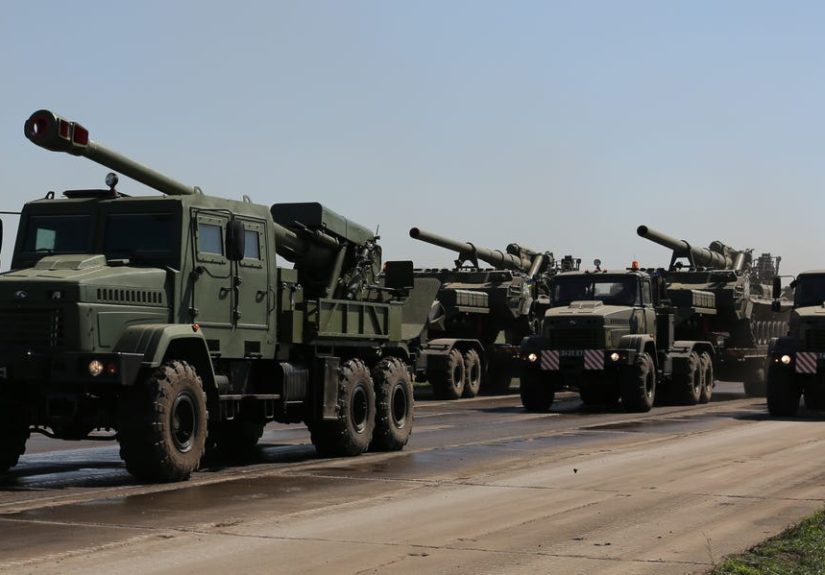
The phrase “Western-caliber artillery vehicles” mostly points to self-propelled systems using 155mm ammunition, the NATO standard for heavy artillery. These include Western-supplied vehicles such as the French CAESAR, German Panzerhaubitze 2000, Polish Krab, Swedish Archer, Slovak Zuzana, American M109 variants, and newer systems like the German RCH 155. Ukraine also fields its own 155mm Bohdana self-propelled howitzer, which has become a symbol of domestic wartime production. Together, these systems represent one of the most important military transitions of the war.
Why 155mm Artillery Matters So Much
For decades, Ukraine’s artillery inheritance was built around Soviet-standard calibers, especially 122mm and 152mm systems. Those weapons were familiar, rugged, and already integrated into Ukrainian military practice. The problem was supply. As the war expanded, ammunition for Soviet-standard guns became harder to source in the quantities Ukraine needed. Many countries that once had compatible stocks had already donated what they could, while Russia had its own massive inventory and production base.
Moving to 155mm artillery gave Ukraine access to the ammunition standard used by the United States and many NATO allies. That opened the door to a larger pool of shells, spare parts, training pipelines, and industrial support. It also made Ukraine’s future force easier to integrate with Western defense planning. In a war where logistics can be just as decisive as dramatic battlefield moments, standardization is not a boring paperwork detail. It is the difference between “we can keep this thing running” and “does anyone have a very specific part hiding in a warehouse from 1987?”
Western-caliber artillery also brought modern fire-control systems, improved mobility, better crew protection, and more consistent integration with drones, radars, and digital command networks. The real value is not simply that a gun is newer. It is that the system fits into a broader ecosystem: sensors find targets, command networks process information, artillery units respond, and then crews move before return fire can arrive.
The Main Western-Caliber Artillery Vehicles Ukraine Uses
CAESAR: The French Truck-Mounted Workhorse
The French CAESAR has become one of the most recognizable Western artillery vehicles in Ukrainian service. Mounted on a wheeled truck chassis, it is lighter and more road-mobile than many tracked self-propelled howitzers. That matters in Ukraine, where artillery crews must frequently relocate, avoid detection, and work across long distances on damaged roads, muddy terrain, and improvised positions.
CAESAR’s appeal is its balance. It is not the heaviest armored vehicle in the artillery family, but it is mobile, relatively efficient, and designed for rapid deployment. For Ukraine, that mobility is valuable because modern artillery warfare is a contest of movement as much as firepower. Crews must arrive, complete their mission, and leave quickly. In the least glamorous possible way, artillery survival often depends on being excellent at not hanging around.
Panzerhaubitze 2000: Heavy, Capable, and Maintenance-Hungry
Germany’s Panzerhaubitze 2000, often shortened to PzH 2000, is one of the most advanced tracked self-propelled howitzers supplied to Ukraine. It offers strong protection, high automation, and impressive performance. But like many sophisticated systems, it also demands serious maintenance and a reliable supply chain.
That tradeoff has been one of the big lessons of the war. Advanced Western systems can be extremely effective, but they are not magic boxes with cannons attached. They require trained crews, spare parts, diagnostic tools, repair facilities, and technicians who understand the platform. Ukraine’s experience with systems like the PzH 2000 shows both the advantages and the headaches of adopting premium Western equipment under wartime pressure.
Krab: Poland’s Practical Contribution
The Polish AHS Krab has also played an important role. Built around a 155mm gun and tracked chassis, the Krab reflects the kind of European defense cooperation that has become central to Ukraine’s artillery transition. Poland’s support has mattered not only because of geography, but also because it understands the urgency of artillery, ammunition, and repair networks in a land war close to NATO’s eastern flank.
For Ukrainian forces, Krab systems have offered a useful combination of NATO-standard ammunition compatibility and battlefield mobility. They also underline a broader point: Ukraine’s artillery modernization is not a single-country story. It is a multinational puzzle, with pieces arriving from France, Germany, Poland, Sweden, Slovakia, the United States, and Ukraine’s own factories.
Archer: Sweden’s Fast-Moving Modern System
Sweden’s Archer system has drawn attention because of its automation and wheeled mobility. It is designed to reduce crew exposure and speed up operation. For a country fighting under constant drone observation and counter-battery pressure, those traits are especially relevant.
Archer represents the direction many modern artillery forces are moving: more automation, better digital integration, faster movement, and reduced time spent in vulnerable positions. In simple terms, if older artillery was a heavyweight boxer planting its feet, systems like Archer are closer to a boxer who hits and immediately dances away. No glittery robe required.
Zuzana and M109: Useful Pieces in a Mixed Fleet
Ukraine has also used Slovak Zuzana self-propelled howitzers and American M109 variants. The M109 family is older than some newer European systems, but it remains widely used, familiar to many NATO forces, and easier to support in certain contexts. That matters because Ukraine does not need only the newest equipment; it needs systems that can be sustained, repaired, and supplied.
The Zuzana, meanwhile, adds another wheeled 155mm option to Ukraine’s arsenal. Like other European systems, it helps Ukraine move away from dependence on Soviet ammunition and toward a more standardized Western artillery base. The result is not perfectly neat. Ukraine’s artillery fleet is still diverse, and diversity can complicate maintenance. But diversity also gives Ukraine options when supply chains are strained.
RCH 155: A Glimpse of the Next Generation
One of the most interesting additions to Ukraine’s Western-caliber artillery story is the German RCH 155. This wheeled self-propelled howitzer uses a highly automated turret mounted on a Boxer-type chassis. Its arrival matters because Ukraine is not only receiving legacy Western systems; it is becoming an early battlefield user of newer artillery technology.
The RCH 155 points toward a future where artillery vehicles are more automated, more mobile, and more deeply connected to digital command systems. For Ukraine, this is not a showroom conversation. It is about whether new systems can survive in a battlefield dominated by drones, sensors, electronic warfare, and rapid counterfire. The war has become a brutal testing ground for military technology, and Ukraine’s feedback is shaping how European defense companies think about the next generation of equipment.
That is why Germany’s cooperation with Ukraine on battlefield data is significant. Performance data from systems such as the PzH 2000 and RCH 155 can help manufacturers improve reliability, software, maintenance cycles, and operational design. In other words, Ukraine is not just receiving Western equipment. It is helping rewrite the manual for how that equipment should evolve.
Bohdana: Ukraine’s Own 155mm Answer
The Ukrainian-made 2S22 Bohdana may be the most important part of the story because it shows Ukraine’s transition from recipient to producer. The Bohdana is a 155mm self-propelled howitzer built domestically and adapted to Ukraine’s needs. It has been seen in active use and has become a major example of how Ukraine’s defense industry has expanded during wartime.
What makes Bohdana especially interesting is not just that Ukraine can build a NATO-caliber artillery vehicle. It is that production has reportedly increased significantly compared with earlier stages of the war. That growth reflects new funding models, European support, domestic industrial learning, and a clear strategic lesson: Ukraine cannot depend forever on donated systems pulled from allied stockpiles.
Domestic production gives Ukraine several advantages. It shortens delivery routes, strengthens local repair capacity, creates jobs in the defense sector, and gives Ukrainian engineers faster feedback from battlefield users. If a crew reports a problem, the answer does not always need to travel through five ministries, three time zones, and a committee whose name has more syllables than a medieval castle.
The Ammunition Problem: Vehicles Are Only Half the Story
Artillery vehicles get the photographs, but ammunition gets the war done. Ukraine’s shift to 155mm systems only works if enough shells are available. This has been one of the hardest challenges for Ukraine and its partners. The United States has supplied millions of 155mm rounds, while European countries have worked to expand production and organize ammunition initiatives. Still, demand has repeatedly outpaced supply.
The lesson is blunt: a modern howitzer without ammunition is an expensive parking decoration. Ukraine’s need for 155mm shells has exposed the limits of Western defense production after decades of assuming that large-scale artillery wars were a thing of the past. Russia’s invasion forced NATO countries to relearn industrial lessons they had happily filed away under “hopefully never again.”
European ammunition production has grown, and programs such as Czech-led shell procurement efforts have helped Ukraine access additional supplies. But the artillery war remains a race between battlefield consumption and factory output. That is why Ukraine’s Western-caliber artillery transition is inseparable from industrial policy. The question is not only “What vehicles does Ukraine have?” but “Can Ukraine and its partners keep them fed, repaired, and ready?”
Why Mobility Is the New Armor
Modern artillery vehicles in Ukraine operate under constant threat from drones, radar, loitering munitions, and long-range fires. This has made mobility one of the most important survival tools. A system that can move quickly, operate efficiently, and reduce crew exposure has a better chance of surviving repeated missions.
This is one reason wheeled systems such as CAESAR, Archer, Zuzana, Bohdana, and RCH 155 attract so much attention. Tracked vehicles can offer better off-road capability and protection, but wheeled vehicles are often easier to maintain and faster on roads. Ukraine needs both types, depending on terrain, mission, and availability.
There is no single perfect artillery vehicle. The best system is the one that fits the mission, has ammunition, can be repaired, and has a trained crew available. That may sound less dramatic than declaring one system the “king of the battlefield,” but wars are not won by catchy nicknames. They are won by supply chains, training schedules, fuel, spare parts, and people who know what to do when something breaks at the worst possible moment.
Training and Maintenance: The Invisible Battlefield
Ukraine’s adoption of Western-caliber artillery vehicles has required a massive training effort. Crews must learn new fire-control systems, new maintenance routines, new vehicle platforms, and new safety procedures. Mechanics must understand engines, electronics, hydraulics, and software that differ sharply from Soviet-era equipment.
This creates a hidden battlefield behind the front lines. Every Western artillery vehicle needs a support network. Some repairs can be handled near the front; others require deeper maintenance hubs or partner-country assistance. The more varied the fleet, the harder this becomes. A CAESAR is not a Krab, a Krab is not an Archer, and none of them are exactly thrilled when someone tries to fix them with the wrong parts and a prayer.
Still, Ukraine has adapted quickly. Its military has become skilled at absorbing different systems under extreme pressure. This adaptability is one of the defining features of Ukraine’s war effort. The challenge now is to move from emergency adaptation to long-term standardization, where training, repair, and ammunition supply become more predictable.
How Western-Caliber Artillery Fits Ukraine’s Broader Strategy
Ukraine’s artillery modernization is part of a broader shift toward NATO-compatible defense. This includes air defense, armored vehicles, drones, electronic warfare, command systems, and domestic production. Artillery remains central because the war is still heavily shaped by ground combat and defensive operations.
Western-caliber artillery helps Ukraine defend positions, disrupt Russian advances, and support maneuver forces. But its impact depends on coordination with reconnaissance drones, counter-battery radars, intelligence networks, and command systems. The artillery vehicle is only one link in the chain.
That chain is becoming more digital. Ukraine’s use of battlefield management tools has attracted attention from partners because it shows how modern software can speed up decision-making. When artillery connects to better information, it becomes more responsive and efficient. That does not remove the human burden of war, but it can reduce waste and improve battlefield awareness.
Western Support Is Evolving from Donation to Co-Production
Early in the war, much of Ukraine’s equipment arrived through emergency donations. Allies searched inventories and sent what they could spare. Over time, that model became harder to sustain. Stockpiles are finite, and modern defense factories do not instantly triple output just because politicians discover the word “urgent.”
Now the trend is shifting toward procurement, co-production, and direct investment in Ukraine’s defense industry. The Bohdana howitzer is a major example. Instead of only sending finished systems from abroad, allies can finance Ukrainian production. This approach can be faster, cheaper, and more sustainable, especially when Ukrainian factories already understand local battlefield requirements.
This does not mean foreign donations are no longer important. Ukraine still depends heavily on Western ammunition, spare parts, air defense systems, and advanced components. But the future is likely to involve a mix: imported systems, domestic production, joint ventures, and European funding mechanisms. Ukraine’s artillery force is becoming both more Western and more Ukrainian at the same time.
What This Means for the War
Ukraine’s fielding of new Western-caliber artillery vehicles does not create an instant turning point by itself. Artillery is powerful, but it is not a magic wand. The impact depends on ammunition supply, air defense coverage, drone reconnaissance, trained crews, and the ability to repair vehicles under wartime conditions.
However, the transition does matter. It makes Ukraine less dependent on shrinking Soviet-era ammunition stocks. It improves compatibility with NATO logistics. It strengthens domestic production. It gives Ukrainian forces more mobile and modern platforms. And it provides Western defense industries with real-world lessons that are already influencing future designs.
The big picture is clear: Ukraine is not simply surviving with borrowed equipment. It is building a new artillery ecosystem under fire. That ecosystem is imperfect, messy, and difficult to sustain, but it is also more modern than what Ukraine had before 2022. In military terms, that is a serious transformation. In everyday terms, it is like rebuilding the engine while the car is still moving, the road is full of craters, and someone keeps stealing the instruction manual.
Experiences and Lessons from Ukraine’s Artillery Transition
The experience of Ukraine fielding Western-caliber artillery vehicles offers several lessons for soldiers, policymakers, defense manufacturers, and ordinary observers trying to understand the war without drowning in acronyms. The first lesson is that modernization under pressure is possible, but it is never clean. Ukraine did not get the luxury of a quiet decade to test equipment, standardize fleets, and train units in perfect conditions. It had to learn while fighting.
That experience has shown how quickly motivated crews can adapt when survival depends on it. Ukrainian artillery teams have moved from Soviet-standard systems to a wide mix of NATO-caliber platforms. Each vehicle has its own controls, maintenance needs, strengths, and quirks. In peacetime, such variety would make logisticians reach for a very strong cup of coffee. In wartime, Ukraine has made it work through practical training, improvisation, and close cooperation with partners.
A second lesson is that equipment quality matters, but reliability and repairability matter just as much. A sophisticated howitzer can be excellent on paper and still become a problem if spare parts are scarce or repairs take too long. Ukraine’s experience has reminded Western militaries that high-tech systems must be designed not only to perform well, but also to survive hard use, bad weather, rough roads, and maintenance by tired crews under pressure.
A third lesson is that domestic industry is not optional. Ukraine’s growing production of the Bohdana howitzer shows why local manufacturing capacity matters. Imported systems can help fill urgent gaps, but domestic production gives a country more control over upgrades, repairs, and delivery schedules. It also allows battlefield feedback to reach engineers faster. When soldiers and factories are part of the same national survival effort, improvements can move from complaint to redesign with unusual speed.
A fourth lesson is that ammunition planning cannot be treated as an afterthought. Western countries spent years investing heavily in precision weapons while allowing basic artillery shell production to shrink. Ukraine’s war has shown that large-scale conflict still consumes huge volumes of conventional ammunition. The 155mm shell has become not only a munition, but also a measure of industrial seriousness. Countries that want credible defense capabilities must be able to produce and stockpile enough ammunition for a long emergency, not just a tidy weekend crisis.
A fifth lesson is that mobility saves lives. The spread of drones and sensors means artillery crews are more visible than ever. Vehicles that can move quickly, operate with fewer exposed crew members, and integrate with digital systems are increasingly valuable. Ukraine’s use of wheeled systems such as CAESAR, Archer, Zuzana, Bohdana, and RCH 155 reflects this reality. The battlefield rewards speed, coordination, and discipline.
Finally, Ukraine’s artillery experience shows that military transformation is also a political and industrial story. Every artillery vehicle represents a chain of decisions: who funds it, who builds it, who trains the crew, who supplies the shells, who repairs it, and who replaces it if it is lost. The visible machine is only the final chapter. The hidden chapters are written in factories, budgets, repair depots, training centers, and diplomatic meetings.
For readers watching from far away, the main takeaway is simple: Ukraine’s Western-caliber artillery vehicles are not just new machines on the battlefield. They are signs of a country moving toward NATO compatibility, expanding domestic production, and helping reshape how modern artillery is understood. The transition is difficult, expensive, and unfinished. But it is real, and it may define Ukraine’s ground forces long after today’s headlines have moved on.
Conclusion
Ukraine is fielding new Western-caliber artillery vehicles because the war has forced a historic shift from Soviet-standard systems toward NATO-compatible firepower. French CAESARs, German PzH 2000s and RCH 155s, Polish Krabs, Swedish Archers, Slovak Zuzanas, American M109s, and Ukraine’s own Bohdana howitzers all contribute to this transformation. The change is about more than caliber. It is about mobility, interoperability, ammunition supply, domestic manufacturing, and the future shape of Ukraine’s armed forces.
The hardest part is sustainment. Vehicles need shells, crews, fuel, software, spare parts, and repair networks. But Ukraine’s progress shows that wartime adaptation can move quickly when necessity is doing the motivational speaking. Western-caliber artillery will not solve every battlefield challenge, yet it gives Ukraine a stronger foundation for long-term defense and closer integration with European and NATO standards.
Note: This article is written for public informational and editorial purposes only. It discusses defense developments at a high level and does not provide operational instructions, targeting guidance, or technical steps for using weapons.







 Close
Close