
Table of Contents >> Show >> Hide
- What Exactly Is Epsom Salt (and Why Do Gardeners Love It)?
- Can Epsom Salt Really Boost Rose Blooms Before Fall?
- How Magnesium Affects Rose Health and Flower Production
- When Epsom Salt Can Actually Help Your Roses
- When You Should Skip Epsom Salt (and the Risks of Overdoing It)
- Want More Blooms Before Fall? Start with Smart Rose Care
- How to Tell If Your Roses Actually Need Magnesium
- Myth vs. Reality: Quick Epsom Salt Q&A
- Real-World Experiences: What Gardeners Learn from Using Epsom Salt on Roses
- Conclusion: Epsom Salt as a Supporting Player in Your Rose Show
If you’ve ever stood in front of your rose bushes in late summer, coffee in hand, whispering, “Just a few more blooms, please,” you’re not alone. Gardeners everywhere want roses that keep performing right up until fall. Somewhere along the way, a tip started circulating: sprinkle Epsom salt around your roses and watch them explode with flowers.
It sounds wonderfully simple. A household staple you can buy at the drugstore that turns your roses into flower machines? Yes, please. But like most “too good to be true” garden hacks, the real story is more nuanced. Epsom salt can help roses in some situations, do nothing in others, and even cause problems if you use it the wrong way.
In this guide, we’ll walk through what Epsom salt actually does, when it may help roses bloom better before fall, when to skip it, and how to fit it into a smart, science-backed rose care routine. Think of Epsom salt as a supporting actor, not the main star of your garden show.
What Exactly Is Epsom Salt (and Why Do Gardeners Love It)?
Epsom salt is not table salt, and it won’t season your fries. It’s a naturally occurring mineral called magnesium sulfate. Magnesium (Mg) and sulfur (S) are both essential plant nutrients. They help with:
- Chlorophyll production – Magnesium sits at the center of the chlorophyll molecule, the green pigment that drives photosynthesis.
- Energy and sugar transport – Magnesium helps move carbohydrates and energy through the plant.
- Protein and enzyme function – Many enzymes need magnesium to work properly.
- Sulfur for flavor and resilience – Sulfur is part of some amino acids and can support plant health and stress tolerance.
So, in theory, if a rose bush is low on magnesium, providing magnesium sulfate (Epsom salt) can help it:
- Green up its foliage
- Improve nutrient absorption
- Grow stronger canes and bigger blooms
That’s the scientific basis behind the Epsom salt tip. The catch? Not all soils are magnesium-deficient. In many gardens, magnesium levels are already sufficient. That’s where things get tricky.
Can Epsom Salt Really Boost Rose Blooms Before Fall?
Here’s the honest truth: you’ll find passionate gardeners on both sides of this debate.
The “Pro Epsom Salt” camp says their roses grow bushier, with more buds and richer color, especially after they sprinkle a bit of Epsom salt at the base in spring or early fall. Some early gardening trials and anecdotal reports suggest magnesium can help plants that were previously deficient produce better growth and flowers.
The “Skeptical” camp includes many university extension specialists and horticulture experts. They point out that:
- Scientific evidence that Epsom salt alone dramatically increases rose bloom count is limited.
- Most garden soils already contain adequate magnesium, particularly if you regularly fertilize.
- Excess magnesium can interfere with other nutrients, especially calcium, and contribute to salt buildup in the soil.
So can Epsom salt help you get more blooms before fall? The best answer is: it can help if your roses actually need magnesium. If your soil is already balanced, Epsom salt is not a magic bloom booster. The real bloom-makers are still the basics: good pruning, smart fertilizing, consistent watering, pest and disease control, and plenty of sun.
How Magnesium Affects Rose Health and Flower Production
To understand where Epsom salt fits in, it helps to look at magnesium’s role in your rose bushes.
Magnesium and chlorophyll
Each chlorophyll molecule has a magnesium atom at its core. Without enough magnesium, roses struggle to make chlorophyll, which means:
- Leaves lose their deep green color and start to look washed out.
- Photosynthesis efficiency drops, so the plant makes less energy.
- With less energy, you get weaker growth and fewer blooms.
Signs of magnesium deficiency in roses
Magnesium deficiency shows up in a distinctive pattern called interveinal chlorosis – fancy words for “yellowing between the veins.” Typical signs include:
- Older leaves turn yellow between the veins while the veins themselves remain green.
- Leaf edges may look scorched or rusty.
- Leaves may get smaller and fall prematurely.
- Bloom production drops, and flowers may be smaller or weaker.
Because magnesium moves around the plant, older leaves show the problem first. Younger leaves may still look relatively normal while the lower foliage is fading and dropping.
Important note: Yellow leaves can also be caused by iron deficiency, nitrogen deficiency, poor drainage, overwatering, underwatering, pests, or disease. That’s why it’s risky to dump Epsom salt on your roses every time a leaf looks sad. You want to be reasonably sure magnesium is the real issue before treating it.
When Epsom Salt Can Actually Help Your Roses
Epsom salt can be useful in targeted, specific situations, especially when:
- You have evidence of magnesium deficiency from a soil test or clear, textbook leaf symptoms.
- Your soil is very sandy and acidic, where magnesium can leach out more easily.
- You grow roses in containers, which often lose nutrients faster through frequent watering.
Step 1: Test before you treat
Before relying on Epsom salt, send a soil sample to a local extension lab or use a reputable home soil test kit that measures magnesium. If the test shows a magnesium shortage, then using Epsom salt as a supplement makes sense. If magnesium levels are adequate or high, skip it.
Step 2: Use modest, garden-safe amounts
If a deficiency is confirmed and your extension guidelines allow it, a common home-garden rate for roses is:
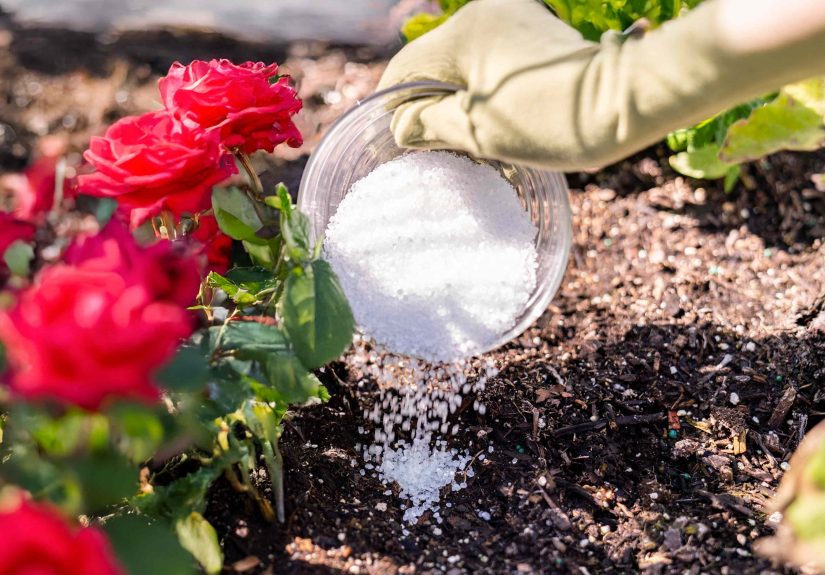
- 1 tablespoon of Epsom salt per foot of plant height, scattered around the drip line of the rose and watered in well.
- Or, dissolve 1–2 tablespoons in a gallon of water and use it to soak the soil around the plant.
Timing matters:
- Apply in spring as new growth begins.
- An optional second light application can be made in early fall, if your climate has a long growing season and frost is still weeks away.
- Avoid heavy applications late in the season that could push tender new growth right before a cold snap.
Always treat Epsom salt as a supplement, not a replacement for a balanced rose fertilizer that provides nitrogen, phosphorus, potassium, and micronutrients.
When You Should Skip Epsom Salt (and the Risks of Overdoing It)
This is the part many social media posts conveniently forget: more is not better.
Dumping Epsom salt around your roses “just in case” can cause several problems:
- Nutrient imbalance: Too much magnesium can interfere with calcium uptake, which roses need for strong cell walls and disease resistance.
- Salt stress: Magnesium sulfate is still a salt. Overuse can create a salty root zone that damages tender roots and reduces water uptake.
- Leaf burn: Foliar sprays made too strong or used in hot sun can scorch leaves.
- Environmental impact: Excess magnesium can leach into groundwater and contribute to mineral pollution.
University extension programs repeatedly warn that routine, “just because” Epsom salt use is not recommended for most home gardens. If your soil already has adequate magnesium (which is common), you’re more likely to create issues than solve them.
Bottom line: only use Epsom salt when you have a good reason. Otherwise, your money and effort are better spent on compost, mulch, and a good-quality rose fertilizer.
Want More Blooms Before Fall? Start with Smart Rose Care
If your goal is a fresh flush of blooms before fall, think of Epsom salt as an “optional side quest.” The main storyline is still solid cultural care. Here’s what actually moves the needle the most.
1. Deadhead like you mean it
Roses are wired to put energy into producing seeds once flowers fade. When you regularly deadhead (remove spent blooms), you’re sending the plant a clear message: “No seeds yet. Keep blooming!”
Snip just above a healthy outward-facing leaf with 3–5 leaflets. This encourages new shoots that will carry the next round of buds. In many climates, consistent deadheading can easily deliver another big flush of flowers in late summer or early fall.
2. Keep water consistent, not random
Roses hate extremes. Long dry spells followed by heavy soaking can stress the plant, encourage disease, and reduce bloom quality.
- Water deeply at the base rather than sprinkling the leaves.
- Aim for about 1–2 inches of water per week, depending on weather and soil.
- Use mulch to retain moisture and keep roots cool in summer.
Stressed roses conserve energy instead of blooming generously. Hydrated roses with stable moisture are far more likely to give you that extended bloom show.
3. Feed, but don’t overfeed
Use a balanced rose fertilizer or slow-release general fertilizer according to label directions through the main growing season. Stop heavy feeding roughly six to eight weeks before your average first frost so the plant can harden off rather than pushing soft new growth that winter will punish.
If a soil test shows low magnesium, that’s where a carefully measured Epsom salt supplement can be layered into your programnever as the only “fertilizer.”
4. Sun, air, and pruning shape
Most roses need at least 6 hours of direct sun daily to bloom well. Crowded, poorly pruned shrubs don’t get enough light or air circulation inside the plant, which invites disease and weak growth.
In late winter or early spring, shape your rose bush to have an open center, removing dead, crossing, or diseased canes. Throughout the season, remove any weak, spindly growth. A well-shaped rose gets more light to each caneand more light equals more energy for blooms.
5. Keep pests and diseases in check
Black spot, powdery mildew, aphids, and spider mites all sap energy from roses that could be going to flowers. Instead of reaching for a “miracle cure,” start with:
- Good hygiene: Remove and discard diseased leaves (don’t compost them).
- Clean tools: Disinfect pruners between plants.
- Gentle controls: Use insecticidal soap or horticultural oil as needed for pests.
Healthy roses, supported by good cultural care, are far more responsive to any nutrient tweaks you makeEpsom salt included.
How to Tell If Your Roses Actually Need Magnesium
Before you pull out the Epsom salt, ask these questions:
- Have I done a soil test? If yes, check if magnesium is listed as low. If no, consider sending a sample to a local lab or cooperative extension service.
- Are the symptoms on older leaves? Magnesium deficiency usually starts on older leaves, with yellowing between the veins.
- Are there other possible causes? Consider watering habits, drainage issues, pH extremes, pests, and fungal diseases first.
- Do other plants show similar symptoms? If multiple species in the same area show interveinal chlorosis, a nutrient issue is more likely.
If you suspect magnesium deficiency but can’t test immediately, a single light application of Epsom saltused once, not repeatedlymay help as a short-term experiment. Just avoid turning that one-time test into a monthly ritual without evidence.
Myth vs. Reality: Quick Epsom Salt Q&A
Is Epsom salt a complete fertilizer?
No. It provides magnesium and sulfur only. Roses also need nitrogen, phosphorus, potassium, and several trace elements. You still need a balanced fertilizer or rich organic matter.
Will Epsom salt fix every yellow leaf?
Also no. Yellowing can signal many other problems: overwatering, underwatering, compacted soil, root damage, iron deficiency, nitrogen deficiency, or disease.
Can I just toss Epsom salt around my roses every month “for good luck”?
That’s an expensive way to risk nutrient imbalance, salt stress, and soil issues. Targeted, evidence-based use is safer and more effective.
So is Epsom salt good or bad?
It’s neither angel nor villain. It’s a tool. Used thoughtfullywhen your roses actually need magnesiumit can support healthier foliage and potentially more abundant blooms. Used blindly, it can work against the health of your plants and soil.
Real-World Experiences: What Gardeners Learn from Using Epsom Salt on Roses
The garden is the best classroom, and Epsom salt has been a “guest teacher” for decades. While every garden is different, there are some common themes in gardeners’ experiences that can help you decide how to approach this trend.
The “Instant Miracle” that Wasn’t
Many new gardeners start by copying a neighbor’s routine: a scoop of Epsom salt around every rose in spring, again in summer, and sometimes once more “just because.” At first, the roses may look fineespecially if the soil is naturally fertile or heavily amended with compost and balanced fertilizer.
Over time, though, some gardeners begin to notice odd issues. The foliage might stay reasonably green, but blooms don’t improve much, and other plants close by start to struggle. In some cases, soil tests later show elevated magnesium levels. When those gardeners dial back the Epsom salt and refocus on organic matter and proper watering, their overall garden health improves, and they realize the “miracle” wasn’t the salt; it was everything else they were doing right.
Container Roses and Sandy Soils: Where Epsom Salt Shines
On the other hand, gardeners with container roses or very sandy, leached soils often report a more obvious benefit. In these situations, nutrients wash away quickly. After a soil test indicates low magnesium, a carefully measured dose of Epsom salt can help container-grown roses regain their deep green foliage and push out a fresh round of buds before fall.
One common story: a gardener with potted hybrid tea roses notices that by mid-summer, older leaves are yellowing between the veins despite proper watering and balanced fertilizer. A soil test shows low magnesium. After a light Epsom salt drenchabout a tablespoon dissolved in a gallon of water, applied once or twice a seasonthe foliage greens up and the plants have enough energy to send out another flush of fall blooms. The key detail? The gardener stopped after correcting the deficiency instead of turning it into a constant habit.
Balancing Enthusiasm with Evidence
Experienced rose growers often land in a middle ground. They don’t dismiss Epsom salt entirely, but they no longer treat it as a cure-all. Instead, they fold it into a broader, evidence-based care plan:
- They test their soil every few years rather than guessing.
- They start with compost, mulch, and good irrigation before reaching for supplements.
- They use Epsom salt sparingly and purposefully, especially in containers or known low-magnesium soils.
- They watch for their plants’ response and adjust instead of sticking to a rigid schedule.
These gardeners often report that their roses bloom well into fall not because of a single “secret ingredient,” but because of a well-rounded care routine in which Epsom salt plays a small, specific role.
Your Takeaway: A Smarter Way to Use Epsom Salt
If you’re tempted to try Epsom salt to get more rose blooms before fall, think like a plant detective, not a magician. Ask what your roses are really missing, look at the whole picture (soil, water, light, pests), and then decide whether magnesium sulfate belongs in the mix.
Used thoughtfully, Epsom salt can help magnesium-starved roses green up, grow stronger canes, and support that late-season bloom show you’re dreaming of. Used blindly, it can waste your money and quietly undermine your soil.
The good news? Roses are generous plants. Give them the basicssun, water, air, nutrients, pruning, and a bit of attentionand they’ll usually reward you with more blooms than any one “magic powder” could ever promise.
Conclusion: Epsom Salt as a Supporting Player in Your Rose Show
If you want more rose blooms before fall, think of Epsom salt as a supporting player, not the star. The star is still solid rose care: deadheading, watering, feeding wisely, managing pests and diseases, and giving your plants the right amount of sun and space.
Epsom salt can help when your roses genuinely need magnesium, especially in containers or sandy soils confirmed as deficient by testing. It can support greener foliage and overall vigor, which may indirectly help your roses put on a longer, stronger bloom performance into fall.
But like any good supporting actor, it needs a script and a director. Let your soil test, plant symptoms, and local extension advice be that director. Use Epsom salt deliberately, in measured amounts, and your roses can enjoy the benefits without the risks.
In short: don’t throw away the bag, but don’t throw it at every problem either.






 Close
Close