
Table of Contents >> Show >> Hide
- Who Is You Mon Tsang?
- Why You Mon Tsang Stands Out in Customer Success
- The Leadership Philosophy Behind the Reputation
- What Other Leaders Can Learn From You Mon Tsang
- You Mon Tsang and the Future of Customer Success
- Conclusion
- Additional Experience and Practical Lessons Related to You Mon Tsang: Customer Success Leader
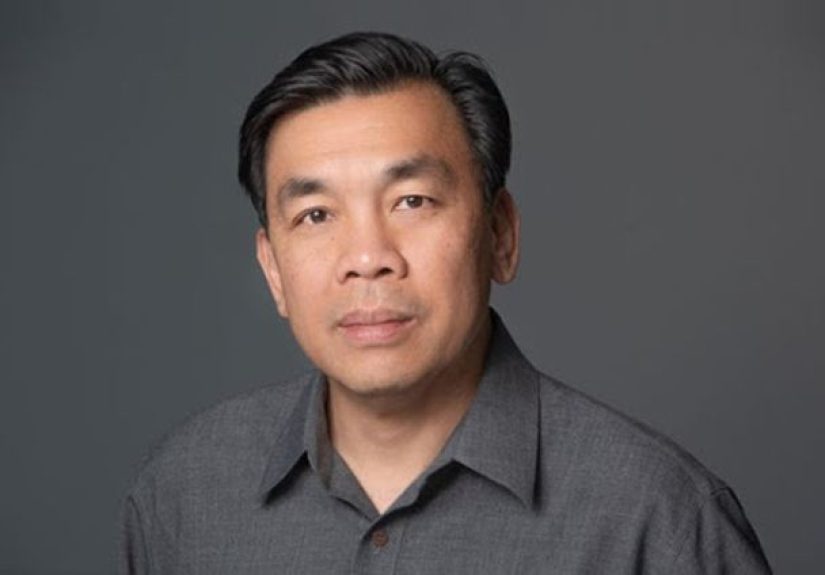
In software, plenty of leaders know how to talk about growth. Fewer know how to talk about keeping that growth from sneaking out the back door wearing sunglasses and carrying your recurring revenue. That is where You Mon Tsang has made his mark.
Best known as the cofounder and CEO of ChurnZero, Tsang has become one of the more recognizable voices in customer success leadership. His work sits at the intersection of retention, revenue, product adoption, and the increasingly unavoidable conversation about AI. If sales is the glamorous dinner party guest and marketing is the witty friend who always gets invited back, customer success is the person quietly making sure the house is still standing the next morning. Tsang has spent years arguing that this role deserves more budget, more attention, and a much bigger seat at the executive table.
That belief is not just branding fluff with a nice blazer on. It reflects a broader shift in SaaS and subscription businesses, where keeping customers happy, active, and growing is no longer a nice extra. It is the business model. And that is exactly why You Mon Tsang matters.
Who Is You Mon Tsang?
You Mon Tsang is widely recognized as a customer success leader because he helped build a company around one central idea: businesses should invest in serving customers with the same seriousness they invest in winning them. Before ChurnZero, Tsang held leadership roles at Vocus and led its marketing automation business unit, OutMarket. He is also known as a repeat entrepreneur, with a track record that includes multiple software ventures before ChurnZero.
That background matters because it explains why his view of customer success feels operational instead of theoretical. He did not arrive at the discipline from a vague desire to “improve experiences.” He came from product, marketing, and company-building, where metrics have sharp edges and results must show up on a dashboard eventually. In other words, he talks about customer success the way a builder talks about plumbing: essential, not decorative.
Tsang’s profile has grown alongside ChurnZero, a platform built for subscription and SaaS businesses that want to reduce churn, improve adoption, and spot expansion opportunities earlier. That positioning has put him in regular conversation with customer success leaders, SaaS operators, finance teams, and executives trying to answer one deceptively simple question: how do you grow without leaking revenue from your existing customer base?
Why You Mon Tsang Stands Out in Customer Success
He Treats Customer Success as a Revenue Function
One of the clearest themes in Tsang’s public commentary is that customer success should not be boxed into a support function with a friendlier smile. He consistently frames it as a growth and retention engine. That means customer success is not only about answering questions, scheduling QBRs, or sending cheerful emails with too many exclamation points. It is about protecting gross revenue retention, improving net revenue retention, driving expansion, and helping subscription businesses build durable value over time.
This perspective has become especially relevant in a tougher SaaS market, where investors and operators have moved from “grow at all costs” to “show me the math.” In that environment, Tsang’s message sounds less like a manifesto and more like common sense. If recurring revenue is the backbone of the business, then the teams responsible for preserving and growing that revenue should not be treated like a side quest.
He Connects Customer Success to Executive Metrics
Another reason Tsang has emerged as a notable customer success leader is his habit of translating CS into executive language. He frequently talks about net revenue retention, gross revenue retention, renewal ownership, expansion ownership, operational efficiency, and business impact. That matters because customer success often loses influence when it speaks in fuzzy language about “relationships” while the board is asking about revenue durability.
Tsang’s approach is different. He tends to emphasize measurable outcomes and leading indicators such as product usage, customer health, adoption patterns, and retention signals. In plain English: if customer success wants budget, headcount, and authority, it has to speak fluently in both empathy and economics. Warmth is nice. Renewal is nicer.
He Pushes the Industry Toward Maturity
Customer success is no longer a new kid wandering the SaaS hallway with an oversized backpack and unclear job description. But it is still maturing. Tsang’s public work, especially around leadership studies and conference conversations, reflects that transition. He often highlights the messy realities facing CS leaders today: shifting reporting lines, pressure to prove value, changing ownership of renewals and expansions, tighter budgets, and rising expectations from the C-suite.
That focus on maturity is important. It suggests that Tsang is not just selling software; he is participating in the broader argument over what customer success is supposed to become. Is it post-sales support? A commercial function? An operational bridge between product, sales, and service? His answer tends to be practical: it is whatever helps the company retain and grow customers in a repeatable, measurable way.
The Leadership Philosophy Behind the Reputation
Data Should Inform, Not Intimidate
Tsang has repeatedly talked about becoming more data-oriented in customer success, and that idea lands because it does not require every CS leader to morph into a full-time analyst with seven dashboards open and mild eye twitching. His version of data orientation is more useful than that. It is about understanding which signals matter at different stages of the customer lifecycle.
For onboarding, that may mean time to launch or milestone completion. For adoption, it may mean feature usage or engagement frequency. For renewals and expansion, it may mean health scores, executive alignment, realized value, and evidence that customers are getting outcomes worth paying for again. He helps normalize the idea that customer success is both human and numerical. You need judgment, but you also need evidence.
Retention Is Not Passive
A lazy view of retention imagines that good customers will simply stick around if the product is decent and nobody does anything truly chaotic. Tsang’s work argues the opposite. Retention is active. It requires systems, workflows, segmentation, timely outreach, and clear signals about risk and opportunity.
That mindset explains why ChurnZero has leaned into automation, health scoring, in-app communications, reporting, and AI. The theory is not that technology replaces the relationship. It is that technology helps teams scale good judgment before problems become expensive. A customer success manager should not discover churn risk the way one discovers a sock behind the dryer six months later. The warning signs should show up early enough to act.
AI Should Create Time for Better Work
Tsang has also been vocal about AI in customer success, but his framing has been more operational than theatrical. Rather than presenting AI as a magical robot executive descending from the cloud, he tends to position it as a tool for speeding up repetitive work, generating drafts, summarizing information, surfacing trends, and helping teams focus on higher-value interactions.
That approach feels grounded. Customer success teams are often overwhelmed by notes, follow-ups, internal coordination, playbook creation, and account context gathering. AI can help with those tasks. It can reduce friction. It can save time. But the end goal is not replacing judgment; it is freeing people to use judgment where it matters most. The best leaders in CS understand that efficiency without relevance is just faster mediocrity.
What Other Leaders Can Learn From You Mon Tsang
1. Stop Treating Post-Sales as an Afterthought
One of the most valuable lessons from Tsang’s career is that post-sales excellence should be designed, not improvised. Companies obsess over acquisition funnels, lead scoring, and pipeline velocity, then act surprised when customers vanish after onboarding. That is a bit like spending lavishly on a wedding and forgetting to plan the marriage.
Tsang’s body of work pushes companies to take the customer lifecycle seriously after the contract is signed. That means investing in tools, playbooks, staffing, and leadership for the part of the business where actual retention happens.
2. Speak the Language of the Business
Another lesson is that customer success leaders need credibility across departments. The best CS leaders can talk to product about adoption friction, to sales about handoff quality, to finance about retention economics, and to the CEO about long-term growth. Tsang’s public messaging consistently reflects this cross-functional stance.
That is a useful reminder for anyone in customer success leadership. Advocacy alone is not enough. To influence the business, you need translation skills. You need to show how customer outcomes connect to company outcomes.
3. Measure What Matters, Not What Looks Busy
Modern customer success is full of tempting vanity metrics. Number of calls. Number of emails. Number of meetings. Number of deck slides no one requested. Tsang’s broader philosophy points teams toward more meaningful measurement: retention, expansion, health, usage, realized value, and the conditions that drive long-term account strength.
Busy is not the same as effective. A crowded calendar can still produce a silent churn problem. Strong customer success leadership means choosing metrics that reveal whether customers are truly progressing.
You Mon Tsang and the Future of Customer Success
The customer success field is still being shaped in real time, and that is part of what makes Tsang an interesting figure. He represents a version of the discipline that is increasingly strategic, more accountable, and more connected to revenue performance. He also reflects a moment when customer success can no longer survive on good intentions alone. The market is asking tougher questions now.
What belongs to CS? Who owns renewals? How should expansion be measured? Where does AI genuinely help? Which metrics prove value? These are not academic questions. They affect organizational design, compensation, technology budgets, and executive trust. Tsang’s relevance comes from the fact that he keeps engaging with those questions in public, and with a point of view that many SaaS leaders now share: retention is not the backup plan. It is the plan.
That makes “You Mon Tsang: Customer Success Leader” more than a tidy label. It describes a leader whose work tracks the evolution of an entire function. He helped push customer success from a reactive service mindset toward a proactive commercial and operational discipline. And in a market where efficient growth matters more than ever, that shift looks less like a trend and more like a necessity.
Conclusion
You Mon Tsang has built a reputation as a customer success leader by focusing on what many companies learn a little too late: customers do not become valuable just because they signed the contract. They become valuable when they stay, adopt, expand, and achieve outcomes worth renewing.
His leadership story is compelling because it combines entrepreneurial experience, operational discipline, and a clear philosophy about how recurring-revenue businesses actually win. He champions customer success as a revenue engine, emphasizes metrics that executives respect, and advocates for smarter systems that help teams scale without losing the human side of the job.
In the end, Tsang’s influence is not really about catchy slogans or conference-friendly talking points. It is about helping companies understand that customer success is one of the strongest levers they have for durable growth. In SaaS, that is not just leadership. That is survival with better manners.
Additional Experience and Practical Lessons Related to You Mon Tsang: Customer Success Leader
A useful way to understand You Mon Tsang’s leadership is to look at the experiences his public work points toward, even when those experiences are described through the lens of customers, operators, and growth teams rather than through autobiography. Again and again, the same theme appears: customer success becomes powerful when it is treated as a system of learning, not a department of polite rescue missions.
Imagine a SaaS company that wins a customer after a polished sales cycle. Everyone celebrates, somebody drops a confetti emoji in Slack, and then the hard part begins. The implementation drags. Product usage is shallow. Executive sponsors go quiet. Renewal is six months away, but the warning signs are already humming like a suspicious refrigerator. This is the kind of environment where Tsang’s philosophy becomes practical. A strong customer success leader does not wait for the renewal panic. He builds instrumentation early, clarifies milestones, creates workflows for risk, and ensures the team can separate “customer seems fine” from “customer is actually getting value.”
That experience matters because many businesses still confuse responsiveness with strategy. Answering tickets quickly is good. Hosting a friendly check-in is good. But neither is enough if the company cannot identify which accounts are healthy, which are stuck, and which are quietly drifting toward churn. Tsang’s work suggests that leadership in customer success comes from creating repeatable visibility. In other words, the goal is not heroic improvisation. The goal is fewer emergencies in the first place.
There is also a leadership lesson in how he talks about AI. The strongest customer success teams do not use technology to avoid relationships; they use it to improve the quality of relationships. A CSM who spends less time drafting routine follow-ups or collecting scattered account notes has more time to prepare for strategic conversations. That sounds simple, but it changes the entire job. Instead of being buried in admin work, the team can focus on adoption, executive alignment, expansion planning, and customer outcomes.
Finally, Tsang’s example is especially relevant for leaders trying to align customer success with finance and executive leadership. His public commentary repeatedly points toward a mature operating model where CS is measured by business impact, not by how busy the team looks. That is a meaningful shift. It encourages leaders to think about revenue protection, customer lifecycle design, and operational leverage all at once. For companies that depend on recurring revenue, that mindset is not only smart. It is a competitive advantage hiding in plain sight.






 Close
Close